
The best beaches in Sicily: a resident's guide
Last updated on August 4th, 2026.
Our house in Santa Teresa di Riva sits across the road from the beach.
Located on Sicily's Ionian coast, the town’s a short distance south of Taormina. The water’s the color of a swimming pool, which you can (mostly) see straight to the bottom. It costs nothing to visit, there are no queues and the beach is completely libera to enjoy.
By August, this stretch of shore belongs entirely to Sicilians who have been coming here their whole lives.
Families. Fishermen. Elderly couples under umbrellas they've carried down from the same apartment block for 30 years. I’m the only foreigner in town, most days. It’s a totally different side to Sicily that most tourists won’t see.
I tell you this because it’s the opposite of what most beach guides about Sicily describe.
The famous beaches, Isola Bella and the coves of the northwest, are beautiful, but they’re also already known.
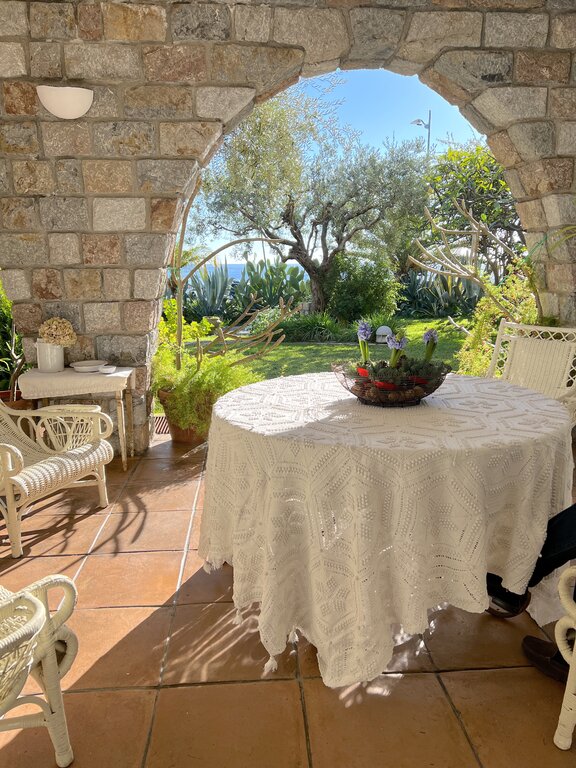
What Sicily offers, for travelers willing to look a little further, is one of the most varied coastlines in Europe. A beach for every kind of traveler.
This guide focuses on Sicily’s east coast, where I live, and where my local knowledge runs deepest.
I've included west and south coast highlights where I can write honestly about them. And I've been transparent where I haven't been personally.
After a decade of visiting, and living part-time, on this island, here’s what I know to be true.
What you’ll learn in this best beaches in Sicily guide:
- The best beaches on Sicily’s east coast
- The truth about Taormina’s beaches
- Free beach options most guides overlook
- Where to stay for beach access
- The best time to visit, and
- How to get in and out of Sicily.
Use this guide to plan your Italy trip.
Jump to:
- At a glance: Sicily’s east coast beaches
- Taormina beaches
- Santa Teresa di Riva and Furci Siculo
- The southeast coast
- Ortigia, Syracuse
- Beyond the east coast of Sicily
- Getting to Sicily and getting around
- When to visit Sicily
- FAQ on Sicily beaches
- Top facts for trip planning
- Ready to plan your Sicily beach trip?
- 💬 Comments
At a glance: Sicily’s east coast beaches
| Beach/area | Best for? | Free or lido? | Lisa's verdict |
| Isola Bella, Taormina | Iconic scenery, snorkeling | Both (small free area) | Go early or at dusk |
| Mazzarò, Taormina | Families, calm water | Lido heavy | Better than Isola Bella for swimming |
| Letojanni | Relaxed, local feel | Both | The Taormina beach nobody mentions |
| Giardini Naxos | Long sandy arc, resort town | Both | Best base for Taormina by the sea |
| Santa Teresa di Riva | Long, uncrowded, local | Mostly free | Where we live. For the locals |
| Furci Siculo | Quiet, long stretch, residential | Mostly free | Santa Teresa’s neighbor |
| Fontane Bianche, Syracuse | White sand, family-friendly | Both | Beautiful sandy beach in the southeast |
| Vendicari Nature Reserve | Wild, protected, pristine | Ticketed entry (from €3.50 | Some of the most beautiful beaches in Sicily |
| Ortigia/Syracuse | Urban swimming, historic backdrop | Lido and rocks | Swimming beside 2,700 years of history |
| Noto beaches (Lido di Noto) | Baroque day trip plus beach | Both | Pair with a Noto visit |
| Santa Maria del Focallo | Long sandy beach, shallow water | Both | Southern gem. Quiet and beautiful |
| Isola delle Correnti | Wild, remote, Sicily’s most southern tip | Free | Read my dedicated guide: linked below |
Sicily beach map: every beach in this guide, pinned
Use the map below to plan your route before you travel.
Every beach in this guide is pinned and organized by coastline. Save it to your Google Maps account and you'll have it on your phone when you need it.
Taormina beaches
Taormina sits on a clifftop with no beach at sea level. Its beaches (Isola Bella, Mazzarò) are reached by cable car or a short bus ride. Isola Bella is the most photographed while Mazzarò is the most practical for swimming.
Let me save you a frustrating discovery.
Visitors arrive in Taormina expecting to walk to the beach, then find themselves on a clifftop 200m above the sea. The town’s beautiful, the views are picturesque, but the beach requires a bit of work.
The cable car (funivia) to Mazzarò and Isola Bella is the quickest way to get there from Taormina town center. For Letojanni and Giardini Naxos, the train, bus or car will get you there in under 32 minutes.

Many travel guides typically miss this detail. I’ve met more than one visitor who didn’t know about it until they arrived.
Isola Bella
Isola Bella, an island connected to the shore by a narrow sandbar, is an image you’ve likely seen on social media.
Water that shifts between jade and sapphire depending on the hour, it’s managed by the WWF as a protected nature reserve.
Entry to the island requires a ticket (€6 full price, €3 for reduced*). However, the beach on either side of the sandbar is partly free and partly lido.

Ticket prices change seasonally. Check the Region of Sicily’s website for the most up-to-date information.
One of the best things to do in Taormina, arrive before 9am or return at 6pm. Between 10am and 5pm in high summer, the area is crowded beyond what the space can comfortably hold.
The water is clear and the snorkeling is good. Go early, go late, or accept the crowds. There’s no middle option when it comes to July and August.
⏩️ Read: Italy in August: what nobody tells you
📌 Lisa’s tip: take the cable car down from Taormina rather than driving. A single ride costs €6* for tourists and non-residents while a return costs €10. Daily tickets cost €20. The station drops you directly at Mazzarò beach. Parking near Isola Bella in summer is expensive, limited and stressful.
Mazzarò
Mazzarò sits north of Isola Bella, and in my view, is the better choice for a proper swimming day.
The water is calm and clear, sheltered by the headland. The beach mixes lido sections with small free areas.
It gets busy in August in Sicily but it’s more manageable than Isola Bella. If you’re looking for a special stay, the fabulous Villa Sant’Andrea, A Belmond Hotel sits directly on this strip.
Letojanni
This is my favorite recommendation in the Taormina area.
Letojanni is a small Sicilian beach town about 8km (5mi) north of Taormina.
The local train on the Catania to Messina line stops here and takes around 4 minutes from Taormina. You can also drive, which is a short, 12-minute drive.
Letojanni Beach (Spiaggia di Letojanni) is long with a mix of small pebbles and sand, partly free and partly lido.
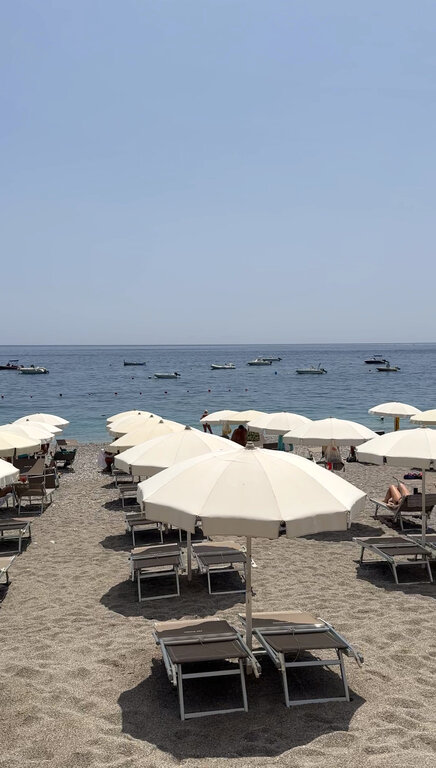
It’s home to a working fishing harbor, good seafood restaurants on the waterfront and fewer non-Italian tourists.
We regularly visit Letojanni in August to eat at Ristorante da Nino.
It’s one of the few restaurants (near us) during the peak season that actually serves fresh fish and seafood. Read my 17 essential Sicily travel tips for more on this subject!
In August, you’ll also find Sicilian families, children in the sea until 8pm and elderly men playing cards under awnings. It’s the Ionian coast as Sicilians, and locals know it.
Giardini Naxos
If beach access and proximity to Taormina are both priorities, stay in Giardini Naxos rather than Taormina.
Located in a wide bay, the beach is a long arc of sand, partly free and partly lido. Interbus IN10 travels from Taormina Luigi Pirandello (bus stop) to Giardini Naxos San Giovanni in around 14 minutes.
From here, it’s a 2-minute walk to Spiaggia San Giovanni Giardini Naxos (beach) and the lungomare (sea promenade).
The town’s a proper resort with restaurants, bars and accommodation at every price point. You pay less here than in Taormina, plus you get to wake up by the sea.
📌 Lisa’s tip: Giardini Naxos was the site of the first Greek colony in Sicily, founded in 734 BC. Archeologic Park Taormina (Museo e area archeologica di Naxos) sits at the base of the bay, with ruins and artifacts from the period. Full-price tickets cost €6 while reduced (18 to 25) cost €3.* Under 18s enter for free.
Santa Teresa di Riva and Furci Siculo
We live in Santa Teresa di Riva, a Sicilian coastal town on the Ionian coast, between Giardini Naxos and Catania.
The beach is long and the majority is completely free (it's also empty come autumn in Sicily). There’s no sunbed charge, no entry fee, and no lines of tourists fighting over a spot.
The seabed is sandy and the shore is pebbled; something I wish was the other way around!
Santa Teresa has the energy of a place that has never been packaged for visitors. Most days, I'm the only non-Italian on the beach.

To the south, Furci Siculo is Santa Teresa’s neighbor.
A residential town with an equally long, beach, it’s also home to one of my favorite outdoor breakfast spots, Il Moro. Between the two, there are several kilometers of Ionian coastline.
Getting there: Santa Teresa di Riva and Furci Siculo are on the Catania to Messina train line. The former takes around 50 minutes from Catania, while Furci Siculo is slightly longer at around 1hr 12mins. By car, both towns are on the SS114 coastal road. Despite being non-touristy towns, parking fills up quickly with locals returning home in August.
These beaches are well suited to families. The Ionian Sea on this stretch is calm and the water deepens gradually. Both towns are built around Italian family summer life.
Cafes, rosticcerias and gelato are never far away.
The southeast coast
Sicily’s southeastern corner is where the island’s baroque interior meets its wildest coastline.
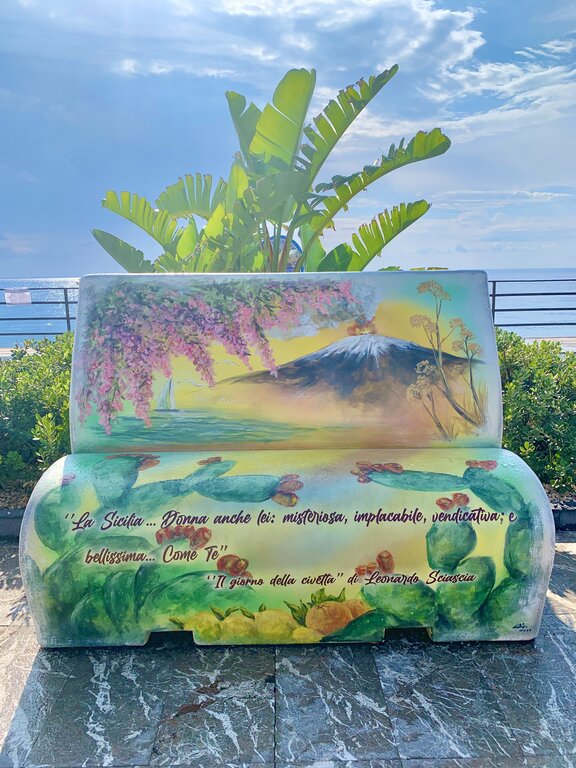
It’s a different Sicily from the Taormina coast. It’s quieter, and the landscape (further south) feels as much North African as it does European.
Vendicari Nature Reserve
I haven’t been to Vendicari yet, which is crazy considering how close we are. But it’s on my list for this year.
Despite this, I’d be doing you a disservice to leave it out. Everyone I know who has visited rates it among the best beaches they’ve been to in Sicily.
Vendicari is a protected nature reserve south of Noto, managed by the Sicilian Region. The coastline runs to over 7kms, with fine sand, rocky coves, dunes, flamingo lagoons and ancient tuna-fishing towers.
There are no sunbeds or bars. The reserve has been awarded four blue sails by Legambiente, Italy's main environmental organization and one of the most respected authorities on beach quality.
It’s not free to visit the reserve, but tickets are extremely affordable. Current prices: €3.50 (full price) €1.50 (reduced rate) and €7.00 (family ticket). Children under 8 visit for free, as do visitors with disabilities accompanied by a carer. Check current prices on the website before visiting, as these may change seasonally.
Vendicari Nature Reserve has 5 beaches within the reserve. They are:
Eloro
This sits at the northern end of the reserve. With crystal clear water and fine, pale sand, it’s the closest beach to the main entrance and tends to be the busiest.
Calamosche
The most famous beach in the reserve. A short walk from the car park brings you to an enclosed cove with white sand and turquoise water. It has been ranked among Italy's best beaches multiple times.
Marianelli
This beach is longer, wilder and less visited than Calamosche. It’s also a naturist beach. Swimwear is welcome, but the etiquette is mutual respect: if you prefer your costume, that’s fine. Respect those who choose otherwise, and you’ll have no issue.
Spiaggia della Tonnara e della Torre Sveva
The beach is dominated by the silhouette of the old tuna fishery and the medieval Swabian tower above it. A long stretch of shoreline, it has an atmosphere unlike anything else on the island.
San Lorenzo
This beach sits at the southern end of the reserve, with larger sandy stretches and small rocky inlets. It has a mixture of rocky and sandy shores.
Go in June or September if you can. August brings more visitors, but the walks between beaches keep the numbers manageable compared to places with direct road access.
When I visit, I’ll update this section with my own account.
Fontane Bianche
About 20km south of Syracuse, Fontane Bianche answers a question many visitors ask: does Sicily have sandy beaches? The answer is yes! Fontane Bianche has white sand, shallow turquoise water and a mix of free beach and lidos.
This family-friendly beach in the southeast is around 25 minutes by car from Syracuse. Take a regional train (13 minutes) or a bus (33 minutes) to get there.
Lido di Noto and the Val di Noto beaches
A perfect summer trip is to spend a morning in Noto, then drive to the coast in the afternoon.
Noto is the finest baroque city in Sicily and a UNESCO World Heritage Site. It deserves at least half a day. See the best things to do in Noto Sicily for a full breakdown.
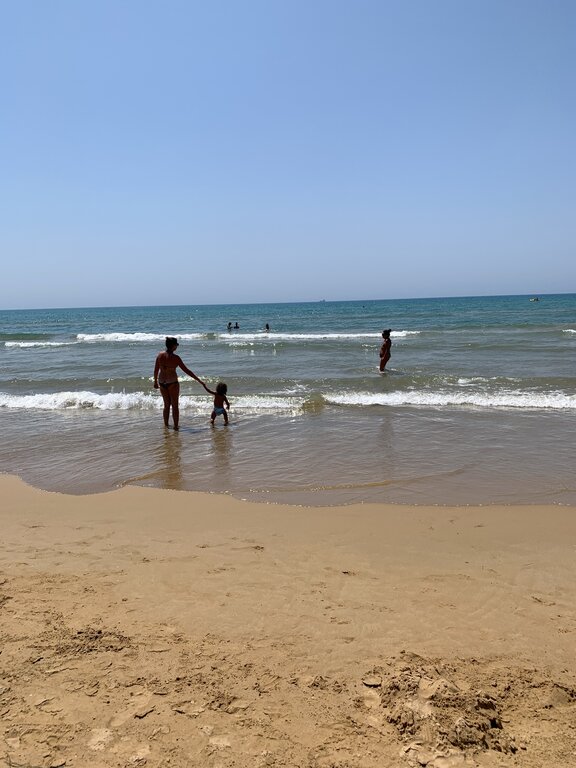
The beach below, Lido di Noto, is a long sandy arc with free sections and lidos. It’s about 8km (16 minutes) from the town center (centro storico) by car. This combination makes for one of the best days you can have in Sicily.
The wider area also includes Avola beach (Pantanello is one that I love: warm, clear water, and soft sand) and the coastline around Pachino and Portopalo di Capo Passero.
In the far south of the island is one of my favorite beaches, Santa Maria del Focallo. It’s long, sandy with shallow, calm water and ideal if visiting with young children.

We’ve been once with our Sicilian relatives, and we’d return in a heartbeat. The area is far less visited by international tourists than the beaches further north, which is part of its appeal.
At the very southern tip of Sicily, Isola delle Correnti is where two seas meet: the Ionian and the Mediterranean.
The currents can be strong, which means swimming requires care. But the setting is unlike anywhere else on the island.
I’ve written a dedicated guide to Isola delle Correnti that details everything you need to know before visiting.
Ortigia, Syracuse
I include Ortigia not as a beach destination but as one of Sicily's great full-day experiences.
For the full picture on what to see, read my complete guide on Things to do in Syracuse Sicily and Ortigia.
For swimming, much of the coastline has rocky bays and pebble beaches where visitors bring their own towels.
The most popular spot is Spiaggia di Cala Rossa. It fills up quickly in summer with rows of colorful towels visible from the lungomare above.
A little further north, Forte Vigliena has a metal staircase leading down to large rocky platforms. It’s smaller than Cala Rossa and it also fills up fast in summer. Water shoes are advisable at both.
Fontane Bianche (mentioned above) is a 25-minute drive or a 40-minute bus ride from Syracuse. Arenella Beach (Spiaggia dell’Arenella), a small sandy cove surrounded by rocks and clear water, is a 20-minute drive away.

Ognina and Plemmirio
Two more spots worth knowing about, both firmly in local territory, are Ognina and Plemmirio.
Ognina is a small fishing harbor south of Catania, with rocky platforms popular with locals for swimming and snorkeling.
The water is clear and the setting is unpretentious.
Plemmirio, a marine reserve south of Syracuse, is similar in character. It’s rocky, wild and known for some of the best snorkeling on the island.
Neither is a beach in the traditional sense. There are no sunbeds, no sandy shores and no tourist infrastructure. But that’s exactly why they deserve a spot on this best Sicily beaches list.
Beyond the east coast of Sicily
My main expertise is Sicily’s east coast and southeast.
But having spent time on other parts of the island, there are a few beaches elsewhere that deserve a mention.
For San Vito lo Capo and Mondello, I’m speaking from word-of-mouth accounts rather than personal experience. For Cefalù and Scala dei Turchi, I can speak from my own visits.

San Vito lo Capo
A long sandy beach on Sicily's northwest tip, San Vito lo Capo is consistently ranked among Italy's finest.
The town hosts Cous Cous Fest, a festival celebrating couscous, every September.
I haven't been, but several of our Sicilian friends have been and tell me it’s worth attending. It’s well set up for visitors and a unique festival that showcases Sicily’s diverse past.
Scala dei Turchi
I’ve been here, and the photographs don’t lie.
White eroded clay cliffs rise above a sandy beach near Agrigento. The effect is unlike anything else on the island.
The cliff face itself isn’t for swimming, but more of a viewing and relaxation spot. The beach below is excellent. Go early. By mid-morning in summer, it gets extremely busy and very hot.
Mondello
Palermo's beach town is around 13km from the city center.
It has a wide sandy bay overlooking a Liberty-style resort. It’s around a 32-minute drive or a 40-minute bus ride from Palermo and makes a great Palermo day trip.
Cefalù
Cefalù is one of my all-time favorite towns in northern Sicily.
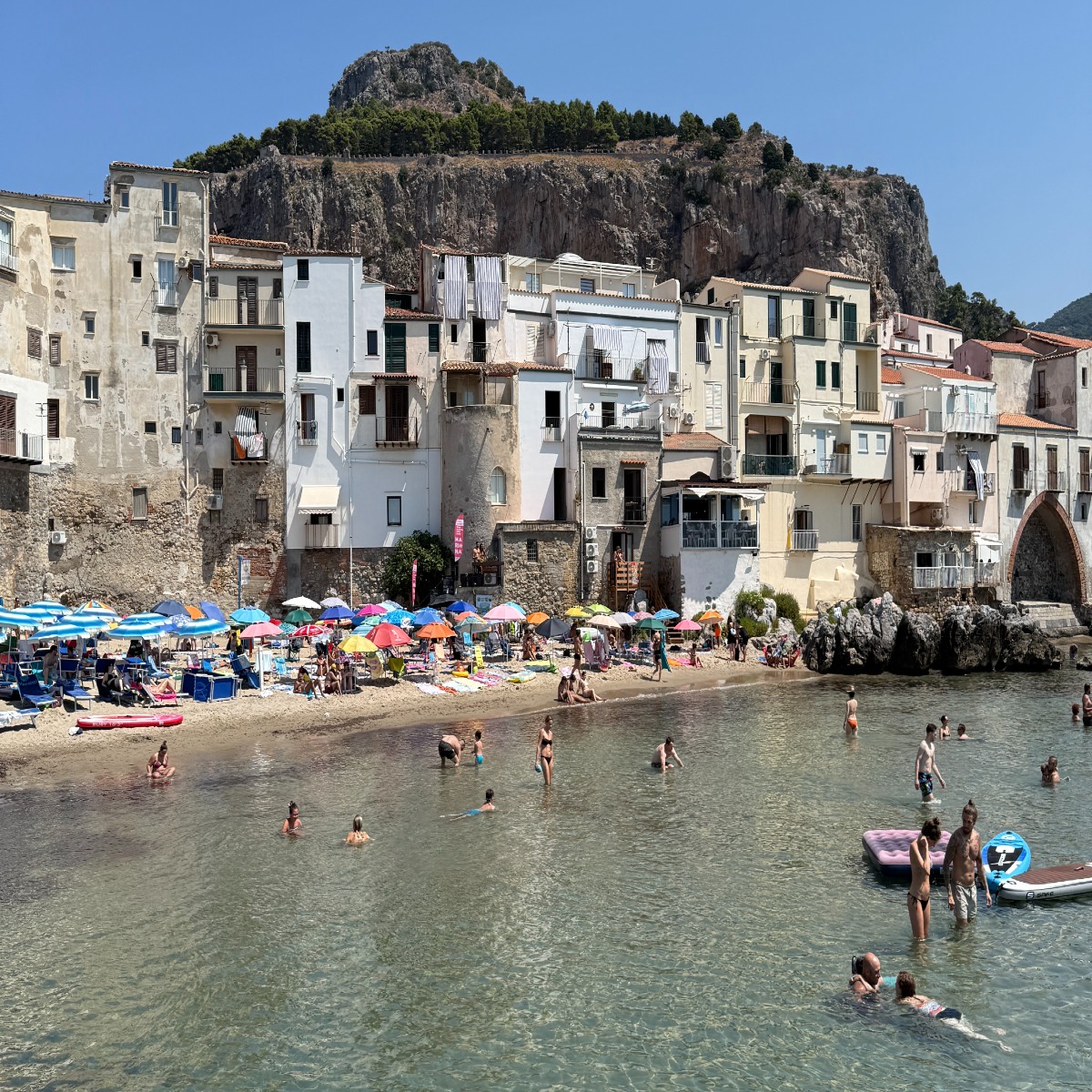
It has a sandy beach, a beautiful Norman cathedral rising above the town, and a lively waterfront.
Cefalù is extremely busy and touristy in peak season, which is the honest caveat. But its beauty lives up to its hype, and it’s a must for fans of The White Lotus TV show.
A note on driving: West coast beaches require a car as public transport connections are limited. If you’re combining east and west coasts, allow at least two weeks in Sicily. The island is larger than most visitors expect. Driving from Catania to Palermo takes around 2.5 to 3 hours. A one-week trip is better focused on one coast.
Getting to Sicily and getting around
Flying
Sicily has two main airports: Catania Fontanarossa (CTA) and Palermo Falcone Borsellino (PMO).
Catania serves the east coast (my local airport), while Palermo serves the west.
⏩️ Read: Every airport in Sicily
To visit the beaches in this guide, fly to Catania. The airport is well connected to most European cities. Ryanair, easyJet and Vueling operate direct seasonal routes from the UK and Ireland.
Catania airport to Taormina takes around 1 hour by car, 1hr 20mins by bus or 51 minutes by train.
Main buses include Etna Trasporti from Catania airport and the Interbus IN10 from Taormina-Giardini train station.
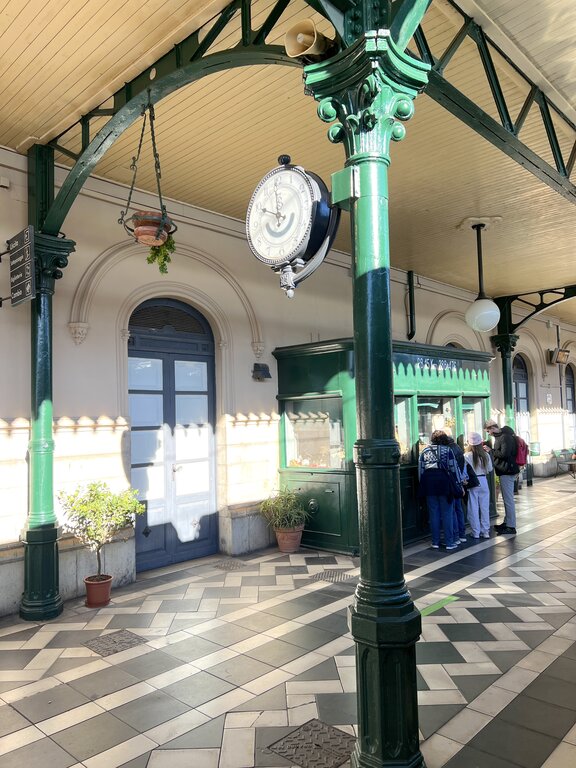
Getting around by car and train
The Catania to Messina regional train line is useful for east coast beaches.
It stops at Giardini Naxos, Taormina-Giardini, Letojanni, Santa Teresa di Riva, and Furci Siculo.
For the interior, southeast and the west coast, a rental car is necessary. Vendicari Nature Reserve has no public transport option.
My guide on How to get around in Sicily delves deeper into this subject.
| Destination | From Catania aiport | Best transport | Notes |
| Taormina | 1 hour* | Car or bus | Etna Trasporti/Interbus bus; parking expensive in town |
| Letojanni | 1 hour* | Car | Fastest route, but plenty of traffic |
| Giardini Naxos | 45 minutes/1 hour* | Car or bus | Etna Trasporti bus |
| Santa Teresa di Riva | 1hr 7mins/2hrs 40mins* | Car or regional train | On the SS114 coastal road |
| Fontane Bianche | 1 hour* | Car | Quickest route, slow moving traffic |
| Vendicari Reserve | 1hr 30mins* | Car essential | No public transport to the reserve |
| Ortigia/Syracuse | 1 hour/1 hour* | Car, bus, or direct train | Trenitalia train to Siracusa station/IN01 bus from Catania airport |
| San Vito lo Capo | 3hrs 50mins* | Car essential | West coast of Sicily, long drive from Catania |
All journey times are approximate. Verify current bus timetables, train schedules and rental car availability before travel. Prices and routes can change.
When to visit Sicily
The best months for beaches in Sicily are June, early July and September. Late July and August are hot, crowded, and more expensive. September offers warm water, quieter beaches and lower accommodation prices. October is worth considering for the southeast coast.
| Month | Sea temperature | Crowds | Prices | Lisa's tip |
| May | 18 to 20°C | Low | Low to medium | Beautiful but the sea is still cold for most |
| June | 21 to 23°C | Low to med | Medium | The best mix of warm weather and space |
| July | 24 to 26°C | High | High | Hot, busy. Book ahead |
| August | 26 to 28°C | Very high | Very high | Peak season. Ferragosto on 15 Aug. Plan carefully |
| September | 24 to 26°C | Med | Medium | Warm sea, quieter beaches |
| October | 21 to 22°C | Low | Low | Underrated. Off-shoulder season |
Lido vs. free beach
Sicilian beaches (and across Italy) are divided into two types. Knowing the difference before you go saves a lot of confusion.
Lido (beach club)
This is a private section of beach run by a concession, where you pay for a sunbed and umbrella.
Prices range from around €20 to €30* or more per pair in high season. Facilities usually include showers, toilets, a bar and sometimes a restaurant. Popular lidos fill up on August weekends.
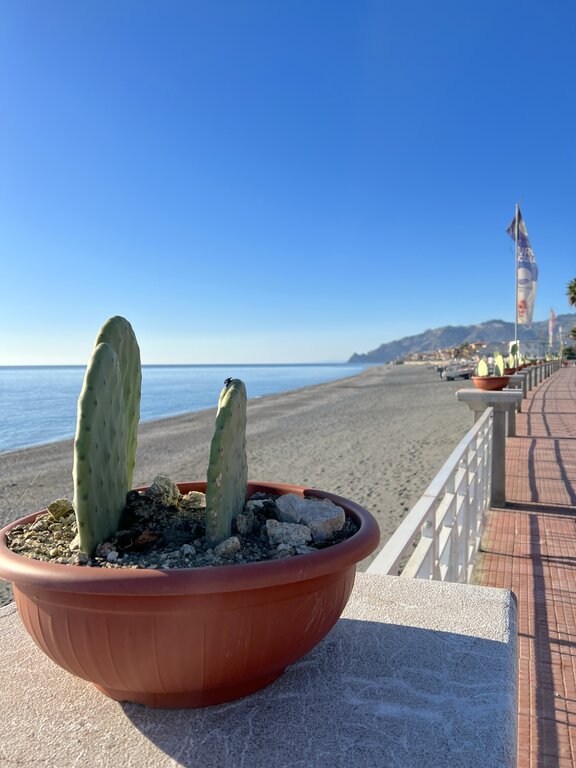
Spiaggia libera (free beach)
The public section of any beach, which Italian law requires to exist alongside every lido concession.
Free beaches have no facilities, no cost, and no booking is needed. Bring your own towel, umbrella, lounger and snacks. On busy beaches, the free sections can be small.
In Santa Teresa di Riva and Furci Siculo, the free section consists of most of the beach.
📌 Lisa’s tip: the beaches I recommend most for families and budget travelers (Santa Teresa di Riva, Furci Siculo, Vendicari and Letojanni) are predominantly free or entirely free. You don’t need to pay for a lido to enjoy a wonderful day at the beach in Sicily. However, lidos can be convenient, especially if you don’t want to buy your own umbrella, lounger etc.
FAQ on Sicily beaches
The east coast (Ionian Sea) is the most accessible for most visitors. Isola Bella near Taormina and the wild reserve at Vendicari cover a wide range of styles in one stretch of coastline. San Vito lo Capo on the northwest tip has an outstanding sandy beach but requires a car and is a longer journey.
Yes. The southeast coast around Noto and Vendicari has some of the finest in Italy. Fontane Bianche and Lido di Noto are sandy, while Letojanni and Santa Teresa di Riva are mixed sand and pebbles. Near Catania, the sand is fine and grey from volcanic rock.
East coast: Giardini Naxos for easy access to Taormina (and more affordable), Letojanni for a more local feel. Santa Teresa di Riva has a free beach and is non-touristy and much cheaper. Southeast: base yourself in Noto or Syracuse. Northwest: stay in San Vito lo Capo.
Yes, particularly the east coast. The Ionian Sea is calm, warm and clear. Italian beach culture is welcoming to children. For more on traveling with little ones, see my guide to Traveling in Italy with a baby and young children.
A week works well for the east coast and southeast. For the full island, allow two weeks. Sicily is larger than most visitors expect. Driving from Catania to Palermo takes around 2.5 to 3 hours.
June and September. The sea is warm, the beaches are quieter and prices are reasonable. July is good but busy. August is peak season with Ferragosto on 15 August bringing widespread closures. October is worth considering for the southeast coast. See When to visit Sicily for a detailed guide on this topic.
Top facts for trip planning
The following summaries pull together the most important facts from this guide. Incredibly useful if you’re mid-planning and need a fast answer.
East coast overview
Sicily's east coast (Ionian Sea) is the most accessible coastline for beach visitors flying into Catania. Main beaches from north to south: Santa Teresa di Riva (long free beach, residential, where we live), Letojanni (free and lidos, local), Mazzarò and Isola Bella (iconic, busy), Giardini Naxos (long sandy arc, good base), Fontane Bianche (best sandy beach near Syracuse), Vendicari Nature Reserve (wild, protected, entirely free), Santa Maria del Focallo (long sandy beach, far south), and Isola delle Correnti (where two seas meet, Sicily’s southernmost tip).
Free beaches
Free beaches (spiaggia libera) are legally guaranteed on all Italian beaches alongside private lido concessions. The best free beaches on Sicily's east coast are Santa Teresa di Riva and Furci Siculo (long Ionian coastline, local towns), Letojanni (partial free access alongside lidos), Vendicari Nature Reserve (entirely free, no facilities) and the public sections of Giardini Naxos.
Best time and planning
The best months for Sicily's beaches are June, early July and September. August is peak Ferragosto season: hot, crowded and more expensive. Sicily has two airports: Catania (CTA) for the east coast and southeast beaches, Palermo (PMO) for the west coast. The Catania-Messina regional train line serves Letojanni, Giardini Naxos and Santa Teresa di Riva directly. A rental car is required for Vendicari Reserve and all west coast beaches.
Ready to plan your Sicily beach trip?
Sicily’s coastline is 1,000km long. It takes years to know it properly, and I’m still exploring even after 10 years.
The beaches that travel guides send you to aren’t always the ones you’ll remember.
Isola Bella is beautiful. But so is an August evening at Santa Teresa di Riva, bathing at 6.30pm watching the sunset and not paying a single euro.

This is the Sicily I want to show you.
What are your thoughts on this guide to the best beaches in Sicily (east coast)? Has it sparked your Sicily summer wanderlust? Let me know in the comments below.
Disclosure: This post may contain affiliate links, which means I may receive a commission if you click a link and purchase something that I’ve recommended. Thank you for your support.
*Information correct at time of publishing.
Written by Lisa Rivera: Italy traveler and resident for 10+ years. First-hand researched for 2026.
Read more on Following the Rivera
Like this post? Pin it!


Comments
No Comments