
15 cozy Italian comfort foods to eat this fall, region by region
Last updated on October 7th, 2026.
It’s not yet 5pm in Venice in November and the sun has already set.
A fierce wind pushes leaves along the streets and canals, and the temperature has dropped.
This is when Italian comfort food comes into its own: ragù-covered pasta, polenta with melted Asiago and slow-cooked stews.

I live in northern Italy and Sicily, and these 15 dishes are what we eat when the weather turns.
They're among the classic Italian foods to try in fall.
Quick answer: In Italy, comfort food means slow-cooked, regional home cooking: ragù, polenta, soups, stews, baked pasta and dumplings. Many of these dishes began as ways to use leftovers. The 15 below run from Veneto and the Dolomites to Milan, Tuscany and Palermo, and most are eaten from October through February.
15 Italian comfort foods at a glance
| Dish | Region | What it is |
| Pasticcio | Northern Italy, Veneto | Baked pasta with ragù, béchamel and Parmesan |
| Polenta, Asiago e funghi | Veneto | Soft polenta with mushrooms and melted Asiago |
| Spezzatino | Throughout Italy | Slow-cooked beef or veal stew |
| Pasta e fagioli | Throughout Italy | Pasta and bean soup |
| Cotoletta alla Milanese | Lombardy | Breaded, fried veal cutlet |
| Falsomagro | Sicily | Stuffed meat roll in tomato sauce |
| Canederli in brodo | Trentino-Alto Adige | Bread dumplings in broth |
| Pollo alla cacciatora | Throughout Italy | Braised chicken with wine and tomato |
| Crespelle radicchio e Gorgonzola | Veneto | Crepes with radicchio and Gorgonzola |
| Polpette al sugo | Throughout Italy | Meatballs in tomato sauce |
| Gnocchi burro e tartufo | Truffle areas such as Piedmont and Umbria | Potato gnocchi with butter and truffle |
| Ossobuco con risotto alla milanese | Lombardy | Braised veal shank with saffron risotto |
| Pappardelle al cinghiale | Tuscany | Wide pasta with wild boar ragù |
| Baccalà alla vicentina | Vicenza, Veneto | Dried cod stewed in milk, served with polenta |
| Spätzle | South Tyrol | Small egg dumplings |
Map: where I've eaten these Italian comfort foods
Many of these dishes are eaten all over Italy, so this map doesn't mark where each one comes from.
It shows the trattorias and restaurants where I've tried them, from baccalà in Vicenza to falsomagro in Palermo.
Tap a pin for the dish and what I'd order.
Planning a route? My guide to the best food in Italy covers more.
Jump to:
- 15 Italian comfort foods at a glance
- Map: where I've eaten these Italian comfort foods
- 15 Italian comfort foods to eat in fall
- Italian fall ingredients to look for on menus
- More Italian fall foods worth ordering
- What to drink with Italian comfort food
- Italian comfort food in Italy vs. Italian-American favorites
- FAQs on Italian comfort food
- 💬 Comments
15 Italian comfort foods to eat in fall
1. Pasticcio
There’s one Italian dish that makes me salivate the second I smell it: pasticcio, (sometimes written as pastitsio).
This dense pie consists of a ragù meat sauce, béchamel and Parmesan cheese sandwiched between layers of pasta. We typically eat it at Christmas and Easter, and there's never usually any leftovers.

The difference between pasticcio and lasagne
When looking at photos of pasticcio and lasagne, you’d be forgiven for thinking they’re the same dish. That's because, for the most part they are. The main difference comes down to region.
In Veneto, and regions across northern Italy, you're more likely to hear it called pasticcio. In central and southern Italy, lasagne is the more common name.
2. Polenta Asiago e funghi
This next Italian dish has comfort food written all over it.
Polenta Asiago e funghi is one of my favorite things to eat in Veneto, more so when we're in the Dolomites in winter.
Polenta Asiago e funghi is a dish you’re also more likely to find in northern Italy rather than the south.
It's so basic, yet it's something you'll want to order the second you see it. The dish consists of fluffy polenta, a helping of mushrooms, and melted Asiago cheese melted on top.
When fall arrives in Italy, so too do a variety of mushrooms. Porcini or finferli (chanterelle) mushrooms add a flavorful punch to the dish.

What is polenta?
Polenta is a dish made from cornmeal cooked in water.
In Veneto, it's often made with yellow Marano corn. It has a texture similar to mashed potatoes and is sometimes eaten instead of rice or pasta.
It can be served soft, or left to set and then grilled, like the polenta that comes with the baccalà alla vicentina in dish no.14.
For a long time, polenta was the main staple in the north. Maize fields are common across northern Italy, which is why corn is the grain most often used for it.
My mother-in-law told me stories about how polenta was a dish for the poor. She remembers that when she was growing up, people ate polenta with the drippings from fish to give it flavor.
Polenta is naturally gluten-free because it's made from corn, not wheat. If you have celiac disease, ask whether it's prepared separately from wheat products.

3. Spezzatino
The first time I tried spezzatino was at a small osteria in Bassano del Grappa. Even though it was the height of summer and the wrong time of the year, I lapped up every bite.
Spezzatino is a stew, consisting of cubes of veal or beef, slow cooked for a few hours until tender. It’s fragrant, full-bodied and delicious. Other ingredients typically include carrots, celery, red wine and rosemary.

An easy dish to make at home, you can throw everything into a saucepan, and leave it to cook. Different versions of spezzatino substitute beef or veal for chicken, pork or lamb.
Serve the beef stew with some crusty bread, and a glass of robust red wine. It’s a dish that’s comforting as it is filling.
4. Pasta e fagioli
Pasta e fagioli is a warm hug in a bowl on a cold fall day.
It's a soup of pasta and beans (fagioli), made with garlic, celery and broth. It changes from region to region, so you'll come across slight variations.
Bean soups have been part of Italian cooking for centuries.
Some versions add herbs such as sage or parsley, peppers, tomatoes, ham or pancetta.
The dish is typical of several regions, including Veneto, Piedmont, Lombardy and Tuscany.

Pasta e fagioli anyway you like it
As with most Italian dishes, good ingredients are essential.
The beans traditionally used are borlotti and cannellini, and the type of pasta makes a difference too. Many versions use short pasta, while others use the long kind.
The cooking technique also changes depending on where you eat it.
In Naples, the pasta and beans are cooked together, so the pasta releases its starch into the soup, giving it a thicker and creamier consistency.
I prefer mine on the creamier side, with small cubes of pancetta on top. However you like it, a big, hearty bowl is hard to beat on a cold day.
5. Cotoletta alla Milanese
When in Milan, there's one Italian comfort food that's as high a priority as visiting its Duomo.
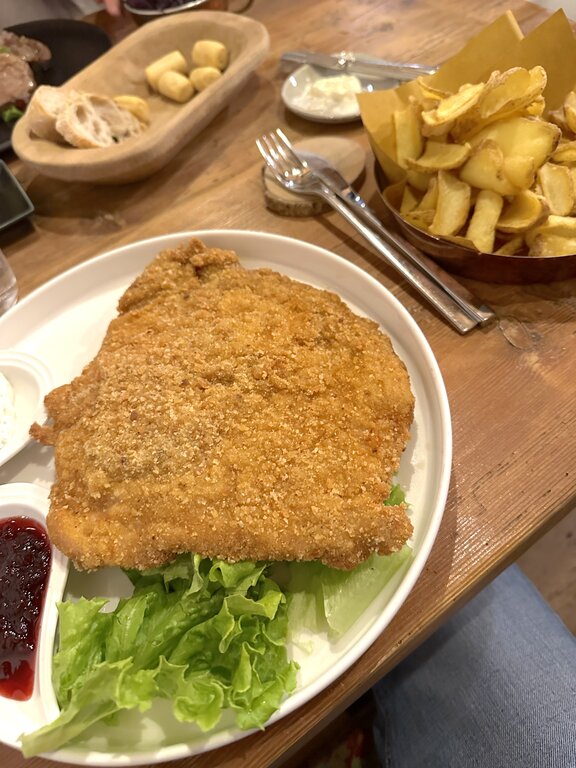
Cotoletta milanese (also called costoletta) is a veal cutlet that’s coated in breadcrumbs and fried. It’s similar to Austria's Wiener schnitzel, and the two countries dispute whose version came first.
One difference is that Wiener schnitzel is always veal by definition, so the contrast is in the cut and the cooking.
A traditional cotoletta alla milanese is a bone-in veal chop, pounded, breaded and fried in clarified butter. The thin, boneless version is often called orecchia d'elefante.
A historic Italian comfort food
According to historians, there’s evidence to show that the dish, then called, lombolos cum panitio, dates to the 12th century. It was listed in the menu of the monks at the Sant’Ambrogio Basilica in Milan.
Variations range from thin and crunchy cutlets, to some with the bone in and also slightly pink inside. Double breading the cutlets and cooking in clarified butter gives it a crunchier exterior.
I enjoy mine with a squeeze of lemon, and a side serving of potatoes and vegetables.
Visiting Milan for the first time? My Milan travel guide covers plenty of helpful tips on traveling to the city.
6. Falsomagro
I first wrote about falsomagro in my guide to Sicilian food.
A dish that’s delicious as it is unusual, I'd the pleasure of trying it during our 2 days in Palermo.
Falsomagro is a traditional meat roll typically made from beef or veal stuffed with bread, cheese and ham. Slices of bacon, onions, garlic and fresh herbs and hard-boiled eggs complete the filling, though the ingredients can vary.
String is tied around the roll to keep the filling in place, and it’s cooked.
American readers will recognize the shape, which is similar to a meatloaf.

The meaning behind falsomagro
Falso meaning false, and magro meaning thin, or lean, refers to the small amount of meat in the dish compared to its generous size.
Another meaning is said to describe the lean cut of meat that's used, which contrasts to the higher fat filling.
The story behind falsomagro
Falsomagro comes from Palermo.
The story goes that the dish was created by the monsù, the French-trained cooks who worked in the kitchens of Sicily's wealthy families.
At the time, people didn't eat beef from working cattle, so the meat available was often from old or lame animals, which was tough and fibrous. The cooks stuffed it with herbs to make it appetizing.

Later, Sicilian cooks developed the filling into what it is today, with ham, boiled eggs and cheese.
Falsomagro is more common in rural areas of Sicily, where families usually make it for Sunday lunch.
If you want to try it in Palermo, I recommend Trattoria Ai Cascinari.
It's closed on Mondays and Tuesdays, so plan your visit around that.
We ate an authentic falsomagro there alongside other Sicilian dishes. As I mention in my Sicily travel tips, traditional Sicilian dishes aren't always easy to find in restaurants.
But, I can personally say that this charming trattoria does make a delicious falsomagro.
Trattoria Ai Cascinari, Via D'Ossuna, 43/45, Palermo
7. Canederli in brodo
Trentino-Alto Adige/Südtirol shares a border with Austria, and it shares some of its dishes too.
Canederli in brodo are dumplings made from stale bread, speck (cured smoked ham) and cheese, cooked in a meat broth.
The smell and sight bring a feeling of comfort long before you taste it. In Austria, the dish is called knödel, and Germany, Czechia and Slovakia have their own version of bread dumplings.
You’ll also find variations across northern Italy in Friuli Venezia-Giulia and in Alta Valtellina in Lombardy.

One dish, many names
The name changes from region to region. In Friuli, the dumplings are called chineglis or chineghi, while in Trieste they're gnochi de pan (bread dumplings).
Canederli comes from an old recipe, from a time when cooks used up leftover bread and scraps instead of throwing them away. In short, it was considered peasant food.
The earliest known picture of someone eating canederli in South Tyrol is a fresco in the castle chapel at Castel d'Appiano (Schloss Hocheppan), painted in the early 13th century. It's unclear how much longer the dish has been around.
A bowl of canederli in brodo is ideal for a blustery fall day, and it'll warm you right up.
8. Pollo alla cacciatora (chicken cacciatora)
It’s off to Tuscany for this next Italian comfort food.
Hunter’s chicken (pollo alla cacciatora) is a baked chicken dish with red wine, tomatoes, rosemary, onions, carrots and celery. Like canederli, pollo alla cacciatora is also a recipe that originates from humble beginnings.
How to make Pollo alla cacciatora
Brown pieces of chicken in a pan with onions, garlic, carrots and celery. Add red (or white) wine, tomatoes and seasoning. Cook on a low heat for around 35 to 40 minutes and serve with crusty bread and a side salad.
This chicken dish is so popular across the country, that regions adapt it using their own local ingredients.
In the Sicilian version, you'll find capers along with olives, chili and sprigs of wild fennel. In Rome, they’re likely to add peppers, anchovies and marjoram.

What does pollo alla cacciatora mean?
Alla cacciatora means 'of the hunter', and refers to the style in which the dish is prepared. It also usually refers to the ingredients they use to make the dish, such as onions, garlic and wine.
There’s another unique theory surrounding the meaning of alla cacciatora. Sources say it refers to the combination of garlic and rosemary that hunters once used to marinate their prey.
9. Crespelle radicchio e Gorgonzola
My mouth waters at the mere thought of this dish.
Light, fluffy crepes filled with Gorgonzola and fresh radicchio make a dream combination and a true Italian comfort food.
Crespelle radicchio e Gorgonzola is a filling first course, though how filling depends on how many you eat.
The radicchio they use is radicchio di Treviso, which is in season from fall through winter. Its slight bitterness balances the rich, creamy cheese.

The story behind Gorgonzola cheese
According to legend, a shepherd left some curdled milk in a container and forgot to add salt to the curd.
The next day he used the same container, with the curds still at the bottom. Without realizing that small molds had formed, he had accidentally created a new cheese.
10. Polpette al sugo (meatballs in sauce)
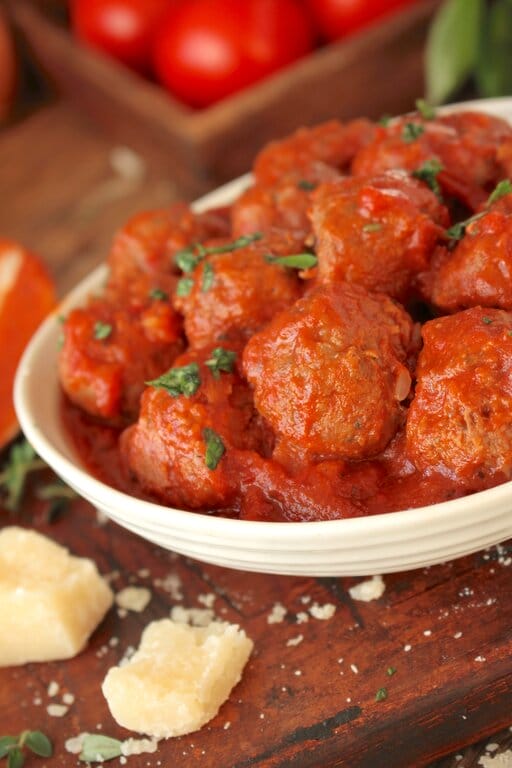
Polpette al sugo are meatballs made from pork and beef, mixed with stale bread soaked in milk, eggs, grated Parmesan and seasoning, then simmered in tomato sauce.
The dish grew out of leftovers so nothing went to waste.
At home we usually make polpette with minced pork, breadcrumbs, seasoning and a generous sprinkling of grated Parmesan (my 2-year-old's favorite part).
How to eat polpette al sugo
The meatballs can be fried, baked or even steamed. For vegetarians, there are also 'meatballs' made from legumes, like chickpeas. Rarer recipes include meatballs made with pecorino cheese and baked vegetables.
Good crusty bread is a must. Do as many Italians do and make the scarpetta: use a piece of bread to clean your plate of the remaining sauce. It’s warming, slightly gluttonous and delicious.
In Italy, polpette are usually served as a second course on their own, not piled on a plate of spaghetti.
We never eat them with spaghetti. For us they're always a meat course, served with bread to mop up the sauce. The spaghetti-and-meatballs combination you may know is Italian-American.
11. Gnocchi burro e tartufo
There’s one aroma that dominates this dish, and that’s truffle.
Truffle prices vary widely. White truffle is one of the costliest ingredients in Italy, while black truffle costs much less. It's why you'll see truffle used in everyday dishes as well as special ones.
Gnocchi burro e tartufo are potato dumplings with butter and truffles. Some recipes call for white truffle and others for black, depending on the season and budget.
Good quality butter, fresh sage and grated Parmesan complete the dish. It's ideal for chilly autumn days.

How to make Gnocchi burro e tartufo
For me, the gnocchi I’ve enjoyed most has always been homemade.
Many Italians prefer to make gnocchi at home, which isn’t as difficult as it might sound. Start with the dough, using boiled potatoes.
Pass the cooked potatoes through a masher, and let them cool, then add flour, an egg and some Parmesan. Roll the dough into strips, cut them into small rectangular pieces, and press each one with a fork to make a small ridge.
For the sauce, melt a little oil and butter with the sage, then take the pan off the heat and stir in some of the grated truffle.
Cook the gnocchi and mix in with the creamy sauce, taking care not to overcook them. Grate any leftover truffle on top to finish.
One of my favorite Italian comfort foods, enjoy gnocchi burro e tartufo with a chilled glass of white wine.
12. Ossobuco con risotto alla Milanese
Cotoletta alla milanese may be the favorite in Milan, but for me, ossobuco con risotto alla milanese wins on taste.
Ossobuco is made from thick slices of veal shank, with the bone still in, braised slowly and served with a rich saffron risotto.
It's traditionally finished with gremolata, a mix of lemon zest, garlic and parsley.
Saffron is a symbol of Milanese cooking, and it gives the risotto its golden color.
Slow cooking is the secret to a good ossobuco. It can take a few hours, but it’s worth every minute.
I like to pair it with an Amarone, a rich red from the Valpolicella area of Veneto.

The origins of risotto alla Milanese
The most popular story says the dish was created in 1574 during the wedding of a Belgian glassmaker’s daughter.
One of his assistants, nicknamed Zafferano (meaning saffron), decided to add the yellow spice to the white rice. The guests reacted well to the surprise, and the saffron added flavor as well as a gold color, which represented wealth and prosperity.
Story no. 2
Another legend tells a different tale, this time about a Sicilian chef who moved to Milan.
While preparing arancini, he didn’t have his usual ingredients to hand, so he went back to a rice recipe he already knew and used saffron for flavor and the distinctive yellow color.
Whichever of the two tales you believe, ossobuco con risotto alla Milanese is a must-try. It’s most closely associated with Lombardy and is a dish I'd order again and again on a cold fall day.
13. Pappardelle al chinghiale
There’s a lot I remember about my first trip to Florence, but as a foodie, one meal stands out.
It was in a cozy restaurant not far from Piazza della Republica, and it was one of my favorite dining experiences. At Ristorante Buca Lapi, we dined on pappardelle al chinghiale followed by a juicy bistecca alla Fiorentina.
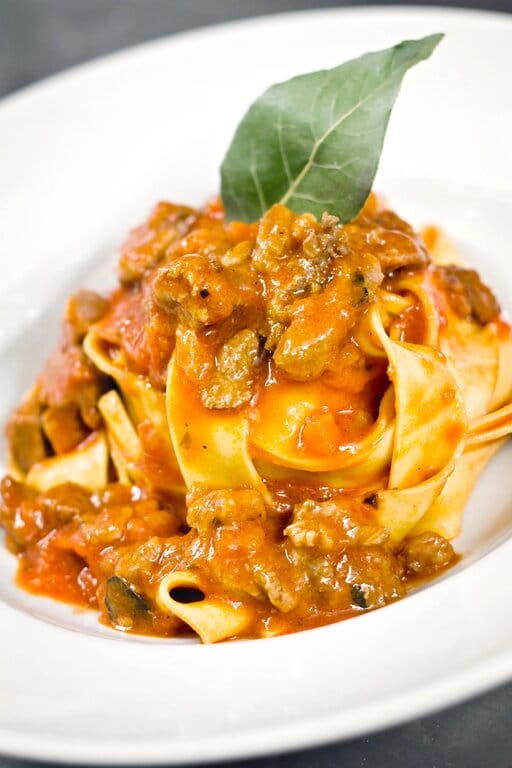
Pappardelle al chinghiale is a typical Tuscan dish of wide pappardelle pasta with a rich wild boar sauce. I'm not usually keen on gamey flavors, but I can say with confidence that you need to try this.
The sauce makes it ideal for colder weather, though honestly I’d probably eat it in summer too.
Ristorante Buca Lapi, Via del Trebbio, 1r, Firenze
How the sauce is made
The boar is marinated for at least 12 hours in red wine, with onion, celery, carrots, rosemary and bay leaves. It’s then browned and left to cook for about 15 minutes before the tomato paste, ripe tomatoes, a glass of red wine and a little olive oil go in.
The sauce is left to cook for about 4 hours, stirred occasionally.
A good sprinkling of salt, pepper and a glug of extra virgin olive oil finished it.
Are you game for trying wild boar?
If you’re reluctant to try wild boar, I get it, because I was too. After one mouthful I was sold.
Wild boar is common in this part of Italy, especially in the Maremma, and features often in Tuscan cooking.
14. Baccalà alla Vicentina
Vicenza is a city in northern Italy, and it also happens to be my home city. And when autumn arrives, there’s one dish I most look forward to most.
Baccalà alla Vicentina is made from dry cod, which in Vicenza is called baccalà even though the fish is air-dried stockfish (stoccafisso). It's cooked slowly with onions, anchovies and milk, and the long cooking tenderizes the fish while the milk softens its strong taste.
Baccalà alla Vicentina is a symbol of the city, and it's so popular that there’s a festival for it every year. Thousands of people head to Sandrigo, in the province of Vicenza, for the Festa del Baccalà alla Vicentina.
The festival takes place every September, over two weekends. Check the dates before you plan your trip.

You’ll find the dish in several places in the historic center and on the outskirts of Vicenza. One trattoria we regularly visit, Da culata, makes an excellent baccalà alla Vicentina, which they serve with grilled polenta.
You can also eat baccalà alla Vicentina with bigoli (a thick, long pasta), gnocchi and risotto. Pumpkin gnocchi with baccalà is one dish that has fall written all over it.
Da culata, Via Giuseppe Roi, 47, Montegalda, Vicenza
⏩️ Read: where to eat in Vicenza Italy
15. Spätzle
My last pick for Italian comfort food is a dish influenced by Italy's Austrian neighbors.
Spätzle are small, unusually shaped dumplings made from flour, eggs and water, not potatoes like gnocchi. They’re also known as Tyrolean dumplings.
As the name suggests, spätzle is German in origin. The dumplings are formed with a special tool called a spätzlehobel, and the result is teardrop-shaped dumplings.

Different varieties to try
Once the spätzle are made, all that's left is the sauce. The most common method is to sauté them in a pan with butter and chives. Most restaurants serve this as a first course, but for me it’s good as a main.
Other variations include the popular spinach spätzle, which takes on the vegetable's green color. I first tried it at Ristorante Wiesthaler in San Candido in the Dolomites and it warmed me right up.
Spätzle with bacon, Parmesan and a generous helping of cream on top is, for me, Italian comfort food heaven.
- Mushrooms: finferli (chanterelles) and porcini are in season in autumn. My husband makes the best tagliatelle ai finferli, and they also go with polenta and risotto.
- Pumpkin (zucca): there are many varieties, and it goes into risotto, gnocchi and filled pasta. My husband’s risotto con la zucca is a favorite in our household.
- Chestnuts (castagne): market stalls begin selling chestnuts around late September to October. Roasted chestnuts (caldarroste) are sold on the street from around late November throughout the Christmas period. Chestnut flour is used in a lot of cakes and sweets.
- Truffles: white truffle season runs roughly from October to December, which is the time to order gnocchi burro e tartufo.
- Game: wild boar ragù, like the pappardelle in dish no.13, is perfect fuel for the colder months.
We're lucky to have two weekly food markets near us: one for fruit and vegetables, and a farmers' market with a 0km policy.
For more on what's in season, see my guides to Italy in October and Italy in November.
More Italian fall foods worth ordering
- Soups: at home we make our own minestra, packed with cavolo nero (Tuscan kale), lentils, carrots, onion and whatever vegetables we have. It's healthy, delicious and filling. On menus, look for ribollita. This Tuscan bread and bean soup whose name means reboiled is a favorite come autumn and winter.
- Sweets: castagnaccio is a chestnut flour cake from Tuscany, and strudel di mele, apple strudel, comes from Trentino-Alto Adige, the same region as canederli and spätzle above. Cioccolata calda is more of a winter drink, which you start seeing at the end of November when the Christmas markets begin.
What to drink with Italian comfort food
| Dish | What I'd drink |
| Baccalà alla vicentina | Soave, a dry white from Veneto |
| Gnocchi burro e tartufo | A chilled glass of white wine |
| Ossobuco con risotto alla milanese | Amarone, a full-bodied red from Valpolicella in Veneto |
Italian comfort food in Italy vs. Italian-American favorites
If you grew up on Italian-American cooking, some of your comfort foods look different in Italy.
When my niece visited us from the US, she asked for chicken alfredo. Despite never having tried it myself, I’d watched enough American cooking shows to know what it was.
I’d to explain to her that it wasn't an Italian dish that you’d find on a typical menu here.
Instead, we ordered her spaghetti al pomodoro, which she finished every bite and even wanted to lick the plate!
Spaghetti and meatballs is another Italian-American dish, as I explain in my polpette section above.
Chicken parmigiana is another Italian-American invention. I’ve never seen it here (though it looks delicious).
What we have is parmigiana di melanzane. Made with eggplant, tomatoes and other ingredients, it’s a dish that more associated with southern Italy.
What do you think of this guide to Italian comfort food? Which of these dishes would you most like to try? Leave me a comment below, I’d love to read them.
FAQs on Italian comfort food
Italian comfort food is slow-cooked, home-style cooking tied to a region and a season: ragù, polenta, soups, stews and baked pasta. It's simple, filling and built on inexpensive ingredients, many of which began as ways to use leftovers. The dishes change a lot between the north and Sicily.
Classic dishes include lasagne or pasticcio, pasta e fagioli, polenta with mushrooms, ossobuco with saffron risotto, meatballs in tomato sauce and gnocchi with butter and truffle. Which dish counts as classic depends on the region, so the table above groups my 15 by where you'll find them.
Fall menus lean on mushrooms, pumpkin, chestnuts, truffles and game such as wild boar. Porcini polenta in Veneto, and gnocchi with truffle and pappardelle with wild boar ragù in Tuscany. For more on what's in season, see my guides to Italy in October and Italy in November.
Yes. Polenta with mushrooms and Asiago, crespelle with radicchio and Gorgonzola, gnocchi with butter and truffle, and spinach spätzle are all meat-free. Pasta e fagioli is often made with pancetta, so ask for it without. Legume-based meatballs also exist.
No. Northern dishes lean on polenta, rice, butter and veal, while southern and Sicilian cooking uses more tomato, olive oil and vegetables. Even pasta e fagioli changes from town to town. My Sicilian food guide covers the southern side.
Disclosure: This post may contain affiliate links, which means I may receive a commission if you click a link and purchase something that I’ve recommended. Thank you for your support.
Written by Lisa Rivera: Italy traveler and resident for 10+ years. First-hand researched for 2026.
Like this post? Pin it!



You just cannot beat pasta as the ultimate comfort food! I love Italian food.
Same! Lucky for me I loveeeee pasta!
I love Italian cuisine, they are amazing. Unfortunately there are limited Italian restaurants here in my country and they are more expensive. I really want to travel to Italy. There are so many beautiful cities in Italy that I want to explore, hopefully I can visit there soon and try different Italian dishes
I hope you can visit one day soon too, there's plenty of delicious things to eat 😀
There are so many comfort foods for fall in Italy which I was not aware off. Never knew that Pasticcio and Lasagne are different as for me Pasticcio is Lasagne. For me Pasta e fagioli looks my favorite as it is combined with beans and being vegetarian, I always prefer beans combined pasta. I would try other dishes too which I was not knowing before reading this.
Pasta e fagioli is the perfect dish for veggies and for fall 🙂
You included so many different Italian dishes I have never heard of. Spezzatino does sound like a good comfort food, especially in the winter. I love the viennese version, so I would like to try Cotoletta alla Milanese.
I hate to admit it but I sometimes get tired of all the pasta and pizza in Italy so it is good to have some other options. I will have to give some of these a try next time I am in Italy.
Trust me I know! We eat pasta regularly, but there are so many different varieties, I haven't tired of it just yet!
This post just made me so hungry! Italy is for sure one the best place for foodies. At least I loved everything I ate there. But you just introduced me dishes that I had never heard of before. Everything looks so delicious!
I think it's the queen of comfort food countries!!
This post is just cruel! With all of those photos of pasta and the incredible descriptions that you wrote! OmG! I need to eat pasta right now and it is breakfast where I live! LOl.
Lol sorrrrry!! I should have added a warning before reading!
Great post!! I am a huge fan of Italian food and I loved the pictures. The one good thing about Italian cuisine is that there are so many varieties of food both for vegans and meat-eaters. My favorite dish that I tried in Italy was Spezzatino, and it was amazing.
You're so right, there's really something for everyone! Spezzatino is an autumn fave of mine too 🙂
Your post just took me on a virtual food tour and now I am feeling tempted to book another trip to Italy for a total foodie adventure :). Indulging in Italian food is, of course, one of the highlights of a visit to Italy - their use of fresh ingredients really brings out the flavor in all these dishes.
Italy is a country of comfort food heaven!
They certainly know how to do comfort food well in Italy. I didn’t know Spätzle made it across the border, that’s something I’d definitely like to try next time I’m back in Italy. I'm sure I'd love Gnocchi burro e tartufo - anything with truffle attracts my attention on a menu.
The gnocchi is very good, and something we eat quite a lot when back in Italy. Definitely try it the next time you're there!
I loved all the pictures of Italian food that you have added along with the description. I have never seen a list of so many comfort foods at one page. However, being a vegan, I am totally impressed by Polpette al sugo as I would get meatballs made of chickbeas or bakes vegetables - that's a good news, indeed!
Yes! There are vegan and vegetarian versions so I promise, there's something good for you to eat too 🙂
So many wonderful dishes...I'd love to visit Italy in the fall. What a lovely post!
Thank youuuuu! I hope you do visit one day, it's a marvelous country and cuisine
Italy is one place where all will power goes out the window as the temptation to woof down plate after plate is sets in. Looking at these pictures is seriously making me either want to book the next flight to Italy or raid the kitchen.
Lol you've got it! I can't resist trying everything when we're back, so I like fall and winter as I can hide behind my clothes 😀
Your post is making me salivate. These are some great options for Italian foods in autumn. All of us know how much we long for comfort food when the temperature drops and your post is such a lifesaver. I am loving the Pollo alla cacciatora and the Polenta dish. We are planning to visit Rome and nearby during fall-winter. This post will come in handy.
Perfect! You should definitely come across the pollo dish as you can find it across Italy. The polenta dish is typically something you find further north in the Dolomiti
Oh yeah! Looking at the picture I too thought Pasticcio, looks like Lasagne! Now I wonder what those differences are. I'm gonna read about that. Lasagne is like, true love, on a plate!!! Haha.
Polenta definitely looks comforting. Reminds me of a similar dish in India.
Pasta e fagioli sounds like the dish you have sitting in the porch, looking at the rain out of the window! Haha. I'm gonna make it this weekend.
Lol you've summed it up perfectly! They're all great choices and guaranteed to keep you cozy this fall 🙂
All of these dishes really look amazing. I could definitely use some comfort food like this. Italian food is a great source of comfort foods for me, most definitely.
It's definitely up there with the queen of comfort food cuisines!
I am going to try all these Italian dishes on my next trip to Italy ? Thank you so much for sharing this compilation!
You're welcome!
Italian food had always been so amazing and all of those look absolutely delicious! I'd love to try Polenta Asiago e funghi and ‘Falsomagro.
Great choices! They're not difficult to make and super yummy!
Give me all the Italian food, please. I absolutely love Italian food dishes. Lasagna has always been a top favorite.
It's also perfect for chilly fall evenings!
Why is that Italian food always makes me hungry?
Because it's just that good
Italian food is one of my favorite. Italian dishes are really delicious, my husband and I cam actually eat pasta everyday.
Lol I don't blame you one bit!
Oh wow what an awesome list! I just had some pizza and lasagna for dinner tonight. Definitely think Italian is the best comfort food!
It is!! And ideal for fall weather 🙂
Everything looks so delicious, but of everything pictured I especially want to try the Spezzatino. It looks so good.
It's very good and so good for fall too 😀
Yum! Some delicious recipes here and I do love Italian food and think that it is comfort food as well. Would love to try making the mushroom polenta from your list
We just had it the other day and it's delicious!!
I shouldn't have read this on an empty stomach- now I am craving these amazing comfort foods! 🙂 Italy is high on my bucket list, and I think we will be visiting next fall. I really enjoyed gaining inspiration for your list of suggestions. The Baccalà alla Vicentina is something I've never heard of, and I think my husband and I would really enjoy it.
Lol sorry Leah, I should have put a warning before reading! The Baccala is something you can only find in Vicenza, so if you visit next fall and happen to visit, give me a shout; I may be there!
Yummy. I love polenta so I can't wait to try these recipes out. I'm also craving that pumpkin dish. It screams fall.
YES!!! We had it the other day, and my coziness level rose by 50%!
I never really thought of Italian food as comfort food. Your post made me realise that I need to spend more time in Italy and get to know about their food despite not being able to eat their 7-course meals.
It's not 7 courses, you can choose what you want to eat 🙂 I hope you get to travel one day
Literally just had pasta for the first time in FOREVER for dinner last night! It made me realize I need to cook it more often! So yum!
It's even better after a long absence from the stomach 😀
Damn it looks sooooo much yummy. Italian food is my weakness.. i must try this weekend so sure.
Thanks Sophia, glad you enjoyed this post!
These sound really yummy! We love all sorts of dishes that have pasta in them. Homemade lasagna is one of my favorites!
Oh yes, me too! And it's perfect for fall too 🙂
Oh my! Italian hygge! Saving for cool fall days and nights, when I want to be cozy in the hosue and with my food.
Yes!! That's the perfect term for these dishes 😀
Yes to all of it! I have a lot of Italian on my dad's side and I really miss my grandma's cooking. Thanks for sharing these with us!
Aw then you really will enjoy these dishes 🙂
Good timing, because the weather just got so cold here! These all look like the perfect fall and winter weather meals.
They are, and delicious too 🙂
Italy is in my bucket list and this list of must-eat food is useful for me when I travel to Italy. Some of them I have not tried before such as Spätzle!
I hope you get to try some of these when you visit one day 🙂
I could feel the intensity of my hunger grow as I continued reading through this post. I WANT EVERYTHING! I am in training for a half marathon so my carb intake is high. I think I need to make a majority of these dishes to support my "training."
Also, I have never heard of crepes with gorgonzola and radicchio before. I have to try that dish. It sounds delightful!
It's amazing Laurie! And the best variety is from a town called Treviso 🙂
I want the Falsomagro immediately. It looks amazing. They all do, but that one in particular.
It's really good and just the right kind of filling!
omg omg omg...I love italian food so much!!! It's so delicious. Everything you describe here sounds so good!!! YUM
Same! I hope you get inspired to try a few of these in fall 😀
I might have to replace my trousers with some stretchy leggings hahah these look delicious and I've just come across some new-to-me dishes!
Lol! Yes sorry about that! They're all so good, and calorie counting is forbidden!
As an Italian I am in love with all of these plates.
Good article
Grazie! I'm glad you enjoyed it
Oh yes, I want all of these. I am all about Italian food. Carbs are my friends and pasta is something I have weekly.
Snap! We eat Italian at least 5 times a week, so it's a cuisine I know well 🙂
Oh wow, does all this look good! I love Italian food in the fall. It's so filling and just makes me feel all warm and fuzzy. I need to try that falsomagro. That looks amazing.
It's so good, and with an unique tale behind its background too!
So hungry now! I grew up on Italian food, so I love many of these, in particular, polenta, osso bucco, gnocchi, cotoletta, spezzatino. But my favourites are lasagna and pasta e fagioli, real comfort foods for me. The only dish I'm not familiar with is Spätzle.
Spatzle is definitely something you find more in the north. It's good, but like you, pasta e fagioli wins!
Italian food is one of my favorite cuisines in the world! I have spent one month in Tuscany during autumn and delighted my taste buds with so many delicious foods. I remember the wild boar tagliatelle, with their very rich meaty taste. At home sometimes I cook chicken alla cacciatora because the flavour is fantastic and it is so easy to make.
Glad you liked the post! Funny that, we too had pollo alla cacciactora just last night 😀
I love Italian food so this post is making me really hungry! I would enjoy all these dishes but if I had to pick my top choice it would be a tie between polpette al sugo and pasticcio.
Lol sorry about that! Both are great choices and perfect for fall too 🙂