
A traveler's guide to Filipino desserts, from halo-halo to ube cake
Last updated on August 30th, 2026.
There’s one word I’d use to describe Filipino desserts and that would be colorful.
During my trip to the Philippines, I was introduced to a kaleidoscope of sweets.
Unique, delicious and bursting with color, these desserts are an Instagrammer’s dream.
Filipino desserts are a bit different from any that I’ve tried on my travels.
They consist of local and traditional cakes and sweets, while also reflecting upon its Spanish colonial heritage.
While many Filipino desserts differ from those you’d find in places like Sicily, there’s one thing they’ve in common. They both satisfy your sweet tooth.

Start at the foundation
On my culinary adventures during my 2 weeks in the Philippines, there was one main ingredient that stood out.
Glutinous rice is a type of grain that when cooked, becomes sticky and denser in texture. It’s used in many desserts, not just in the Philippines, but in other southeast Asian countries like Thailand and Malaysia.
You won’t be surprised to read that this sticky rice forms the basis of many popular Filipino sweets.
Cast the diet aside and put on your comfiest sweatpants. Here are 23 Filipino desserts to try on your travels in the Philippines.
Jump to:
23 Filipino desserts
Filipino icy desserts
When the sun’s beating down and you’re in need of some ice-cold refreshment, Filipino sweets offer the perfect solution.
Halo-halo
It’s icy, milky and with a whole lot of sweet treats added for good measure.
Halo-halo is probably the most popular dessert in the Philippines. In a country where the average temperature is around 26.6°C (79.9°F), this icy sundae is a godsend.
The name means ‘mix mix’ in the Philippine language. And once seeing the ingredients that go into a Halo-halo, it makes a whole lot of sense.

A sundae with a twist
Different regions in the Philippines vary their ingredients and toppings, but the Halo-halo base usually remains the same.
Plenty of shaved ice is the standard as is evaporated milk to give the dessert its milky base. What comes next depends on what the stall or shop has on display.
I tried one with small sweet red beans, sugar palm fruit (cubed) and sweet coconut strips. This was followed by nata de coco (coconut jelly), jackfruit and leche flan (crème caramel).
I politely refused a scoop of ice cream on top as my glass was already overflowing.
Mix the ingredients together and let the ice melt into the milk. Once you try your first spoonful, you’ll totally understand why it’s a Filipino favorite.
Ube ice cream
You may have already seen this popping purple ice cream on social media, but had no idea what it was.
Ube is a purple yam that’s used to flavor and color Filipino ice cream.
The taste is unusually nutty and not overly sweet. Ube ice cream is a popular ingredient in halo-halo but you can also eat it on its own.
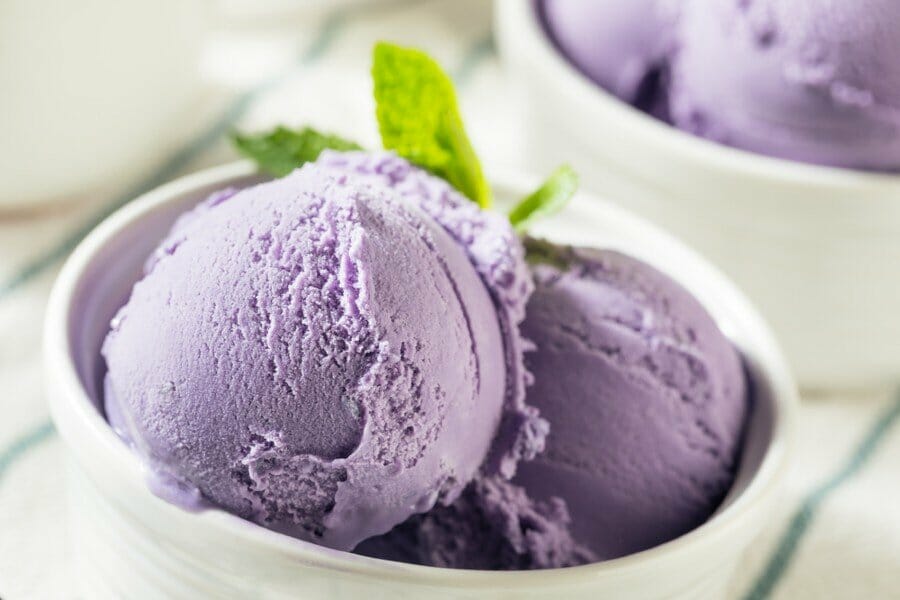
How to make ube ice cream at home
Ingredients
- 2 cups heavy cream
- 1 cup whole milk
- ¾ cup granulated sugar
- ½ teaspoon salt
- 2 cups of ube puree
- 5 egg yolks
- 1 teaspoon vanilla extract
Instructions
- In a saucepan, combine the heavy cream, whole milk, sugar, and salt. Cook over medium heat, stirring occasionally, until the sugar has dissolved
- In a separate bowl, whisk together the egg yolks
- Slowly pour about ½ cup of the hot cream mixture into the egg yolks, whisking constantly, to temper the eggs
- Pour the egg mixture back into the saucepan with the remaining cream mixture and cook over medium heat, stirring constantly, until the mixture thickens and coats the back of a spoon
- Remove from heat and stir in the ube puree and vanilla extract
- Pour the mixture through a fine-mesh strainer into a large bowl and let it cool to room temperature
- Cover and refrigerate until thoroughly chilled, at least 2 hours or overnight
- Once chilled, freeze the mixture in an ice cream maker
- Transfer the ice cream to a freezer-safe container and freeze until firm, at least 2 hours
Iskrambol
A similar take on Halo-halo, but probably more random is Iskrambol.
Also known as ice scramble, this frozen dessert is very popular among children. Shaved ice is mixed with evaporated, or condensed, milk.

Next, comes a mountain of toppings including marshmallow, ice cream and chocolate syrup. Where it also differs from Halo-halo is that the shaved ice for the Iskrambol is dyed pink with food coloring.
When trying an Iskrambol, make sure to stir the ingredients together before enjoying.
Sorbetes
Along with ube ice cream and other popular varieties, there’s another type of ice cream, and more traditional too.
As you can see in its name, sorbetes comes from the word, sorbet.
It’s traditionally made using carabao milk. The water buffalo ingredient is mixed with cassava flour and coconut milk. Fruits such as mango, melon and jackfruit are added to flavor the dessert.
Listen for the bell
You can mainly find sorbetes from the street sellers that walk around with their colorful carts. They’ll typically ring a bell to let people know that they’re there.
Try sorbetes in a cup, a wafer cone, or like one of my favorite Sicilian sweets, inside a brioche bun. It’s a local take on ice cream and something you won’t find everywhere.
Filipino cakes
Filipino cakes are a unique grouping. While some reflect the recipes and textures that we’re accustomed to in the west, others embrace its traditional roots.
Cassava cake
There are some foodie moments that stick with you on your travels and cassava cake is one of mine.
This root vegetable was one of many crops that was brought to the Philippines from South America.
Traditional base ingredients of flour and butter are substituted for grated cassava, coconut and condensed milk. It’s firm and chewy in texture and the right amount of sweetness for me.
Most Filipinos enjoy eating cassava cake for merienda or as a snack. However, I found it so moreish, I could happily eat it any time of the day.
An optional topping
The classic version of cassava cake comes with a coconut-custard topping. It’s made with egg yolks, condensed milk and sugar.
I tried some with the topping but honestly preferred it without. It takes away from the texture of the cassava, which — for me — is the best part.

How to make Filipino Cassava cake
Ingredients
- 2 lbs grated cassava (fresh or frozen)
- 1 cup granulated sugar
- 1 can (14 oz) coconut milk
- 2 large eggs
- 1 teaspoon vanilla extract
- ¼ teaspoon salt
- ¼ cup cornstarch
- Banana leaves (optional)
Instructions
- Preheat oven to 350°F (180°C). Line a 9x9in square baking pan with parchment paper or grease with cooking spray
- In a large mixing bowl, combine the grated cassava, sugar, coconut milk, eggs, vanilla extract, and salt. Mix well
- In a separate bowl, mix the cornstarch with a little bit of water until it forms a smooth paste
- Stir the cornstarch paste into the cassava mixture until well combined
- Pour the mixture into the prepared baking pan and smooth out the top with a spatula
- If using banana leaves, cut a piece large enough to cover the top of the pan. Place the leaves on top of the cassava mixture, making sure they don’t touch the batter
- Bake for 40 to 45 minutes, or until the edges are golden brown and a toothpick inserted in the center comes out clean
- Let cool before slicing and serving
If you can’t find fresh cassava, frozen grated cassava is widely available at many Asian markets or online.
Leche flan
This creamy caramel flan is another memorable Filipino sweet and is a usual favorite at special occasions.
Leche flan, literally meaning milk flan, is the Filipino version of a crème caramel. Condensed milk and egg yolks are the two principle ingredients.
Where leche flan differs from a crème caramel are the molds that they use to form them. In the Philippines, the flans are poured into a tin called a llanera and steam-baked in the oven.
The result is a melt-in-the-mouth dessert with the glossy caramel syrup on top.
When traveling in the Philippines, you’d be crazy not to try leche flan.
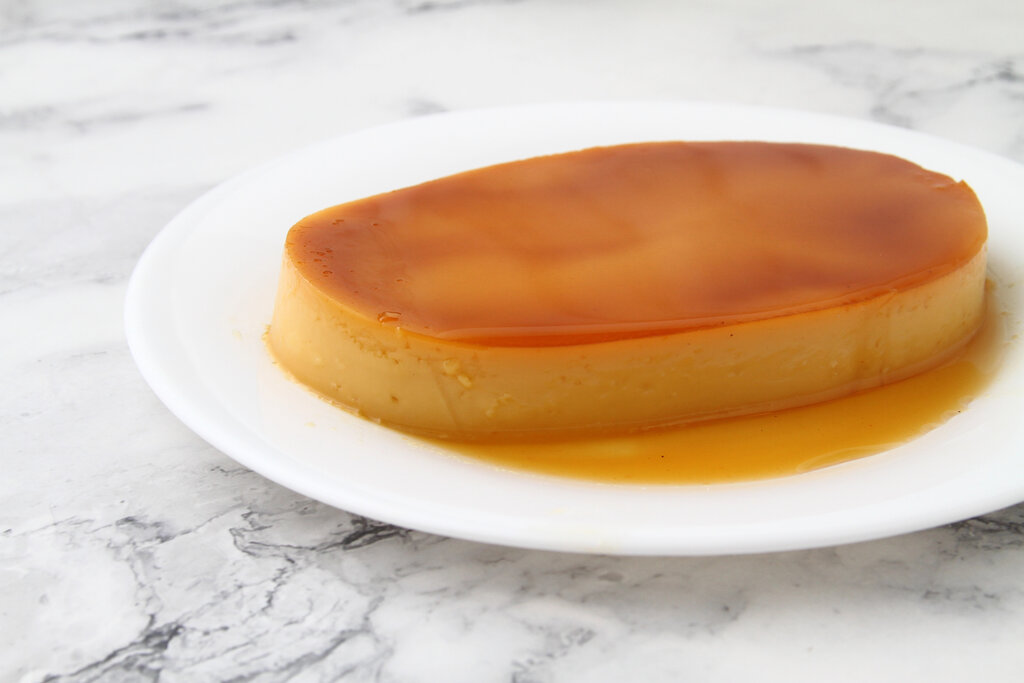
How to make leche flan
Ingredients
- 6 large eggs
- 1 can (14 ounces) of sweetened condensed milk
- 1 can (12 fluid ounces) of evaporated milk
- ½ cup granulated sugar
- 1 teaspoon vanilla extract
- a pinch of salt
Instructions
- Preheat your oven to 350°F (175°C)
- In a saucepan, melt the sugar over medium heat until it turns into a golden brown caramel. Quickly pour the caramel into a 9-inch round baking dish and swirl to coat the bottom. Set aside
- In a large mixing bowl, whisk together the eggs, condensed milk, evaporated milk, vanilla extract, and salt until well blended
- Pour the mixture into the caramel-coated baking dish
- Place the dish into a large roasting pan and pour enough hot water into the roasting pan to reach about halfway up the sides of the dish
- Bake in the preheated oven for about 45 to 55 minutes or until the center is set
- Allow the leche flan to cool to room temperature. Then cover and refrigerate until chilled, at least 2 hours or overnight
- To serve, run a knife around the edges of the dish to loosen the flan. Place a serving platter upside down on top of the baking dish and quickly flip over to release the flan
Buko pie
The first time I tried a slice of buko pie was in the city of Tagaytay.
This traditional coconut pie is a must try and is seriously delicious. It’s packed full of coconuts, a custard base and plenty of calories.
Buko are baby coconuts and the filling is made from the flesh along with sweet condensed milk. The filling is poured into a pastry crust and baked.
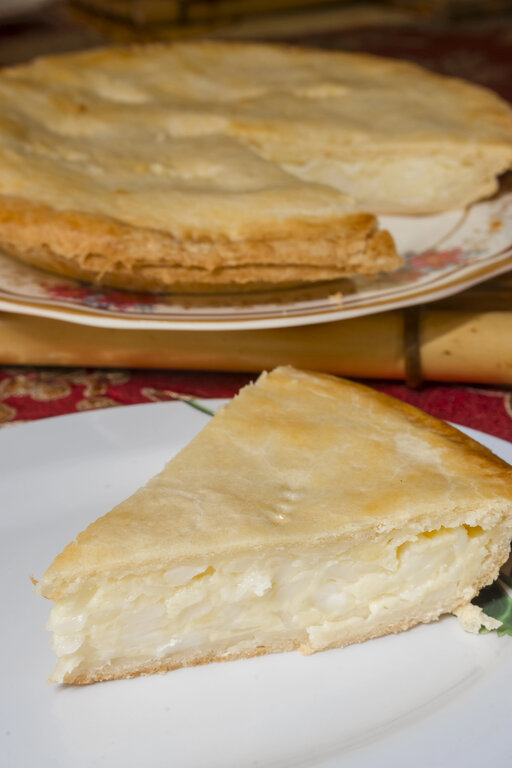
Because the pies are regularly made in this city, eating buko pie is one of the best things to do in Tagaytay.
The pies have also gained an international following as you can now find buko pie outside the Philippines.
Los Angeles, California, is home to several places where you can sit down to an authentic slice of the Philippine pie.
Ube cake
Philippine mamon are light and fluffy sweet sponge cakes. They also typically form the basis for many Filipino sweets like ube cake.
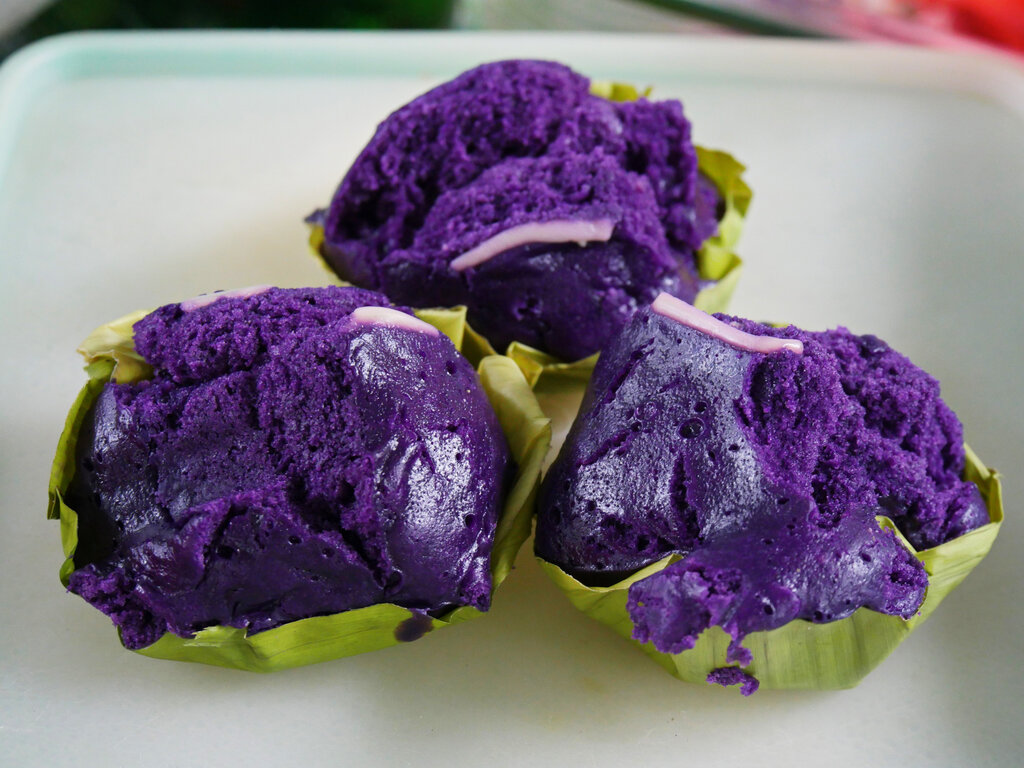
Mashed purple yams are mixed together with flour, eggs, baking powder, vanilla, milk and cream of tartar. Food coloring may sometime be used to make the purple color stand out more.
Ube cake is moist in texture and a delight to eat. Its frosting consists of whipped cream or buttercream, which is also flavored with ube.
Filipino rice cakes
As mentioned earlier, glutinous rice is a main ingredient in many Filipino desserts.
These rice-based treats fall under a category Filipinos call kakanin: a simple grain with many uses, and something you'll see a lot on your Philippine food travels.
Bibingka
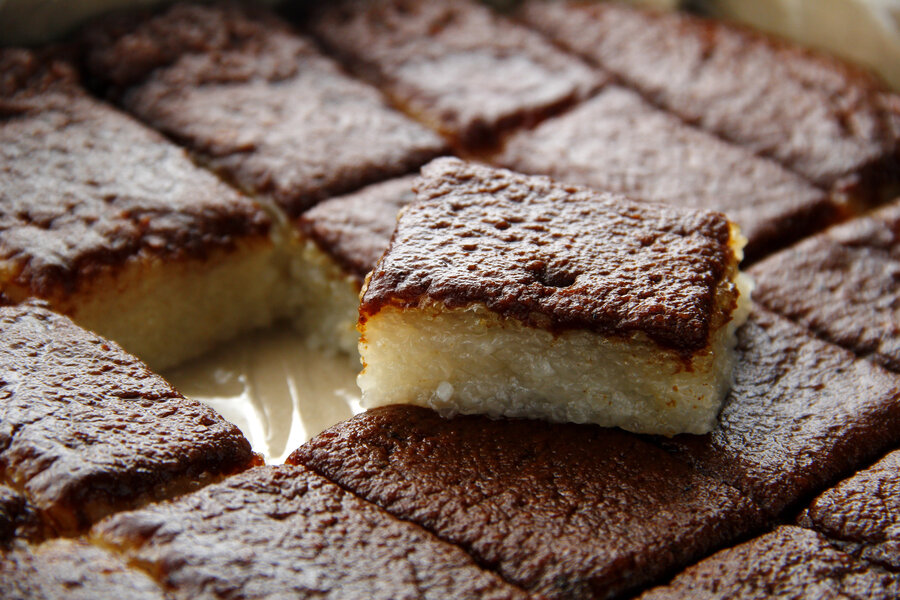
As well as being a traditional cake, bibingka is a symbol of the Christmas period. This baked glutinous rice cake is something that many Filipinos will eat after attending Midnight Mass.
The cakes are also sold outside churches during the season for church-goers to eat for breakfast.
Steamed and filling
Along with glutinous rice, coconut milk, or water, is added to the mix. The traditional way of cooking bibingka is in a banana leaf and over pre-heated coals.
Modern — and less time-consuming — methods use the banana leaf, but replace the coals with an oven. While you can eat bibingka as it is, many like to add toppings such as sugar or grated coconut.
I tried a bibingka when it was still warm and with no toppings. It has a soft spongy texture with a slight hint of sweetness.
Puto
I need to address the (rude) elephant in the room before continuing. Puto has no association with the word puta meaning, among other things, a promiscuous woman (!).
These Filipino steamed rice cakes are innocently delicious and a staple in the country.
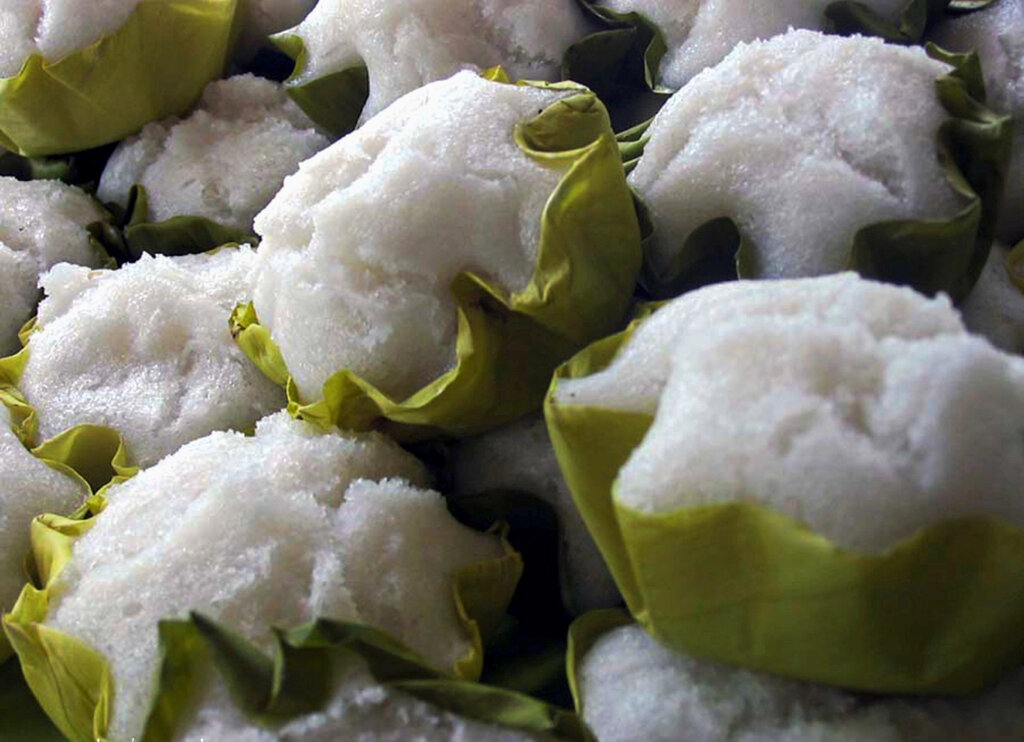
Made from a slightly fermented rice dough, you can eat puto as they are, or to accompany savory dishes.
There are many varieties of puto, some of which include toppings like cheese and coconut. Personally, I tried one without any toppings and enjoyed its simplicity.
The texture is unsurprisingly rice-like, and with a subtle sweetness that gives it an enjoyable edge.
Biko
Simple yet sweet, this Filipino rice cake is another popular dessert. Very easy to make, biko consists of just 3 ingredients: glutinous rice, coconut milk and brown sugar.
Once the rice is cooked, it’s mixed with the milk, brown sugar and is then baked. After it has cooled, the biko is cut into squares and served.
Other variations of biko include ube and pandan leaf. The latter gives the biko a vibrant green color from the leaf extract.
Suman
If traditional Filipino sweets are what you’re looking for, underline this next rice cake.
Suman is another glutinous rice cake, which is cooked in coconut milk and then wrapped in a banana leaf.
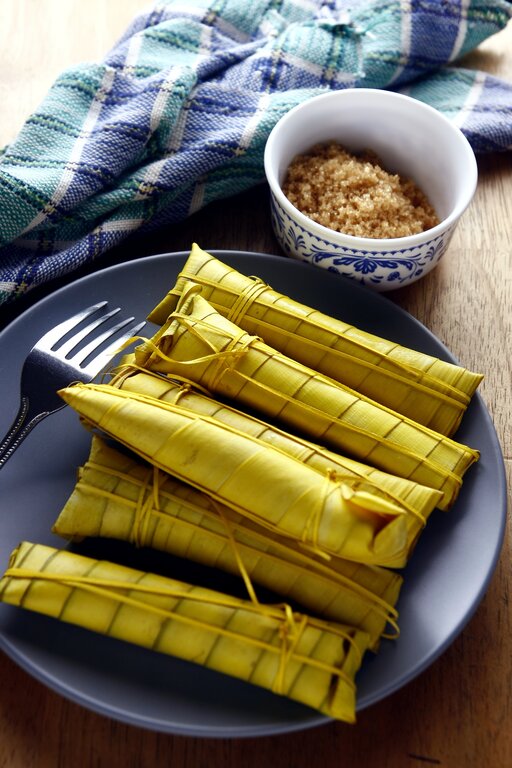
The cake’s steamed and then sprinkled with brown sugar once cooled. Some variations substitute the rice with cassava.
I found suman to be blander than the other Filipino rice cakes I’d tried. Even with the sugar sprinkling, for me, it was a little lacking.
Bilo-bilo
This next Filipino sweet is a soup-dessert hybrid.
Bilo-bilo, meaning rice flour balls, are small bite-sized chewy balls. The flour is mixed with water to create the namesake ingredient.
Once ready, the balls are placed in a pan containing coconut milk and sugar. Other ingredients like bananas, tapioca pearls and jackfruit are then added to the pot.
Recipes for bilo-bilo will differ depending on where you are in the country. I was offered a hot bowl of the chewy rice ball coconut soup and lapped up every last drop.
Filipino banana desserts
The yellow curved-shaped fruit are big news in the Philippines. With four varieties grown in the country, they’re a popular ingredient in many Filipino sweets.
Turon
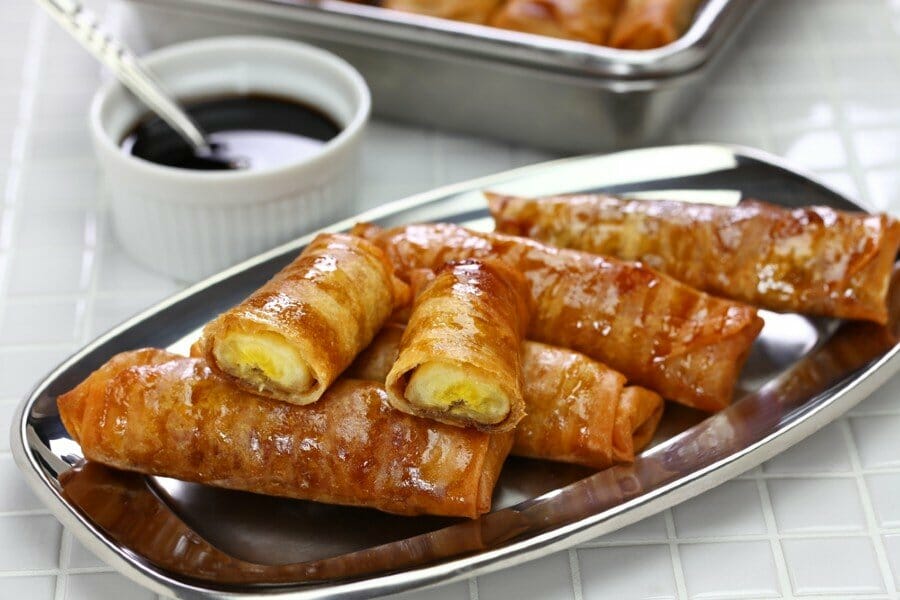
What do you get when you take a banana, a spring roll wrapper and some brown sugar? These 3 simple ingredients make up a sinfully sweet Filipino street food called turon.
For Filipino sweets like turon, they’d use a cooking variety of banana like Saba or Cardaba.
Thinly sliced bananas are dusted with brown sugar, before being wrapped in a spring roll pastry and then fried.
Needless to say, turon is best eaten when freshly made — just try not to burn your tongue.
Fruity variations
While bananas are the most popular filling for turon, you can also find versions with jackfruit or even mango.
Another unique filling is sweet mung beans, which you can find in the Malabon area of Manila. These differ from the classic banana variety in that they’re triangular-shaped, not rectangular.
How to make Filipino turon
Ingredients
- 4 ripe bananas, peeled and sliced into halves lengthwise
- 8 spring roll wrappers
- ¼ cup brown sugar
- cooking oil for deep frying
Instructions
- Lay out a spring roll wrapper on a flat surface and place a banana slice near one end
- Sprinkle some brown sugar on top of the banana
- Roll the wrapper over the banana and tuck in the sides, then continue rolling until you reach the other end of the wrapper. Repeat with the remaining ingredients
- Heat the cooking oil in a deep frying pan or wok over medium heat until it reaches 375°F (190°C)
- Gently place the wrapped bananas in the hot oil and deep fry for about 2-3 minutes, or until golden brown and crispy on all sides
- Remove the turon from the oil and transfer to a plate lined with paper towels to drain excess oil
- Eat while still piping hot
Banana cue
The clue is in the name for the main ingredient in this Filipino sweet. Banana cue, also known as 'Banana Q' is another popular street food.
'Cue' is an abbreviation of barbecue, given the way in which the bananas are cooked.
Similar to turon, Saba bananas are coated with caramelized brown sugar and then deep fried. Unlike turon, the bananas are left whole, and not sliced.
The banana cue is served on skewer sticks, similar to how they would serve a traditional meat barbecue.
Other cue varieties include sweet potato, which is known as camote in the Philippine language.
Sweet bananas
You may have become a bit of an expert with Filipino bananas if you’ve reached this point. This simple sweet again uses the variety ideal for cooking, the Saba banana.

The bananas are cooked in a sugar syrup with water until they’re soft and ready to eat. You can easily eat them on their own, or they can be added to other Filipino desserts like halo-halo.
Adding the sweet bananas over milk and shaved ice creates another dessert called saba kon-yelo.
Filipino corn-based desserts
Another interesting ingredient popular in Filipino sweets is corn. It may sound a little unorthodox, but I've tried several corn-based Filipino desserts and they were all delicious.
Maíz con hielo
The first one I tried was maíz con hielo. It comes from the Spanish and translates to corn with ice.
It’s a simpler variation of halo-halo, consisting of shaved ice, creamed corn, sugar and evaporated milk.
To add an extra touch to the maíz con hielo, ask for a scoop of vanilla ice cream. Mix all the ingredients before eating, and enjoy.
Maja blanca
The more Filipino sweets you try, the more you recognize its Spanish influence.
Take the maja blanca. This coconut milk pudding is an adaptation of the Spanish blancmange called manjar blanco.
Its form and texture also remind me slightly of a panna cotta, just without the coconut flavor.
Where the two differ is of course in the ingredients. Coconut milk is used over cow’s milk, and kernels of corn, evaporated milk and sugar are added to the dish.
It’s then put in the fridge to set for a few hours, before being ready to serve.
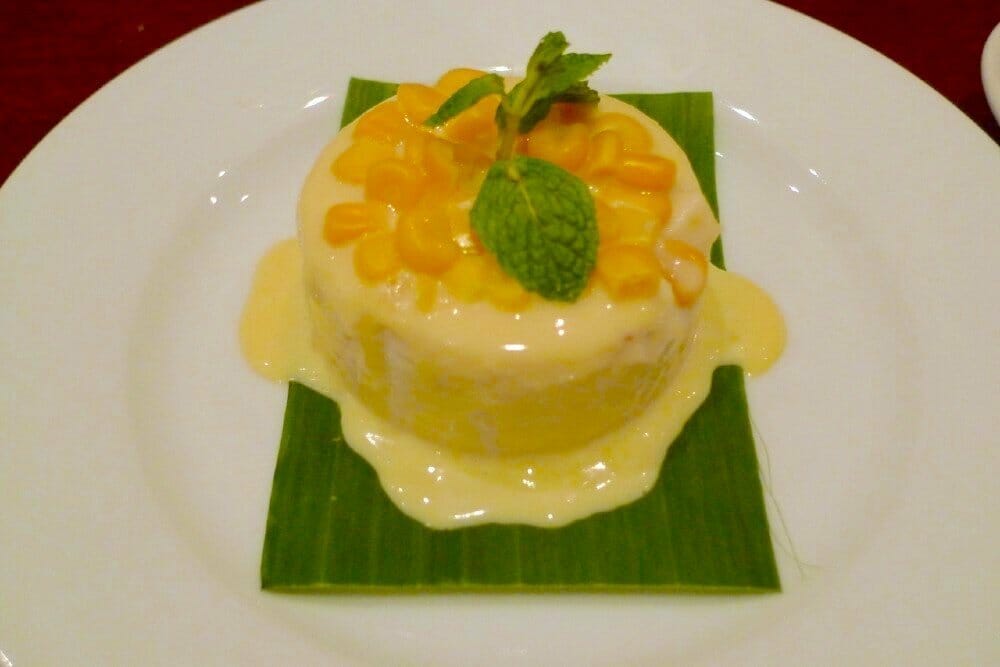
The finishing touch
The maja blanca is usually finished with some brown coconut cream curds called latik. It gives the dessert an extra layer of texture.
Maja blanca isn’t something they serve everywhere. The Filipino sweet is usually served during the holidays and more so at Christmastime.
Binaki
This next Filipino sweet has strong similarities with South and Central American cuisine.
Binaki are steamed corn cakes served in corn husks. Its appearance instantly reminded me of tamales, but inside is a sweet rather than savory dish.
You’ll sometimes see the dessert referred to as a 'sweet corn tamale.'
You can’t find binaki everywhere in the Philippines, only in Cebu and the northern Mindanao region.

Making binaki
Grated cornmeal is mixed with milk, butter, baking powder and sugar. Condensed milk is sometimes added as is cheese.
The finished compound is wrapped inside a corn husk and steamed until the cake is firm. Binaki is unique as it’s unusual.
However, if you’re in the Philippines and you get the opportunity, I’d say to give it a go. It’s probably one of the most traditional Filipino desserts I tried when I was there.
Filipino desserts from Spain
The country’s Spanish period plays a huge role in the Philippines cuisine and culture. Under Spanish rule for over 300 years, signs of its former colonial past are everywhere.
Alfajores
The Philippines love affair with sweets doesn’t stop at icy concoctions and glutinous rice cakes.
Alfajores are butter cookies with a dulce de leche (caramel) filling and finished with a dusting of powdered sugar.
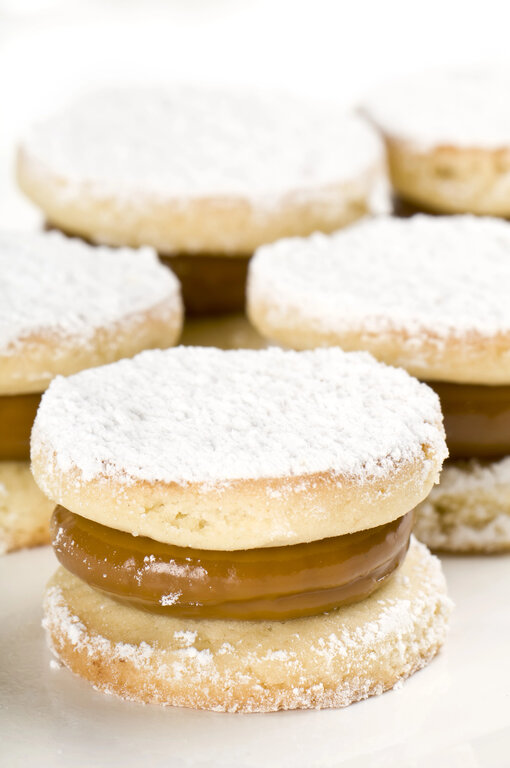
The cookie comes from the Spanish version of the same name — and filling. Where it differs from the original are the toppings.
Filipino alfajores are typically only dusted with powdered sugar. Spanish alfajores can be topped with powdered or glazed sugar, coconut or even chocolate.
Brazo de Mercedes
A Filipino dessert that dates to the Spanish period, this custard-filled meringue roll is dangerously delicious.
Brazo de Mercedes literally means 'Mercedes’ arm', but its roots are more religious in nature. It actually refers to the ‘Arm of our Lady of Mercy, or Mary, mother of Jesus Christ.
The meringue is made from egg whites, cream of tartar and sugar. For the custard filling, egg yolks and condensed milk are mixed together, along with vanilla extract.
Once the meringue is baked, the custard is spread on one side before being rolled into a cylinder shape. The Brazo de Mercedes is then chilled and dusted with powdered sugar before being served.
Different variations of Brazo de Mercedes include ube, pandan and chocolate.
By holy order
Brazo de Mercedes is a type of pionono. These are pastries or cakes that were named after Pope Pius IX, his Spanish name being Pionono.
Piononos are also found in Spain, several South American countries, Cuba and Puerto Rico.
Where they differ from the Filipino version is in the spelling and fillings. Some piononos can also be savory, but in the Philippines, they’re all sweet.
Polvorón
The best way I can describe polvorón is a powdery soft crumbly cookie. The Filipino adaptation of the Spanish biscuit is popular all year round, but more so at Christmastime.
Made of flour, sugar, butter and powdered milk, you can find polvorón everywhere. A well-known brand in the Philippines is Goldilocks, who sell the cookies in gift-size bags.

Small differences
An important difference to note between the Spanish and Filipino version is the ingredients.
While almonds constitute the Spanish recipe, the Filipino polvorón makes use of their local ingredients.
These include toasted rice grains called pinipig, cashew nuts and of course, ube. I tried a more modern cookies-and-cream-flavored polvorón and was pleasantly surprised.
Pastel de Camiguin
Along with its volcanoes and lush green landscapes, the province of Camiguin is known for something sweeter.
Located in southern Philippines, the province is famous for its delicious pastel (cake in Spanish).
However, the name 'pastel' is a little misleading, given that pastel de Camiguin is really a soft bread bun.
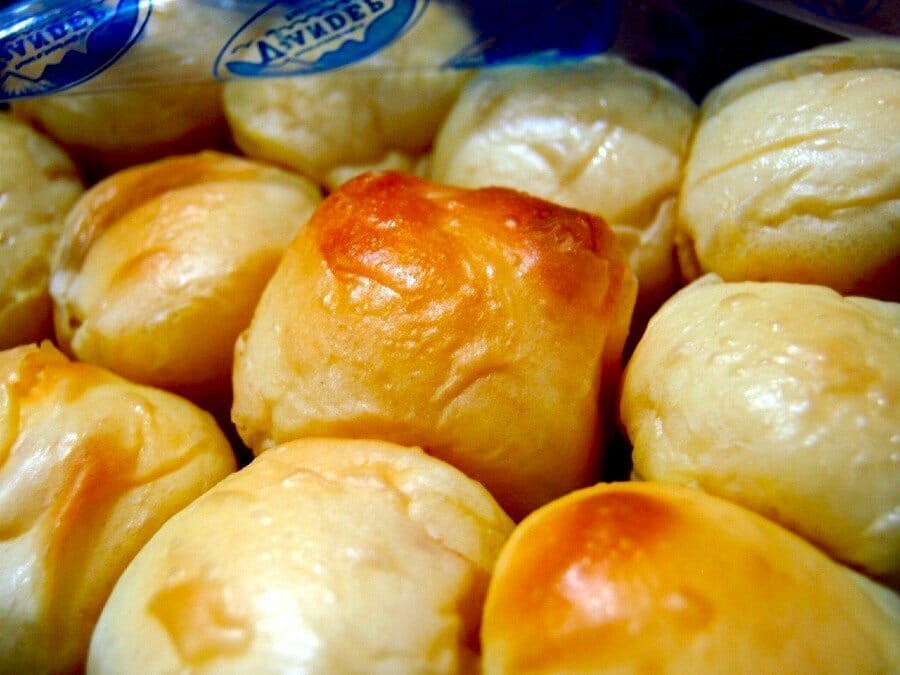
Inside, is a creamy custard filling called yema (yolk in Spanish) made from egg yolks, condensed milk and sugar.
Other Pastel de Camiguin fillings range from ube or chocolate to mango or jackfruit. It’s soft, chewy and super delicious.
Map: where to find regional Filipino desserts
A few of these desserts are tied to specific places in the Philippines; they’re not something you'll find everywhere.
Here's a quick map of where to go if you want to try them at the source.
FAQs on Filipino desserts
Halo-halo: a mix of shaved ice, evaporated milk, and sweet toppings like red beans, coconut and leche flan.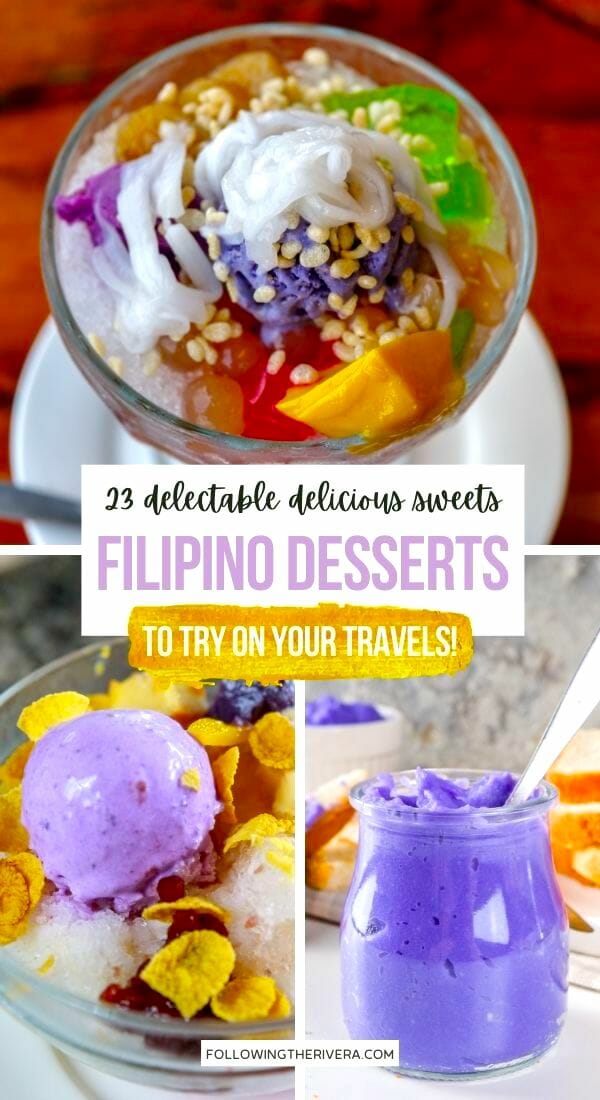
There isn't just one popular dessert in the Philippines. Some of the most popular Filipino desserts include halo-halo, ube ice cream, cassava cake and leche flan
A purple yam used to flavor and color many Filipino desserts, with a nutty, mildly sweet taste rather than an overly sugary one.
A category of Filipino rice-based desserts, including bibingka, puto, biko, and suman, usually made with glutinous rice and coconut milk.
Yes, though often less sweet than Western desserts. Many rely on natural sweetness from coconut, rice, and condensed milk rather than added sugar.
Alfajores, Brazo de Mercedes and polvorón all trace back to Spanish recipes, adapted with local Filipino ingredients like ube and pinipig.
No. Halo-halo uses evaporated milk with fruit and jelly toppings, while Iskrambol is a simpler, pink-dyed shaved ice mixed with condensed milk and toppings like marshmallow and chocolate syrup.
Did you enjoy your journey through the world of Filipino desserts? Which of these would you most like to try? Let me know in the comments below.
Disclosure: This post may contain affiliate links, which means I may receive a commission if you click a link and purchase something that I’ve recommended. Thank you for your support.
Like this post? Pin it!



Wow - this looks delicious! I did not know that the Filipinos have such a sweet tooth! I guess I would gain weight while travelling there. But I wouldn`t mind that much, because it would be worth it!
They have really delicious desserts and it's worth every calorie 😀
Wow amazing Filipino food.
There are some delicious desserts
I’m a foodie, and even more, a sweet tooth just like my husband. We both loved it. Great post
glad to hear it!
They are so colorful! I read over a couple of them and decided that I would have no problem trying any of them! It is nice to have a little insight into the dessert menu for when I visit one day 🙂
They really are, and so unique in flavor and texture too. I hope you get to try a few someday
Wow they all look so good. I don't see many Filipino desserts here in Singapore, but I think I'll have to look harder!
Give some a go if you find any there 🙂
My friend has mentioned some of these to me previously and I am SO intrigued!
Trust me, the ones I tried were so delicious!
All of these sweet treats and desserts are so mouth-watering. Would one be able to try most of them in Manila?
I tried several and yes, they're delicious! You can try most in Manila, but some, like the Pastel de Camiguin is regional.
Halo halo will always be my all time favorite. I do like leche flan when it is not made very sweet and also Buko pie! I miss Philippines so much!
The leche flan is amazing, and the one I tried wasn't too sweet 🙂
YUM.... these mentioned desert looks so delicious.......especially the Halo-halo looks so yummy.... wanna have once....
It was so refreshing!
On this list has so many wonderfully delicious idea for something a little sweet. I'd love to try and recreate some of these.
The banana desserts are probably the most doable 🙂 I'd love to know if you try making some
The Halo Halo and casava cake were jsut am amazing. I had tried this a few years ago when I visited phillipines. There are some dishes on this list I have just heard if via your article. Would love to try some of these the next time I come there.
I tried both and they were so good! I wouldn't mind having some now!
I've never been fortunate enough to try a Filipino dessert, they look delicious! The Ubo ice cream looks so good, I'd love to try it.
I'm glad I tried it, it's very unique 🙂
Ooh this gives me a great list for when I visit Philippines! I'm a foodie, and even more, a sweet tooth, so this is really great for my food planning. haha!
Perfect! I hope you get to try some of these 🙂
Oooh. I love a good pastry; especially when it is fresh out of the oven and warm. Yummy!!!
You and me both!
I miss eating outside. I miss indulging in these yummy foods. <3 Looking forward to better days...
Hang in there, it'll happen again 🙂
Ok, no you left me with my mouth watering! I love to learn about other culture's culinary specialities even more if they are desserts! Thank you!
You're welcome! Glad you enjoyed it
So many delicious sounding desserts. I want to try them all.
I tried quite a few and can confirm they're delicious!
I love your post! You made me appreciate our very own Filipino desserts and snacks more! I was just taking these things for granted as I can always grab any one of them if I so wish. You made me crave for most of them. As a Filipina, I would honestly tell you that I have not yet tried the Binaki as well as the Alfajores. Meaning, I have not been to the place/island that serves those specialties! I need to travel within more when it becomes safe and doable again.
Aw thank you! I tried so many delicious desserts there and they were so interesting too. The history behind these sweets are equally as fascinating.
Wow these are so beautiful. The Filipino cookies look out of this world and right up my street! My husband would choose the cassava dessert. If ever there was a reason to travel this is it!
The cassava cake was my favorite!
These all sound so delicious! I have heard a lot about ube, but I have never had it before. It would be fun to try.
It's definitely one to try!
Oh my gosh, this all looks amazing! I love desserts, so I'd want to try it all.
They're all so good too!
Oh wow what a lot of yummy desserts! I think the Ube ice cream and Buko cake are my favourite but I wouldn't say no to trying any of them!
The buko pie is so delicious!
all look so delicious, it's always fun try new food, have had a few of this from my friend who loves baking.
That's great to read!
These all sound delicious. To be honest I hadn't heard of most of them before but it wouldn't stop me from trying them!
Trust me, I tried a few and they were so good!
These all look so delicious. The color of the ice cream is so vibrant. Such an interesting list.
And it's natural coloring too 🙂
These all look so yummy! I would love any of the banana ones and especially the alfajores.
All of the banana desserts are delicious 🙂
I am HERE for this. I love sweet things and desserts are my absolute favorites. I would like to try ALL OF THESE!
Bookmark it for the future, they're all so good 😀
Glad to learn about so many Filipino desserts here. I may try to make some of these during the lockdown.
That's a great idea! Any with the bananas shouldn't be difficult 🙂
Everything looks so delicious! One of my roommates in college was Filipino and she always made the yummiest foods.
It was a real culinary treat!
I would not know where to start or end with this list lol. Puto seems like a very interesting dish, so too the cassava cake. There is something very similar we make in Barbados, but we call it ' pone', so I'd definitely like to try the Filipino equivalent.
The cassava cake was my favorite, it's so good!
I used to live in Singapore and this made me really miss asian desserts thanks for sharing these yummy treats!
They were so interesting and very yummy too!
The colour on the icecream is amazing. They look bursting with flavour
It's such a unique yet delicious flavor
Those all look so yummy. Thanks for sharing.
You're welcome.