
What not to do in Italy: 27 mistakes to avoid, from a 10-year resident
Last updated on September 7th, 2026.
I’ve lived in Italy for over 10 years, splitting my time between the north and Sicily.
And during this time, I’ve learned that fitting in goes far beyond just learning the language.
For first-time travelers, visiting Italy can feel like a balancing act between exhilarating discovery and cultural exhaustion.
Most visitors worry about the big things like budgeting or transportation. But it’s the unspoken Italian etiquette and local customs that truly define your experience.
Rather than second-guessing yourself, use my local expertise to navigate the country with confidence.
To help you have a seamless journey, I’ve put together this definitive list of what not to do in Italy.
This 2026 guide covers 27 essential mistakes to avoid, from dining faux pas to the latest train travel rules.
My local tips will ensure that you avoid common tourist pitfalls so you can experience the true Italy, as a local would.
Use this helpful resource to plan your trip to Italy.
Jump to:
If you’re in a hurry, here’s a quick at-a-glance summary of the most important Italian transit and dining rules.
| Topic | The 'don't' | The 'do' |
| Dining time | Expect dinner at 6.30pm | Book for 8pm (earlier in the Dolomites, later in the south) |
| Payments | Rely 100% on credit cards | Have €10 to €20 in cash |
| Train travel | Forget to validate paper tickets | Validate paper tickets! |
| Steak (Florence) | Order ben cotta (well done) | Order al sangue (rare/medium rare) |
| Taxis | Hail from the sidewalk | Find a fermata taxi (taxi rank) or use an app |
Ordering coffee in Italy
When should you not drink a cappuccino in Italy?
In Italy, try not to order a cappuccino after 11am or following a meal. Why? many Italians consider milk-based coffees a breakfast-only ritual, as they believe hot milk hinders digestion after lunch or dinner. To blend in like a local, stick to a simple espresso or caffè macchiato for your afternoon, or late morning, caffeine fix.
While you may have read that these 'rules' are softening, they’re still deeply rooted in the local culture.
The digestion factor
Most tourists miss this, but the 'no cappuccino after 11am' rule isn't about being elitist, it’s functional.
Many Italians view a large cup of warm milk as a meal in itself, and they see drinking it after a plate of pasta as a digestive disaster.
Personal experience
When I first moved here, I once ordered a cappuccino at 4pm. I thought nothing of it only until after I received a raised eyebrow look from the barista.
Now, after living between northern Italy and Sicily, I understand it better. There's nothing stopping from you ordering a cappuccino whenever you want, but the Italian way really does makes sense.
What to do instead
If you need that hit of milk in the afternoon, order a caffè macchiato. It gives you that touch of froth without the social faux pas of a full-sized cappuccino.
🎥 Watch: if there's one thing you should never do in Italy it's this
What should you expect when ordering a coffee in Italy?
When you order a simple caffè in an Italian bar, you’ll receive a single espresso, a short, concentrated black coffee. Don’t expect a large 'drip' or 'long' coffee. If you prefer a diluted version, be sure to ask for a caffè Americano, which is espresso served with a separate small pitcher of hot water.
The caffè standard
Most tourists miss this, but the word caffè is synonymous with espresso here. Ask for a latte and you’ll likely be served a glass of cold milk.
For coffee with milk, always ask for a caffè latte or a cappuccino.

Don't fall for 'doppio' scams
Be wary of tourist-trap menus, especially near major landmarks like the Vatican or the Colosseum, offering 'doppio cappuccinos'.
In 2019, two tourists were at a cafe near the Vatican and fell victim to the scam. They paid €81 ($96 /£71) for 2 burgers and 3 coffees (2 doppio cappuccinos and 1 ‘doppio Americano).
In authentic Italian coffee culture, a doppio (double) only exists for espresso.
Ordering a double of any milk-based drink is often a red flag to predatory establishments that you're a tourist. The result? Paying inflated prices for standard goods and services.
⏩️ Read more: scams to avoid in Italy
Why does coffee cost more when you sit down in Italy?
Italian bars operate on a two-tier pricing system: al banco (at the counter) and al tavolo (at the table). Drinking at the counter is quick and with fixed low prices. Once you sit down, you’re paying for service and the 'real estate' of the seat, which can double or triple the price of your drink.
The price gap
An espresso at the counter typically costs around €1.10 to €1.20. Compare this to a tourist hotspot like St. Mark’s Square in Venice and that price can jump significantly.
📌 Lisa's tip: check the listino prezzi (price list) usually displayed near the bar. It should state the different prices for standing versus sitting.
If you’re on a budget but want the Italian experience, stand at the bar with the locals.
Tips on eating in Italy
Should you put Parmesan cheese on fish in Italy?
You should never ask for Parmesan cheese on a dish with fish or seafood in Italy. Doing so is considered a major culinary faux pas that masks the fresh and delicate flavors of the sea. While cheese is a staple for meat and vegetable pastas, keep it away from your frutti di mare.
Outside of Italy, cheese is often used as a universal topping. Here, however, it’s seen as a distraction from the quality of the catch and it's just plain wrong!
Have I made this faux pas in Italy?
In a nutshell, yes!
I’d no idea it was so frowned upon when the waiter asked me if I wanted Parmesan on my seafood pasta. It was only when my husband asked me if 'I was I sure' that I realized it wasn’t the norm.
Now when dining with my Italian family, I follow this rule: if it comes from the water, the cheese grater stays put.

What do Italians typically eat for breakfast?
A traditional Italian breakfast is strictly sweet, typically consisting of a brioche (croissant) or pastry and a coffee. Don’t expect to find savory items like eggs or bacon in a local bar. While international hotels often provide American-style cooked breakfasts, the authentic Italian start to the day is a quick, sugary affair.
Depending on where I am in Italy, the breakfast pastry changes. In the north, it's a buttery brioche. In Sicily, you might see a brioche roll (brioche col tuppo) served with a refreshing granita Siciliana.
📌 Lisa's tip: If you absolutely need eggs to start your day, check your hotel’s breakfast menu in advance. Local neighborhood bars will rarely have the facilities to cook them for you.

Is it okay to use ketchup on pasta or pizza in Italy?
You should never put ketchup on pasta or pizza in Italy. Italians see ketchup as a condiment for fries. Using it on traditional dishes is considered an insult to the quality of the ingredients and the authenticity of the recipe. Most traditional trattorias won’t likely have ketchup in the kitchen to offer you.

The boots-on-the-ground perspective
I’ve seen some tourists reach for the ketchup, only to be followed by confused looks from the staff.
Authentic Italian sauces are built on a foundation of fresh tomatoes, olive oil and herbs. To put it simply, adding a sugary, vinegar-based condiment like ketchup ruins the flavor.
🎥 Watch: things not to do in Italy
Dress decorum in Italy
Can you wear flip-flops in Italy?
You should only wear flip-flops at the beach, the pool or inside your hotel room in Italy. Wearing thong style flip-flops in city centers like Rome immediately marks you as a tourist. Furthermore, they’re functionally dangerous when walking on Italy's uneven, historic cobblestones like pietra serena in Florence.
As a resident, I can tell you that many Italians value bella figura (appearing well-presented). Even in 95°F (35°C) heat, locals will choose leather sandals or stylish sneakers over flip flops (in city centers).
Safety warning
Fashion aside, walking in Florence or the ruins of Pompeii in thin flip-flops is a recipe for a twisted ankle.
If you want the open feel, pack a pair of supportive leather sandals like Birkenstocks. Many Italians wear them in summer (as do I) and they’re acceptable in the city.
See What to wear in Italy as a local for a more detailed breakdown.

What is the dress code for churches in Italy?
The mandatory dress code for all Italian churches and cathedrals is covering both your shoulders and your knees. This applies to all genders. If you’re wearing a tank top, miniskirt or short shorts, you'll likely be denied entry to major sites like St. Peter’s Basilica or the Florence Duomo.
The poncho trap
During my visit to Palermo Cathedral, I, alongside other tourists, paid €1.50 ($1.87/£1.31) for a disposable poncho because I wasn't prepared. Not only was it unflattering but it was also bad for the environment. Lesson learned.
N.b. in some high tourist areas, ponchos cost €2 ($2.3/£1.75).
📌 Lisa's tip: always carry a lightweight linen scarf or pashmina in your day bag. You can quickly tie it around your waist to cover your knees or drape it over your shoulders before entering. It allows you to stay cool in the sun while remaining respectful (and photo ready) inside the Duomo.
Travel expectations & transport
How do you get from Venice Airport to the city center?
To reach Venice city center from Marco Polo Airport, you must take a separate transfer to the water bus (vaporetto) or bus terminal. The airport is not in the city. Your options include the Alilaguna water bus (1 hour), the ATVO express bus to Piazzale Roma (20 mins) or a private water taxi. Pre-booking tickets online is highly recommended to avoid long queues at airport kiosks.
Many of my clients visiting Venice are shocked to find that Venice airport is actually on the mainland.
If you don't pre-book the Alilaguna or bus, you'll spend your first hour in Italy standing in a humid ticket line. Get your Venice bus tickets in advance so you can walk straight to the dock.
| Method | Best for | Cost (approximately) | Time to San Marco |
| Alilaguna | Airport to hotel | €15 | 1hr 15mins |
| ACTV bus | Budget to Piazzale Roma (Venice) | €10 | 20 minutes |
| Water taxi | Luxury travelers/groups | €120+ | 30 minutes |
Can you hail a taxi on the street in Italy?
No, you can’t hail a taxi on the street in Italy. You must either go to a designated fermata taxi (taxi rank) or call a local radio-taxi dispatch number. While Uber exists in Rome and Milan, it’s primarily Uber Black (luxury cars). This service is significantly more expensive than standard city white taxis.
I’ve seen many travelers standing on the curb in Rome or Milan waving at passing taxis only to be ignored.
It’s not that drivers are being rude or driving past you on purpose, it’s simply the law here. In Italy, taxis are highly regulated and can only pick up passengers at official stands or via a radio dispatch.
⏩️ Read: the complete guide to taking taxis in Italy

If you’re at a restaurant or hotel, the easiest way to book a taxi is to ask the staff to 'prenotare un taxi.' You can even do this at services like hairdressers or beauticians (speaking from experience!)
Services will call their local preferred line and a car will typically arrive in under 5 minutes. If you’re out and about, look for the bright orange signs. Waiting there is the only way to guarantee a taxi ride without making a phone call.
🎥 Watch: what ordering an Uber looks like in Italy
What are ZTL zones and how can you avoid the invisible fine?
ZTL stands for Zona Traffico Limitato. These are restricted driving areas in almost every Italian city center monitored by high-tech cameras. If you drive past a varco attivo (active gate) sign without a resident permit, a fine is automatically generated. These invisible tickets are often mailed to your home address 6 months after your trip, along with rental car admin fees.
I call this the 'invisible fine' because you won't even realize you've done anything wrong at the time. There are no flashing lights or a police car to pull you over. You simply drive into a historic center and a camera snaps your license plate.

Most travelers only find out about the mistake 6 months to a year later when a €100+ fine arrives in the mail.
If you’re staying at a hotel inside a ZTL, ask them to whitelist your license plate number. Otherwise, keep your eyes peeled for the white circular signs with red borders on the road. If you see one, don't enter.
⏩️ Read: Tuscany ZTL fines guide
Do you still need to check in for digital train tickets?
As of late 2024, Trenitalia has moved to an automatic validation system for Digital Regional Tickets. You no longer need to manually check in or validate your ticket via the app before boarding. Your digital ticket is valid for the specific train and time indicated on your receipt. It makes the process much simpler for travelers.
This is a good example of how Italy is modernizing.
For a while, the manual check-in on the app was a major stress point for travelers (and a source of many fines). Now, the process is seamless.

📌 Lisa's tip: While you don't need to check in, make sure your phone has enough battery to show the QR code to the conductor.
Also, remember that this auto-validation only applies to digital tickets. If you buy a physical paper ticket from a machine, you must still stamp it in the green or yellow validatrice machines. They’re located inside the station and on the platform. Remember to do this before you board the train.
What are the typical meal times in Italy?
Italians typically eat lunch between 12:30pm and 2:30pm and dinner around 8pm. Most restaurants close their kitchens between 3pm and 7:30pm. In northern regions like the Dolomites, dinner starts earlier (7:30pm). Meanwhile in Sicily, dinner starts around 9pm and restaurants often stay busy until midnight.
If you try to show up for dinner at 6:30pm, you might find the doors locked or the staff sitting down for their own family meal.
One of the biggest cultural adjustments for my friends visiting from the UK or US is the time for dinner. In Italy, we often have aperitivo around 7pm to bridge the gap.
Living between northern Italy and Sicily, I’ve noticed that the clock shifts the further south you go. In the Dolomites, the kitchen might stop taking orders around 9:15pm. While in Palermo, the party’s just getting started at 10:00pm.
If a restaurant is full of people eating at 6pm, take a closer look at the menu. It might be a sign that you’ve stumbled into a tourist trap.
What is the riposo in Italy and how does it affect travel?
The riposo is Italy’s traditional midday break, typically occurring between 1pm and 4pm. During these hours, many places close for the afternoon. They include shops, family-run restaurants and even some smaller museums, especially in Sicily and southern Italy. Travelers should plan to finish lunch by 2pm and avoid scheduling shopping trips during this afternoon window.
North vs. south
As someone who splits the year between the north and Sicily, I see how often tourists are caught off guard by the riposo.

In business-centric cities like Milan or Turin, you’ll find orario continuato (non-stop hours) at most major stores. However, once you head south or into smaller villages, the riposo is non-negotiable.
If you arrive in a small Sicilian town at 2:30pm looking for a pharmacy or a boutique, you'll find a ghost town. It’s not that they’re too lazy to open, it’s simply part of the culture.
📌 Lisa's tip: Use this time to visit outdoor monuments (like the Roman Forum or a public park) that don't have doors to close. Or, you can do as us locals do and enjoy your own brief riposo.
Should you use a credit card for everything in Italy?
While credit cards are widely accepted, you should always carry small amounts of Euros for micro payments. Many small bars, gelaterias and family-run shops have a minimum spend for card use. Or they prefer cash for purchases under €10 such as a coffee or a brioche.
Even though Italy has moved significantly toward digital payments, some places still prefer cash for smaller items.
You can pay for a €1.20 espresso with a credit card in larger cities and town centers with no issue. Digital payment systems like Satispay and Apple Pay are also accepted in many places.
Despite this, I still suggest keeping a handful of €1 and €2 coins if visiting rural areas and remote villages.

While the law technically requires businesses to accept cards, some small 'mom and pop' shops might prefer cash.
In rural areas, some could claim that their POS machine is 'broken' if the sale is for a small amount. Having cash on hand avoids any kind of hassle.
It’s not only faster for getting your coffee, but it’s also helpful for paying for things like public restrooms.
Dining & local etiquette
Can you order a well done steak in Florence?
You should avoid ordering a Bistecca alla Fiorentina well done. This specific Tuscan steak, sourced from Chianina cattle, is traditionally served rare (al sangue). Asking for it to be fully cooked (ben cotta) is often seen as a waste of a high-quality, expensive cut of meat.
We've devoured this famous Tuscan steak several times, one of the most memorable during our 2 days in Florence.
When you order one, avoid asking for your steak to be well done, or 'ben cotta.'

Bistecca alla Fiorentina should be a little pink on the inside and melt like butter in the mouth.
While this is a tip and not a diehard rule, I promise you that it's one worth following.
How do you spot a tourist trap restaurant in Italy?
Avoid restaurants where staff stand outside ushering or enticing guests to enter. Authentic Italian trattorias rely on their reputation and rarely need street touts. Other red flags include menus with photos of the food, tourist menus (menu turistico) and places in major piazzas.
The best meals I’ve had in Italy have been in tucked away places that had a menu with a basic English translation.
If a waiter is trying to sell you on the food from the sidewalk, it usually means the food can’t sell itself.
Look for where the locals are standing. If you hear more Italian than English, you’ve found the right place.
Is it safe to drink tap water in Italy?
Yes, tap water is safe, high-quality and free throughout Italy. In cities like Rome, you should use the nasoni (public drinking fountains) that provide constant, cold running water. Avoid buying overpriced bottled water at tourist stands near major landmarks. Instead, carry a reusable bottle and fill it at these historic fountains to save money.
One of the best money-saving tips for visiting Rome is to use the nasoni.
A nasone, which literally translates to big nose, is a public drinking fountain you can find across the center. Nasoni have been providing fresh, drinkable water to Romans for centuries.
The water is tested regularly and is often colder than what you’d buy in a shop. Just look for the curved metal spouts.
The only time you should steer clear is if you see a sign saying acqua non potabile (not drinkable water). Other than that, drink up, it's one of the best freebies in Italy.
What is the supermarket glove rule in Italy?
In Italian supermarkets, it’s a major hygiene faux pas to touch produce with bare hands. You must use the disposable plastic gloves before touching any items. You can find them in the ortofrutta (fruit and vegetable) and fresh bread sections. It’s considered disrespectful if you don’t use them and will likely result in a scolding from staff or fellow shoppers.
If there’s one way to immediately mark yourself as a tourist it’s by grabbing fruit or vegetables with bare hands. In Italy, food hygiene is taken very seriously.
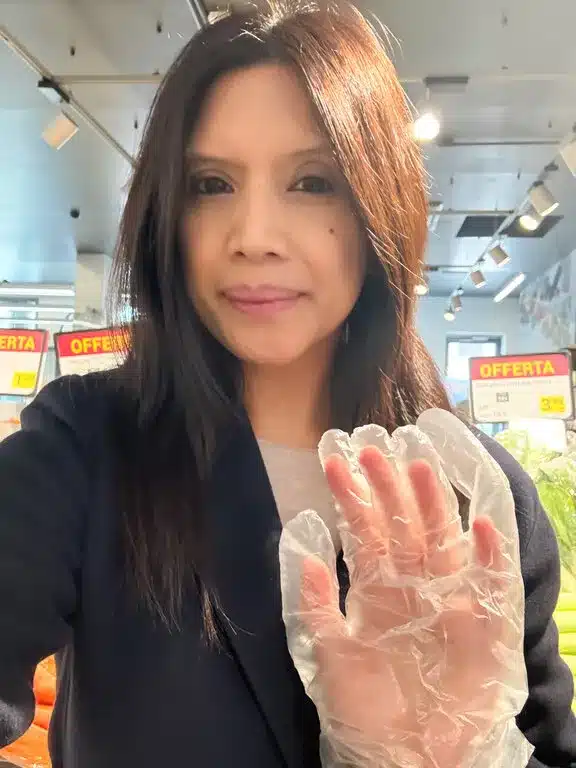
I’ve seen first-hand visitors getting scolded by a nonna or a shop assistant because they forgot the gloves.
They’re usually located next to the produce bags in the fruit and vegetables and fresh bread sections.
Put the glove on, select your produce, bag it, and then use the digital scale to print your price sticker.
Should you talk about football (soccer) in Italy?
In Italy, football is a passion and not just a sport. Avoid wearing rival team jerseys in specific cities, most notably, avoid mentioning support for Juventus F.C. while in Naples. The rivalry between Napoli and Juventus is historically intense. Keeping your affiliations private is a matter of local respect.
Football (or calcio) is the unofficial religion of Italy.
It’s a surefire way to bond with the locals but you have to read the room. I’ve seen heated debates break out just by someone mentioning a controversial referee decision.

When you’re in Naples, the locals' love for their team (and for Maradona) is visible on every street corner.
And one of the most provocative things you can do there is to wear a Juventus jersey. If you’re not a diehard fan, it's best to stay neutral or simply admire the passion from the sidelines.
If you do want to talk sports, ask a local who their favorite football player is. It’s a much safer way to start a conversation.
Language
How do you pronounce 'grazie' correctly?
The correct pronunciation of grazie (thank you) is grat-zee-eh with three distinct syllables. A common mistake among English speakers is saying grat-zee, which drops the final vowel. Pronouncing the final 'e' is a small but significant sign of respect for the Italian language that locals deeply appreciate.
It sounds like a minor detail, but as someone living here, I hear the grat-zee mistake almost daily. In Italian, every vowel is pronounced. When you drop that final 'e,' it feels unfinished to an Italian ear.
Getting the pronunciation right shows you’ve moved beyond the basic tourist phrasebook. It’s the difference between just getting by and truly connecting with the language.
⏩️ Read: The best way to learn Italian
Is it rude to say ciao to everyone in Italy?
While traditional etiquette suggests ciao is an informal greeting for friends and family, modern Italian social norms are shifting. In many casual settings (e.g. bars, trendy boutiques) it’s common for strangers to greet you with a friendly ciao. However, for formal situations or with elders, saying ‘buongiorno’ or ‘buonasera’ remains the gold standard of respect.
Living in Italy, I say, and hear, the word 'ciao' a minimum of 10 times a day.
And while it’s true that Italian social norms are changing, this ground rule still remains:
You shouldn’t greet someone you don’t know, and especially someone significantly older than you, with ciao. Instead, you should say 'buongiorno' (good morning/day) or 'buonasera' (good evening).
Does it happen? All the time. Whether it's a barista or a market stall seller, the lines between formal (lei) and informal (tu) are more blurred than in the past.

Personally, I stick to this language rule, simply because I feel more comfortable saying buongiorno or salve (formal hello).
My rule of thumb is to follow the local lead. If the shopkeeper greets you with a cheerful 'ciao!' feel free to say it back. If they greet you with a formal salve or buongiorno, stick to that.
It’s all about matching the energy of the person you’re speaking with.
| Greeting | Meaning | Best for | Timing |
| Buongiorno | Good morning/day | Entering a shop, hotel, cafe, trattoria | Morning until 4pm |
| Buonasera | Good evening | Restaurants | After 4pm |
| Salve (sal-veh) | Hello (formal) | Shops, when you're not sure which greeting to use | Anytime |
| Ciao | Hi and bye (informal) | Friends, family or if the local says it first | Anytime |
Can you rely on English in Italy?
While English is spoken in major tourist cities like Rome, Florence and Venice, you shouldn’t expect the same across Italy. Many Italians find English phonetics difficult. Learning basic Italian phrases for greetings, ordering food and asking for directions is helpful for a smooth travel experience outside larger cities.
While more Italians are now speaking English, English speakers in Italy are still the exception and not the rule.
I always advise my readers that learning some common Italian phrases will change your entire trip. Many Italians appreciate when you make the effort.
You don't need to be fluent and Italians don’t expect you to be. I still make mistakes even after years of living here. But, showing that you value their language is the best way to open doors during your travels.
General decorum in Italy
Is it rude to make sounds while eating in Italy?
Yes. Making sounds while eating or drinking (slurping pasta or burping) is considered impolite in Italian culture. Unlike some cultures where slurping signifies enjoyment, Italians value quiet, refined table manners. Maintaining silent eating habits is a big part of showing respect for your dining companions and the establishment.
Where would you place your eating and drinking etiquette on a scale of 1 to 10?
If you’re someone who enjoys making sounds when they eat, you’d probably score a 1 in Italy.
It’s something I’ve mentioned in conversation with my friends visiting Italy from Asia or the US. Slurping ramen might be a compliment in Japan, but it’s seen as the opposite in Italy.
Can you swim in the fountains or canals in Italy?
No, it’s strictly forbidden to bathe, swim or even dip your feet into historic fountains or the Venice canals. They’re protected cultural heritage sites and doing so carries heavy fines (often exceeding €500). Always use designated public beaches or lakes for cooling off.
I can wholly relate to the local annoyance with this one as I’ve seen many travelers do this.
Living here, it’s heartbreaking to see someone treating the Trevi Fountain as their personal wading pool.

It isn't just a ‘don’t, it's a legal issue. Italian authorities have zero tolerance for this now, and the fines have skyrocketed to protect these monuments from erosion and damage.
If the summer heat is getting to you, there are other things you can do to cool down. In Rome, find the nearest nasone (drinking fountain) to hydrate and splash cold water on yourself.
Alternatively, consider taking a day trip to the beaches near Genoa or to the shores of Lake Como.
Leave the historic fountains for the photos.
⏩️ Read: 3 days in Lake Como
Should you avoid eye contact in Naples?
While not a universal rule, many locals suggest avoiding direct eye contact with strangers in certain neighborhoods in Naples. While the city is vibrant and friendly, intense staring can occasionally be misinterpreted as a challenge or a provocation.
A Napoletan friend of ours first clued me in on this. While I’ve never had a personal confrontation, it’s a nuance that helps you move through the city with more ease.

This doesn't mean that you should be afraid; you just have to adopt a different street energy.
When you’re walking through the narrower vicoli (alleys), keep your gaze soft and your posture confident. If you’re constantly staring at people, you mark yourself as a distracted tourist.
Keep your gaze straight ahead, enjoy the atmosphere and carry on walking.
Where is it inappropriate to eat in Italy?
You should avoid eating while walking, leaning against historic monuments or using public transport in Italy. Cities like Rome have fines in place for eating on famous attractions. To eat like a local, eat at the cafe/bar, at home or in a public park.
Italy has some of the best street food in the world, ranging from panelle from Palermo to supplì from Rome.
However, there’s a time and place to enjoy it. Italians almost never eat while walking. Instead, they prefer to sit down and enjoy their food rather than gobble it down while on the move.

FAQs on what not to do in Italy
Ordering cappuccino after 11am, over-relying on credit cards, forgetting to validate train tickets, and eating while walking are among the most common.
Avoid tourist-trap restaurants with menus outside, wearing flip-flops in cities, hailing taxis on the street, and swimming in fountains or canals. All can mark you as an easy target or result in fines.
It's not forbidden, but many Italians see milk-based coffee as a breakfast-only drink. Ordering espresso or caffè macchiato later in the day blends in better.
Cards are widely accepted, but keep €10 to 20 in cash for small purchases under €10, since some smaller shops prefer it.
Shoulders and knees covered, for all genders. A light scarf or pashmina is an easy way to stay compliant without overheating.
Yes, it's safe and free throughout the country, including from Rome's public nasoni fountains.
1. Order a cappuccino with your lunch or dinner
2. Put Parmesan cheese on fish dishes
3. Fall for coffee scams
4. Wear flip flops in the city center
5. Greet everyone with ciao if you don’t know them
What are your 3 takeaways from this guide on what not to do in Italy? Is there anything that surprises you from this list? Drop me a note in the comments below.
Disclosure: This post may contain affiliate links, which means I may receive a commission if you click a link and purchase something that I’ve recommended. Thank you for your support.
Written by Lisa Rivera: Italy traveler and resident for 10+ years. First-hand researched for 2026.
Like this post? Pin it!


Article was so condescending as if Americans need to be told not to bathe in fountain water. Americans are constantly being told they must accommodate other cultures while ours is trampled upon. If I were a person that enjoyed a post noon cap, I wouldn’t hesitate to order one despite the judgement and derision such a small thing apparently triggers in Italy.
I didn't mean to offend anyone and I don't think I singled out Americans? I wrote this to make visitors aware of some things before visiting Italy. But thank you for the feedback.
Condescending? That's funny as the week I read this an American woman walked across the Trevi fountain. My wife and I try to look and act like locals. Service is nicer and interactions are more rewarding. How? We find infamously rude Parisian waiters to be very helpful. And you can pick out tourists at 30 feet, as can the pickpockets. Many of these rules are from hard experience. Afternoon croissant and cappuccino? Maybe stale or the milk left out too long. Live a little, explore a little, accommodate a little, maybe learn a little. Like I find I like my fries with mayo. Grazie per la tua aiuta.
Prego Mike. It's true what you said but I can only write about my experience and how it is here 🙂
Condescending, you say? Most (though certainly not all) Americans need to be told everything that is in this very helpful post. Not with the verbal manners, but in almost every other way Americans manage to insult the locals because they don't study the culture. You prove my point with your comment about cappuccinos.
Relax into the country's customs. But most of all remember you are a guest in the country. Behave like one. You never know, you might enjoy your trips more.
P.S. I do agree that the American culture is trampled on. But two wrongs don't make a right. Be the person you wish visitors to the U.S. were.
Thank you for your take on this topic Debby, it's good to read about this 🙂
We are finally headed back to Italy after a long absence. So this post was helpful to review. I will have to break some of my food habits and refrain from afternoon cappuccinos and expecting eggs for breakfast. The last dinner hours will continue to be an issue for us. But we would never order our beef well done! We need to spend some time this summer brushing up on our Italian. We do like to have the basics down pat!
That's great to read Linda, it's nice that you're trying to learn a few basics I agree it is important! You can order cappuccinos in the afternoon, it's just that very very few Italians do it 🙂
"Who would have thought!?" on some of these. I always try to look people in the eye and smile when I travel. Guess I'll have to be careful in Italy.
It's not everywhere in Italy, just mainly in southern regions
What silky advice. Completely ignorant of the regional diversity of the county, including even the regional differences in the pronunciation of thank you. I wonder if “Val” would agree that it’s shameful that more Americans don’t speak Italian?
Thank you Dennis. There are so many things that tourists aren't aware of when visiting Italy.
OK I committed 9 sins from this list last year in Venice! Fantastic read - thank you Lisa!
Lol shame on you Adrian! Glad you enjoyed it 🙂
Interesting about being scammed on the coffee drinks! Honestly, I think that noisy eating should be banned everywhere. Lol! This is a great list, and I didn't know most of these things.
It's something I had to learn the hard way!
Great list Lisa! I particularly agree with the fact that credit cards are still not so widespread in certain places and shops. Also, it's a sad truth that here in Italy English is not well known.
Thanks Val! It's always encouraging to read the viewpoint of Italians 🙂
I haven't been to Italy yet so these tips are noted and thanks for sharing. But the coffee part, ugh, it's my to do list - just sit at a fancy-looking cafe and do nothing but enjoy my coffee.
Spending time in a cafe sipping on my coffee is a favorite pastime for me too; just be prepared to pay the extra cost when in Italy 🙂
I have been to Italy multiple times and these are such good tips! It's nice to hear what not to do, not just what TO do. Great post!
Thanks Sophia! So glad you found them useful, and that you've also been multiple times 🙂
Oh wow. This is a very helpful guide. I have not been to Italy yet so I want to thank you for writing this post. If and when the time comes that I get an opportunity to travel there, I would know what NOT to do. 🙂
You're welcome! Definitely consider visiting in the future 🙂
I've always wanted to go to Italy. This insider information will be super helpful.
Just some things to keep in mind when visiting!
These are such interesting facts which I did not know about Italy at all, especially that lke Spain they have a Siesta time
It's a southern European thing 🙂
I really miss traveling. I must be at home right now for this pandemic. But I will undoubtedly be aware of these recommendations.
You and me both. But keep it in mind for when we're able to travel again.
I feel like I always stand out as a tourist no matter where I go LOL. I've been saving up for a trip to Italy, and I have been trying so hard to learn at least the basics in Italian because I know how much that will be appreciated in the country as you said. I would never use ketchup on any dish made in Italy - blasphemy! I had no idea about the cost of sitting down the eat - will keep this in mind!
You'd be surprised at how many people I see putting ketchup! Save it for the fries I say 😀
I've been to Italy a few times and I picked up some great tips here for when I go back, thanks! I really appreciate the cappuccino tip now that I'm a coffee lover because I wouldn't have thought twice about ordering one in the afternoon so that's great to know.
It's not a rule that's set in stone, so if you really, really want one, ignore the strange looks and still go for it!
This is amazing information that I had no clue about. Thank you for the heads up!
You're welcome!
It is a fantastic article. Very useful for planning a trip to Italy. It is great to know about local customs. I knew that sitting down costs more and ask for an Americano, not an espresso. But I have no idea that I shouldn't look people in the eye or don’t say ciao to everyone.
I was guilty of overdoing the ciao's to everyone, including the cheesemonger 😀
These were some gest tips! I had no idea about some of these faux pas. I will keep this in mind if I ever make it to Italy
Thank you! There are some good ones to keep in mind 🙂
Thanks for sharing these helpful guides. I always thought that Italians are one of the relax-kind-of people, but I noticed that they take food-related very seriously. I take note on how to order coffee the right way.. hahaha I am guilty of pairing coffee with pasta!
Lol! Well you can still do that if you want, just not when visiting Italy 😉
Thankfully I already do these apart from the don't look people in the eye. I hadn't heard of this one! Great list Lisa.
You're welcome Wendy! I've personally never had any trouble, but this is something that's more regional 🙂
Great tips! It is always nice to know insider tips like these before traveling in order to fit in a little better. I'm glad I read about the flip flops, I tend to wear them constantly during the warmer weather months, so it's great to know Italians reserve them for the beach. These tips will definitely help me when I visit.
Glad you found it useful Melissa ; it's definitely important to know these things before visiting
Wow, so many things to remember! Many of them make perfect sense, though, so I think it would be pretty easy to remember these.
I think so too, especially about no ketchup on pizza and pasta!
Wow. There are lots of things to remember. Im not sure if I could keep up with this in actual. because there's a lot, really! ahaha. Thanks for the information...
Just remember what you can if you ever visit Italy 🙂
There are some important points here - most of which I had never heard of before. This is truly a valuable post for those who are planning a trip to Italy in the near future.
Thanks Britt for the feedback!
I've been to Italy a couple of times and did a few of the things that you said I shouldn't do lol Well lesson learned.
We all have to learn the hard way sometimes 🙂
omg these are amazing tips! Out of the 25 things that I shouldn't do, i do like 20 lmao!!! Not any more! Thank you so so much.
Lol take comfort knowing that you are not alone!
We used to go to Italy a lot when I was a kid. We never realized how many different rules and unspoken rules there were for things we would never have thought of.
More places over here are starting to charge to sit in now too.
Unfortunately, everything is becoming more about money and less about experience
Throughout reading all of this the thing that sticks with me is sweets for breakfast. I actually hate eggs and love sweets with my coffee for breakfast, so I would be SO down with this.
Lol then you'd be a great traveler in Italy 😀
These are wonderful tips. I had n idea it could cost more to sit and have a coffee. Definitely to go option for us.
It's definitely an extra cost we all can do without!
These are really handy tips! I have been to Italy many a time and it's the little things that make a big difference. Parmesan on fish is a definite no no!
Thanks Talya, glad you enjoyed it!
I hope I can get to Italy! Honestly, I'd probably spend most of the time eating. I just love proper Italian food.
Definitely come and visit once all is back to normal 🙂
Ok, so I would have made some real faux pas if I ever visited. Who knew they had so many rules on breakfast lol. This was an amazing and really thought out list, made me realize there are so many things to learn about other's cultures and it's amazing!
Aw thanks Ashlee. We all make faux pas when visiting new countries; the more clued up we are before visiting the better 🙂
What an amazing post ...... will surely follow it if ever visit Italy....
Thank you
As an Italian I read with a smile on my lips. You have perfectly summarized the common mistakes of any foreign tourist. Very good, excellent advice.
Aw grazie Cristina! Glad you enjoyed it 🙂
Lot's of good things to avoid doing here on your guide. I learned the hard way about sitting down to eat. Didn't realize that it was more. I do agree with the ketchup tip, put that bottle down and enjoy the flavors of the dish!
Lol it amazes me that anyone would want to put ketchup on pasta or pizza!
Relieved to know I get a lot of these right. Guess all my visits there serve me well. But I do need to better my Italian.
You're clearly an excellent visitor in Italy, keep up the practice 🙂
Totally agree with the sitting down and scam coffee part. A couple of my friends were in Rome and became the victims of the same scam.
It's a common one.
I lived for half a year in Italy 20 years ago and I remember Italians had problems with English. Actually, I spoke pretty good Italian, so I had no problem to interact with them but we had a problem when I didn't know how to say something in Italian and tried to say it in English.
It\s something that English speakers seem to forget; English isn't widely spoken in Italy.