
What to wear in Italy as a local
Last updated on September 14th, 2026.
What to wear in Italy is a topic that has no shortage of answers online.
But what makes this guide stand out from the rest is the perspective.
I’m a local who splits their time between northern Italy and Sicily and I know what to wear here.
Unlike other generic travel guides, this one is packed with tips from someone living day-to-day in Italy.
I’ll break down what I wear in Italy as a local month by month and season by season.
From braving chilly mornings in Milan to keeping cool in the heat in Taormina, this is your definitive, insider guide.
This won’t be a fashion style guide. I’m far from what you’d call a fashionista and I’ve no intention to try and give fashion tips.
Instead, I’ll be providing practical advice on what to pack for Italy for any season.

Jump to:
- What is bella figura?
- What not to wear in Italy
- What to wear at churches and religious sites in Italy
- What to wear in Italy: month-by-month
- What to wear in Italy by season
- What shoes to wear in Italy
- What to wear in Italy by destination
- What to wear in Italy: men's packing guide by season
- Italy outfits FAQ
- 💬 Comments
What is bella figura?
Italians have a concept called la bella figura. Translated as the 'beautiful figure', it shapes how people dress here more than any written rule or dress code.
La bella figura isn’t about wealth or fashion. It's about presenting yourself with care and intention, whatever you're wearing.
It’s why you might see an Italian woman wearing a structured blazer to the supermarket. And why wearing gym wear and flips flops (in cities) could garner earn a quiet but unmistakable side-eye from locals.
Understanding bella figura is a useful lens for packing for Italy.
Every recommendation in this guide comes back to it. Dress for the season, dress for the occasion, and dress as though you made a conscious choice. Because in Italy, people notice when you didn't.
What not to wear in Italy
Italy has no official dress code outside of churches, but there are unwritten rules that locals notice.
These mark you as a tourist the moment you step off the plane.
After years of living between northern Italy and Sicily, here's what I'd leave at home.
Gym wear and activewear in the city
Leggings, sweatpants, hoodies and athletic shorts are for the gym and the hiking trail. They’re not ideal for exploring Florence or sitting at a cafe in Milan.
Many Italians find gym wear in public out of place (unless you're exercising), and you might encounter the bella figura side-eye.
Save your Lululemon for your flight or for a walk in the mountains.
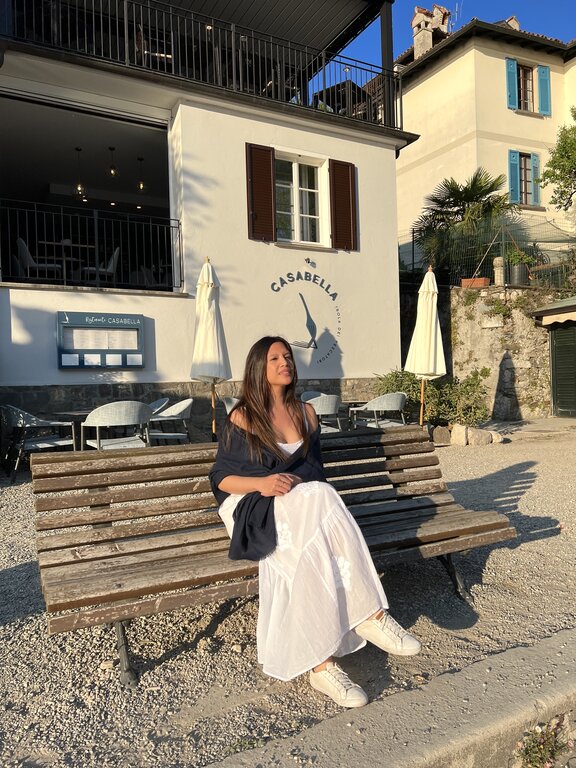
📌 Lisa’s advice: smart, clean sneakers, particularly white leather styles, are completely acceptable in Italian cities year-round. I wear mine everyday, everywhere and so do many Italians, young and not so young.
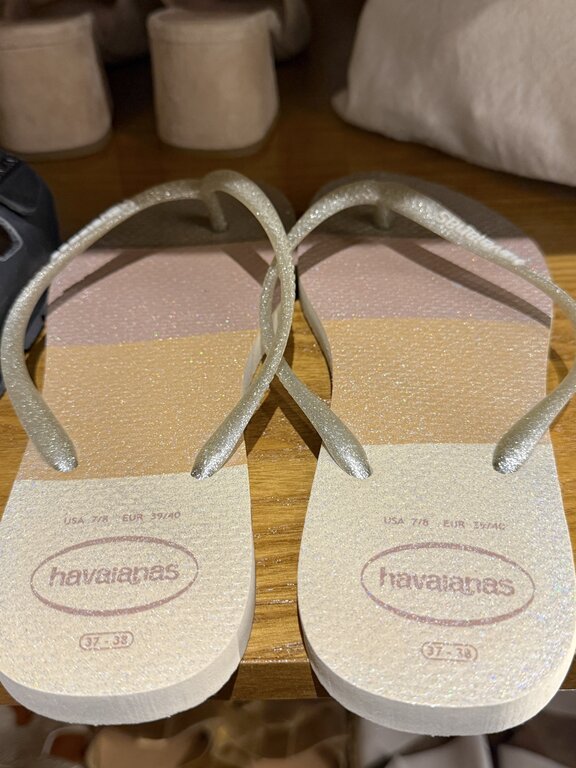
Flip flops in the city
Flip flops belong on the beach. Full stop.
You'll almost never see an Italian wearing them in city centers, in restaurants or shops, even in summer.
Instead, wear leather sandals with a strap or backstrap, or styles like Birkenstocks in hot weather. Save the flip flops strictly for the beach or pool.
It's one of many 'unwritten rules' I discuss in 'What not to do in Italy.'
Shorts outside of summer
Shorts on men and women are broadly acceptable from late June through August. But, wear them in spring, autumn or even a warm October day and you’ll stand out immediately.
We can immediately tell who the tourists are by the way they’re dressed, or undressed!
Italians stick to trousers, jeans or longer skirts in the transitional months, even when temperatures feel warm to a visitor.
Overly revealing clothing (outside the beach)
Low-cut tops, micro-minis and backless dresses are beach or nightclub wear.
In cities, even in summer, Italian women tend toward an elegant modesty. Shoulders can be bare, but outfits remain put-together rather than revealing.
This applies double if you plan to visit churches (see the next section).
A money belt worn on the outside
Beyond being a pickpocket magnet, a visible money belt is the universal tourist signal.
Use a slim card holder in your front pocket or an under-clothing belt if you're concerned about security.
Alternatively, I use a chic crossbody bag. It’s secure, stylish and keeps my hands free.
Overly bright or logo-heavy clothing
Excluding teenagers, many Italians gravitate toward neutral colors. Think navy, white, black, cream, tan and olive.
Neon colors and large logo prints can come across as American tourist rather than a local. This doesn't mean you can't wear color, but tonal, understated dressing will help you blend in far more naturally.
White socks (with anything other than sneakers)
You probably never expected to see this one on the list! White athletic socks with dress shoes or loafers is a look that’ll immediately identify you as a tourist.
Match your sock color to your trousers or shoes, and keep white athletic socks strictly for sports or sneaker-based outfits.
A large backpack as your everyday bag
Carrying a large hiking or travel backpack for everyday use makes you visible as a tourist and more vulnerable to pickpockets.
A crossbody bag, or small shoulder travel bag, is more appropriate and practical on crowded public transport.
What to wear at churches and religious sites in Italy
This is the question I get asked most by people planning their first trip to Italy, and for good reason.
Italy has over 900 Catholic churches open to visitors, including some of the world’s most iconic buildings.
They include St. Peter's Basilica in Vatican City, the Duomo in Florence and St Mark's Basilica in Venice. Every one has a dress code, and it’s enforced.
The golden rule: shoulders and knees covered
To enter any church in Italy, both men and women must have:
- Shoulders covered: no sleeveless tops, vest tops, spaghetti straps or off-the-shoulder styles.
- Knees covered: no shorts (men or women), no short skirts or mini-dresses.
This rule applies year-round, including in the middle of a 35°C Roman summer.
Guards at big basilicas will turn you away at the door. At smaller churches, you may receive a polite but firm request to leave.
The simplest solution: carry a scarf
The most practical thing I recommend to every visitor, is to keep a light scarf or pashmina in your bag.
It serves for covering up in churches and religious sites, as well as for keeping warm on train journeys in Italy.
In 30 seconds, you can cover your shoulders, wrap around your waist as a skirt, or do both. It weighs nothing and solves the problem entirely.
For cooler months (November through March), you won’t have this problem. Your existing layers should meet the dress code without any extra thought.
What about the Vatican specifically?
St. Peter's Basilica strictly applies the dress code and the queue to get in is long.
Being turned away and having to find cover-up clothing nearby is a frustrating and expensive waste of time.
Don’t make this mistake and ensure you dress to the code before you arrive. In addition to the shoulder and knee rules:
- No hats inside the basilica (men and women must remove them).
- Keep voices low and behavior respectful throughout.
Other religious sites in Italy
The same shoulder-and-knee rule applies to:
- Synagogues: visitors may also be asked to cover their heads (a scarf works here too).
- Mosques: you must remove your shoes, and women should cover their hair and wear loose clothing.
- Orthodox Christian sites: particularly in Sicily, which has Byzantine churches, similar rules to Catholic churches apply.
What I wear to churches in Italy
Even in summer, I always have my trusty yellow lightweight pashmina in my bag. It isn’t just a pretty color in the sunshine but it also protects my skin from the blazing heat.
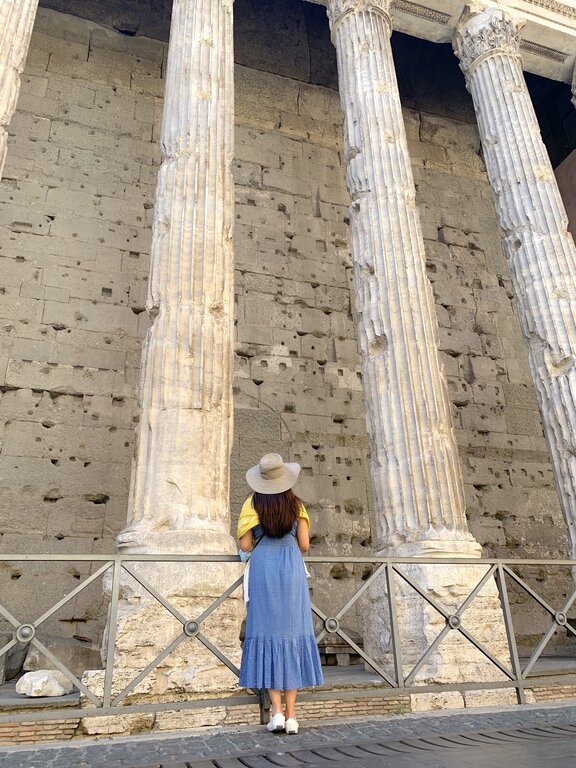
The moment I arrive at a church, I drape it around my shoulders.
I typically pair it with a midi or maxi dress in summer. It’s long enough to skip the skirt-wrap entirely while still feeling cool.
What to wear in Italy: month-by-month
Whether you're planning for February in Florence or Sicily in September, here’s how to pack and dress like a local.
What to wear in Italy in January
January is the heart of winter especially in northern Italy.
As a rule of thumb winter dressing in northern Italy is all about layers. What to wear in Italy as a local in January mixes together items that are practical yet chic — something typically Italian.
Destinations like the Dolomites in winter usually gets plenty of snow and freezing temperatures.
⏩️ My guide on when is the best time to visit Italy lists a month-by-month breakdown of average temperatures for more information.
Base layers
Lightweight, yet quality fabric, base tops to wear beneath wool or cashmere sweaters are an essential winter item.
It’s common for many places in northern Italy to dip to single digits in January. Not all of us experience snow in January in Italy (sadly) but this doesn’t mean that it doesn’t get cold.
My go-to brand for everyday base layers is Intimissimi. They’ve shops worldwide and I believe they stock the same items that we have in Italy.
I live for their cashmere ultralight tops for keeping warm in winter. They’re light, incredibly warm and make the perfect base layer.
Outerwear
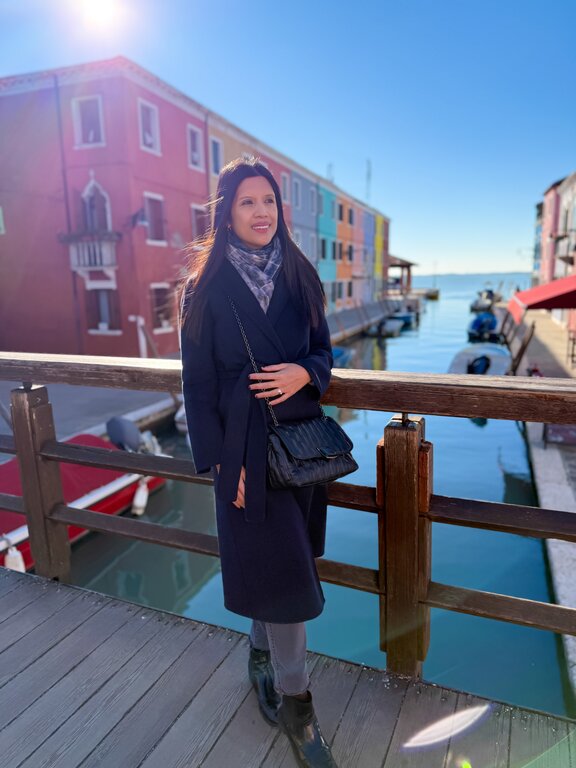
A heavy wool coat or puffer jacket are also ideal for January in Italy and something you’ll see frequently here. Many Italians also wear puffer vests over sweaters for an extra layer of warmth.
Another popular choice of outerwear — among some Italian ladies — is the fur coat (pelliccia).
Personally, it’s not my style, but it’s one that you’ll often see when traveling in winter in Italy.
What I wear in northern Italy in January:
- Heavy wool coat or down puffer jacket (popular brands include Colmar, Herno, Moncler and Falconieri)
- Quality base layers
- Wool/cashmere sweaters
- Jeans, wool trousers or cashmere track pants
- Leather boots or snow boots if visiting the mountains
- Wool socks (try knee length for extra warmth)
Accessories:
- Oversized scarf
- Gloves and hat (preferably cashmere or wool)
Use an expandable luggage like this 29in Swissgear softside suitcase to pack all your necessary bulky winter items. It's one of the most affordable, and best suitcases for Italy.
Southern Italy
January in southern Italy tends to be milder than the north. However, mornings and evenings are chilly, and rainfall is more likely as are strong winds.
To offset this, pack, or wear, a heavyweight waterproof jacket to fend off any cold and wet spells.
Leave behind any items like sun or spring dresses. They’ll be out of place in winter in southern Italy despite the milder temperatures.
The same applies to swimwear. The only exception would be if staying at a hotel with an indoor pool or if visiting Italy for a spa break.
Stick to clothing suited for autumn/winter and bring/wear a pair of well insulated sport shoes.
What to wear in Italy in February
Like January, February is also a very cold month in Italy, especially in the north.
And because of this, what I wear in Italy as a local in February mirrors January. The only difference is that I sometimes swap my wool coat for a heavy waterproof jacket on rainy days.
In recent years, we’ve experienced plenty of sunny days in February (in the north). Because of this, it’s worth bringing your sunglasses just in case.
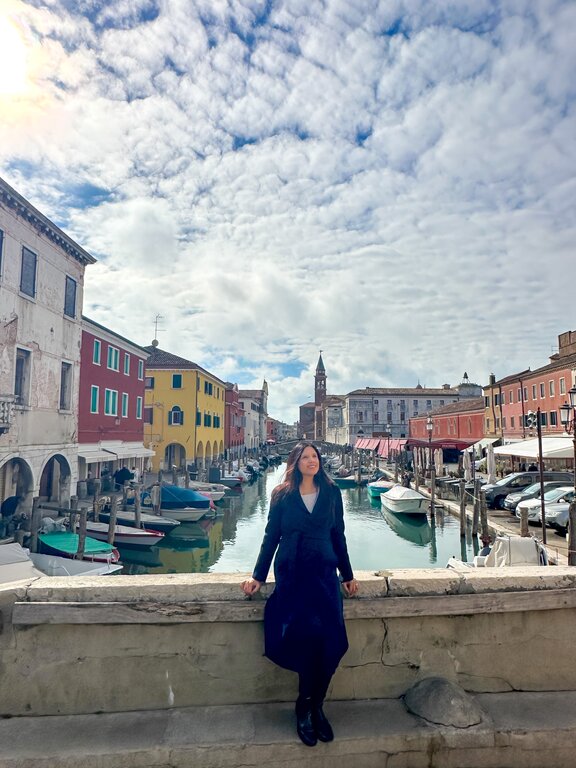
Southern Italy in February follows January and is usually wetter too. A waterproof jacket (with a hood if possible), umbrella and waterproof shoes are all essential items.
What I wear in Italy (north & south) in February:
- Same list as January
Accessories:
- Umbrella (rainy season begins)
- Sunglasses
What to wear in Italy in March
Spring begins to creep in in Italy in early March, but the sunshine can mask chilly mornings. Light, and consistent, winds can also make it feel colder than it is.
What I wear in Italy as a local in March still combines much of my winter wardrobe. The main changes are my outerwear and accessories.
⏩️ Read: 10 best places to visit in Italy in March

In the south of Italy, temperatures tend to be slightly higher, but not by much. I remember visiting Noto, Sicily one year in mid-March and was shocked by how cold it got at night.
Quality outerwear and wool sweaters are still necessary in March in Italy, even in the south.
Lighter wool scarves or pashminas will protect you from cool morning temperatures and from any unexpected windy weather.
Bring sunglasses for sunny days and to look chic on your Italy trip.
What I wear in Italy (north & south) in March:
- A mix of thicker and lighter wool sweaters
- Light wool coat/puffer jacket/waterproof jacket with hood
- Jeans and/or trousers
- Lightweight scarf
- Waterproof shoes
Accessories:
- Sunglasses
- Umbrella
What to wear in Italy in April
April in Italy is a tale of two sides. On one hand, signs of spring are in full bloom, with trees, flora and fauna blossoming beneath the sunshine.
On the other hand, weather in April can be unpredictable, with sunshine one moment and heavy showers the next.
However, something that stays somewhat consistent in April are the temperatures.
Early mornings may feel fresh, but numbers can rise to around 64°F (18°C) by midday. Consequently, what to wear in Italy as a local in April typically includes light sweaters, shirts, jeans, the occasional dress/skirt and smart boots/sneakers.
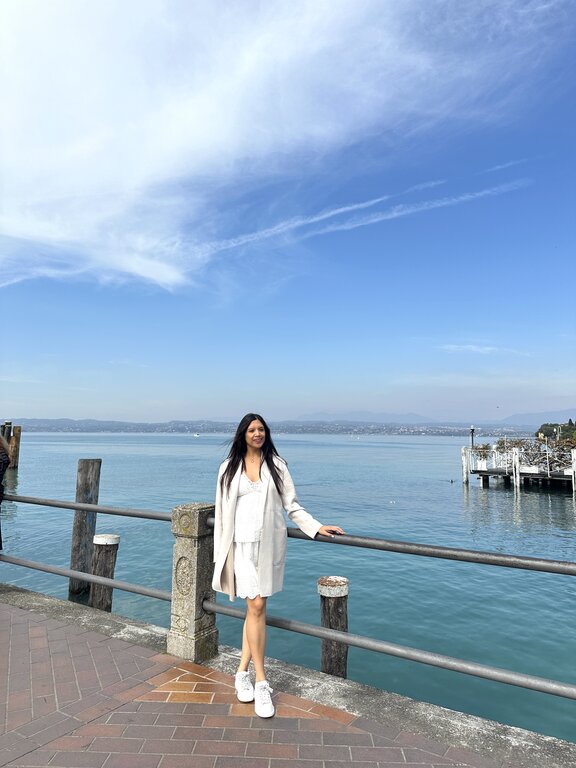
The biggest change in my April wardrobe is my outerwear. Gone are the heavy wool coats and puffer jackets in exchange for my long trench coat or shorter jacket.
Mid-length dresses or skirts with a cardigan, shirt and sweater also suits the Italian climate in April.
What I wear in Italy (north & south) in April:
- Lightweight layers
- Light sweaters (cotton or wool)
- Jeans
- Long-sleeve shirts
- Trench coat or short jacket
- Mid-length dresses/skirts
- Smart boots, sport shoes or loafers
Accessories:
- Light scarf
- Umbrella
- Sunglasses
What to wear in Italy in May
Italy in May is one of my favorite months. The weather’s (usually) warm enough that you can start going out without a jacket.
It's also less chilly in the mornings making it possible to have breakfast in Italy outdoors.
Central and southern Italy typically experiences warmer and sunnier days than in the north. However, there’s always the exception, something we found out on our 4-day trip around the Amalfi Coast.
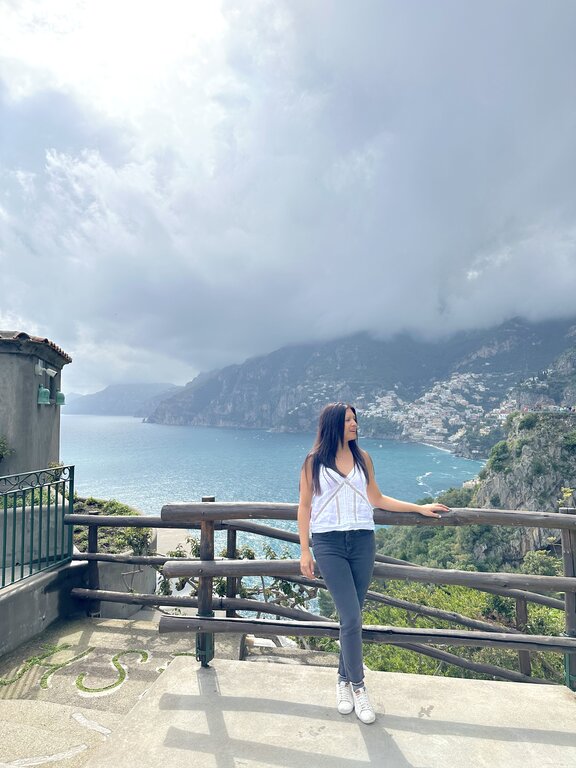
It rained half the time we were there but thankfully remained warm for the entire trip.
May is a good time to bring out spring and even summer dresses (paired with a light cardigan/scarf). Swap jeans for cigarette pants or linen trousers for a comfortable, yet chic, look. Cotton sweaters, cardigans and t-shirts are essentials as is a light scarf.
Sport shoes are still, for me, the best choice of footwear when visiting Italy in May. They’re comfortable, work with any outfit and are ideal for any kind of weather.
What I wear in Italy (north & south) in May:
- Light, long-sleeve tops or blouses for cloudier days
- T-shirts or vest tops for warmer weather
- Light sweaters and/or cardigans
- Jeans/combat trousers or slim-fitting trousers
- Cotton mid-length dresses
- Long-length or midi skirts
- Sport shoes
- Denim jacket or lightweight short jacket
Accessories:
- Sunglasses
- Light scarf (for any unexpected cool mornings or evenings)
- Sunhat/cap
- Umbrella/poncho (just in case)
What to wear in Italy in June
June is my favorite month in Italy for several reasons. The first is that it’s the month when my daughter was born.
Aside from that, June has perfect temperatures. It rarely gets too hot, and it never feels cold. Rainfall is minimal and it’s just a beautiful month to be in Italy.
Southern cities like Rome, Naples and Palermo will be pleasantly warm but not yet sweltering. The same applies to northern cities like Milan and Venice.
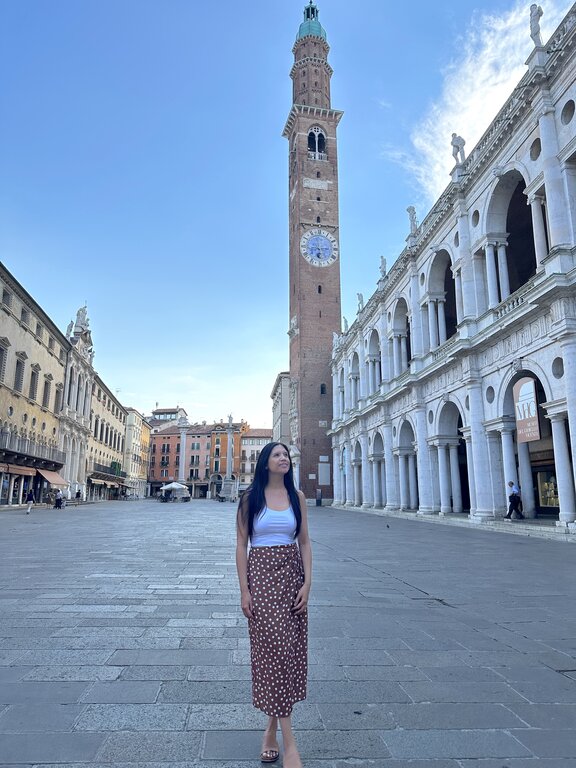
What I wear in Italy as a local in June begins to transition to my summer wardrobe. It includes plenty of vest tops, long skirts and comfortable sandals like Birkenstocks.
What you won’t see me wearing, unless I’m at the beach, are flip flops. It’s one of several 'what not to do in Italy' unwritten rules and something you’ll rarely see in cities.
Pack swimwear if you're planning a beach/island vacation. Personally, it’s still too cold for me to swim in the sea in June in Italy but pack accordingly.
What I wear in Italy (north & south) in June:
- Knee-length or midi-length cotton dresses and skirts
- Combat/linen trousers
- Tank tops and t-shirts
- Light cardigans/denim jacket
- Leather sandals or sport shoes
- Swimwear and beach coverup (optional)
Accessories:
- Sunglasses
- Sunhat
- Light scarf (for breezy evenings or air-conditioned places)
What to wear in Italy in July
July in Italy signals the start of one of the hottest months across the whole country. Days are long, hot and nights can be sweaty and restless.
Outerwear isn’t required in July in Italy nor are sweaters or cardigans.
What I wear in Italy as a local in July can best be described as minimal. Tank tops, shorts, skirts, maxi dresses and sandals characterize my daily wardrobe.
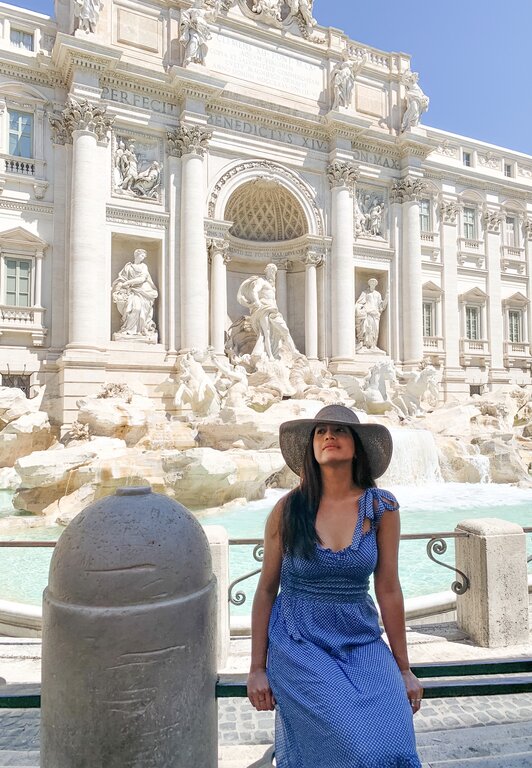
Choose light, breathable fabrics like linen and light cotton. I wear it regularly when we’re at our home in Sicily and they’re the most comfortable for the extreme heat.
While summer wear in Italy is usually minimal this doesn’t mean that it’s vulgar. Avoid wearing overly revealing clothing unless you’re on the beach!
Speaking of the beach, summer in Italy is the time for swimwear. Pack your favorite swimming costume, bikini, large rim hat, beach coverup and essentials if planning a beach vacation.
What I wear in Italy (north & south) in July:
- Flowy maxi or boho dresses
- Sleeveless tops and blouses
- Sleeveless dresses
- Linen trousers/dresses
- Denim shorts/skirts
- Flat open-toed sandals like espadrilles or Birkenstocks
Accessories:
- Sunglasses
- Sunhat
- Swimwear
- Flip-flops for the beach
- Shawl for coverup
What to wear in Italy in August
Like July, August in Italy is easy to pack for. The peak of summer in Italy August is defined by sweltering temperatures and heatwaves.
Because of this, what I wear in Italy as a local in August mirrors July’s wardrobe. Like many Italians, we usually leave the city for the cooler climes of the coast when vacation month arrives.
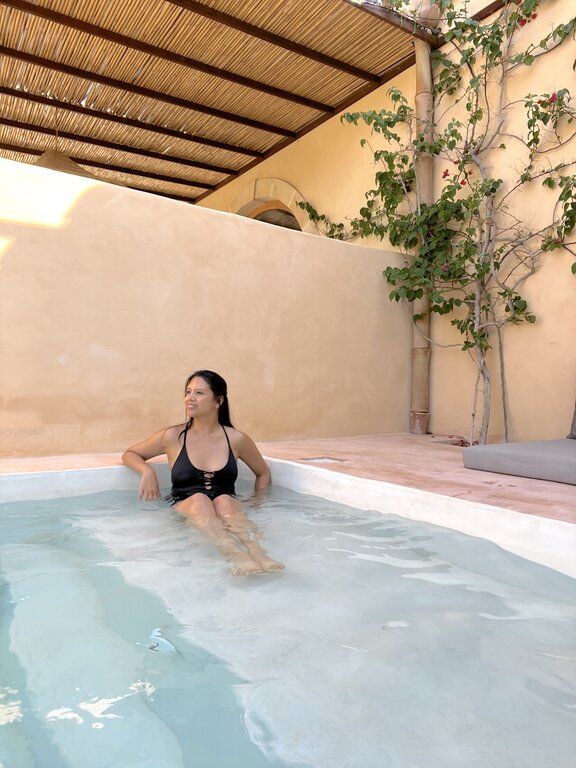
The best place in Italy to escape the August heat is the Dolomites region and further north. Pack a hoodie or light jacket for light showers and for cool mornings and evenings.
What I wear in Italy (north & south) in August:
- Same as the list in July
Accessories:
- Woven tote bag for beach essentials
- Exceptions for the Dolomites and further north
- Light rain jacket or hoodie
- Sports shoes
- Outdoor clothing for activities (hiking, biking)
What to wear in Italy in September
Italy in September is an extension of July and August.
Granted, temperatures begin to dip towards the middle of the month, but temperatures are pleasant and it’s still very warm overall.
Much of what I wear in Italy as a local in September utilizes most of my Italian summer wardrobe.
I rarely use outerwear, and the odd pair of jeans might make an appearance towards the end of the month. Aside from that, I make the most of my summer attire and footwear while still possible.

September in Italy is also still a good month for beach trips and swimming in the sea. Pack all your usual beach essentials if planning a trip to Italy in September.
What I wear in Italy (north & south) in September:
- Tank tops and t-shirts
- Short skirts and denim shorts
- Linen trousers and/or combat trousers (for late September)
- Long, light flowy dresses (or linen)
- Light sweaters or hoodie (late September)
- Denim jacket
- Flat sandals or sport shoes
Accessories:
- Lightweight large scarf (late September or if visiting the mountains)
- Sunglasses
What to wear in Italy in October
October in Italy around much of the country remains mild and warm.
Though temperatures no longer mirror July and August (thankfully), there’s no need yet for heavy jackets or chunky autumn boots.
Jeans, t-shirts, short-sleeve blouses and light sweaters are what I wear in Italy as a local in October.
In the south, temperatures are still high enough to enjoy beach days. In fact, our relatives and friends in Sicily regularly go to the beach in October.

I find it too cold to swim but temperatures are warm enough to sunbathe.
The only exception, as always, is if visiting the Dolomites or mountainous regions. Temperatures are lower here in October, so appropriate fall clothing is necessary.
What I wear in Italy (north & south) in October:
- Jeans/cigarette pants
- T-shirts and short-sleeve blouses
- Light sweaters/hoodies
- Dark jeans and knits
- Thick blazer or light coat
- Boots or stylish sneakers
Accessories:
- Light scarf
- Umbrella for surprise showers
- Layer-friendly pieces for varied temps
What to wear in Italy in November
When November arrives in Italy so too do shorter, and colder, days. Temperatures aren’t cold like December or January but it’s chilly enough to pack a winter wardrobe.
Saying that, what I wear in Italy as a local in November comprises of a classic autumn wardrobe. Jeans, heavier wool sweaters, Chelsea boots plus my wool coat and scarf make a reappearance.
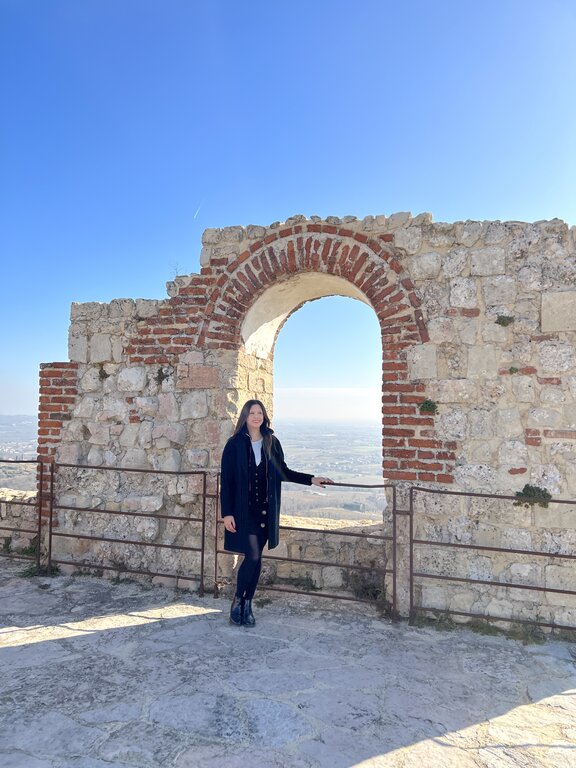
If visiting southern Italy in November, pack as if you’re traveling in early September. Swap a heavy coat for something lighter but bring a lightweight scarf.
What I wear in Italy (north & south) in November:
- Jeans or corduroy trousers
- Mid-length wool/cotton dresses with tights (hosiery)
- Belted or long-length cardigans
- Basic layers
- Chelsea boots or sport shoes
Accessories:
- Oversized scarf
- Umbrella
What to wear in Italy in December
In December in Italy, we see, and feel, temperatures drop around much of the country. Mornings are bitingly cold and cloudy in the north and the weather becomes cooler too in the south.
By the end of the year, most of my winter wardrobe comprises what I wear in Italy as a local.
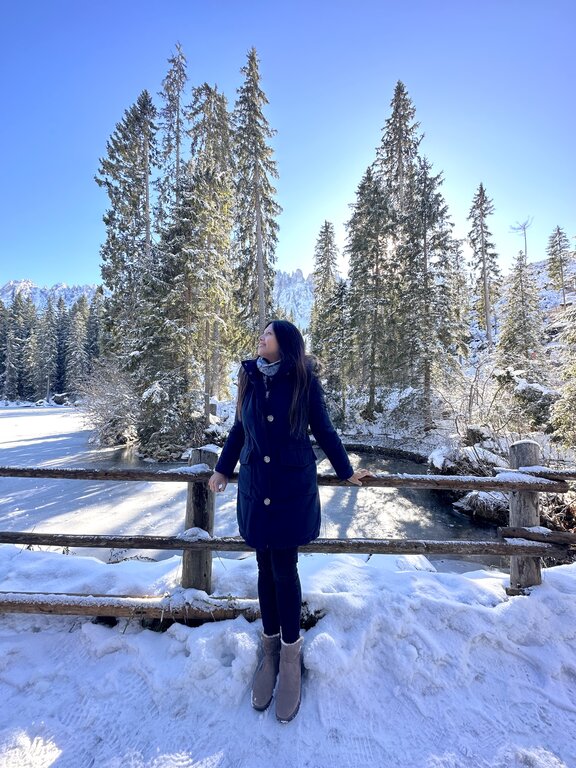
The Dolomites and mountainous regions usually have snow by mid to late December so pack more thermals and snow boots.
If planning to come for Christmas in Italy pack something festive for the holidays.
Like many other countries, Italians like to make an effort when the holidays arrive. Wear something red, sparkly or elegant (or all three!).
What I wear in Italy (north & south) in December:
- Equal to January and February
Additions:
- Warm dresses and tights
- Knee-high or fleece-lined boots
- High-heels or smart dress shoes
Accessories:
- Cashmere scarf
- Wool gloves
- Cashmere/wool hat
- Umbrella
- Sparkly jewelry
What to wear in Italy by season
What to wear in Italy in winter (December to February)
- Thermal/cashmere base layers
- Cashmere and thick wool sweaters
- Jeans or wool trousers
- Long-length wool coats and/or puffer jackets
- Cashmere/wool scarves, hats and gloves
- Leather boots (ankle or knee high)
- Sport shoes (waterproof) with thick soles
What to wear in Italy in spring (March to May)
- Thermal base layers for cold mornings, especially March and April
- Cotton t-shirts and long-sleeve blouses
- Jeans, mid-length skirts and/or light pants
- Mid-season jacket (trench coat, light puffer jacket or denim jacket/blazer from May onwards)
- White sneakers, loafers
- Oversize scarves
What to wear in Italy in summer (June to August)
- Short linen dresses
- Maxi dresses
- Tank tops and short sleeve/sleeveless tops
- Shorts (denim, linen or tailored)
- Mid-length or short skirts
- Sport shoes, espadrilles or flat sandals like Birkenstocks
- Swimwear and cover-ups
- Sunhat and UV-blocking sunglasses
What to wear in Italy in fall (September to November)
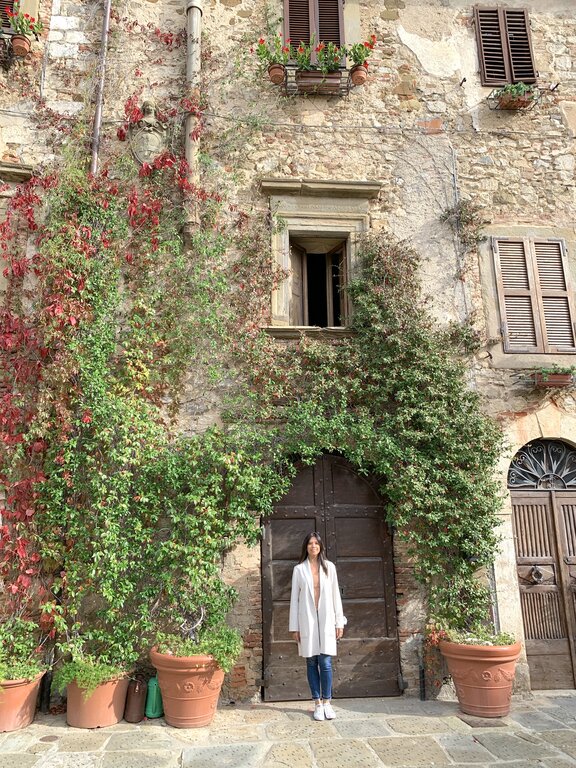
- Jeans, corduroy trousers or combat trousers
- Mid-length dresses and skirts
- Light outerwear (denim jacket and long cardigans for early fall, light puffer or leather jacket for later)
- Ankle boots, sport shoes
- Scarves
- Umbrella
What shoes to wear in Italy
Shoes are probably the most important packing decision for Italy, and the one where most visitors go wrong.
Between cobblestone streets (sampietrini) and endless kilometers of city walking, your footwear can make or break your trip.
Here's exactly what I wear in Italy by season, and what I'd never recommend.
White leather sneakers (year-round)
The most versatile shoe in Italy, full stop.
A clean, slim-profile white leather sneaker works with dresses, jeans, trousers and skirts across every season.
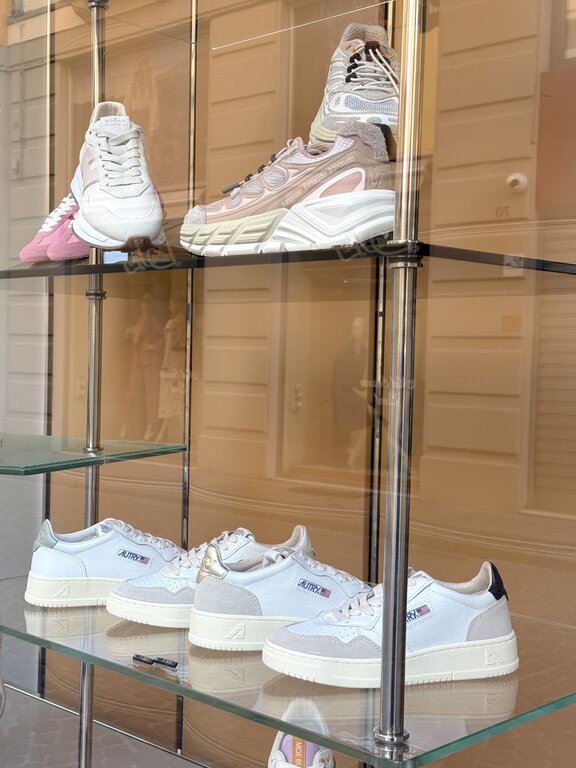
Italians wear them constantly, with everything from casual weekend outfits to smart evening looks.
Brands like New Balance 574s, Hogan and Superga are popular locally. If you only pack one pair of shoes for Italy, make it these, and ensure that they’re clean and unscuffed.
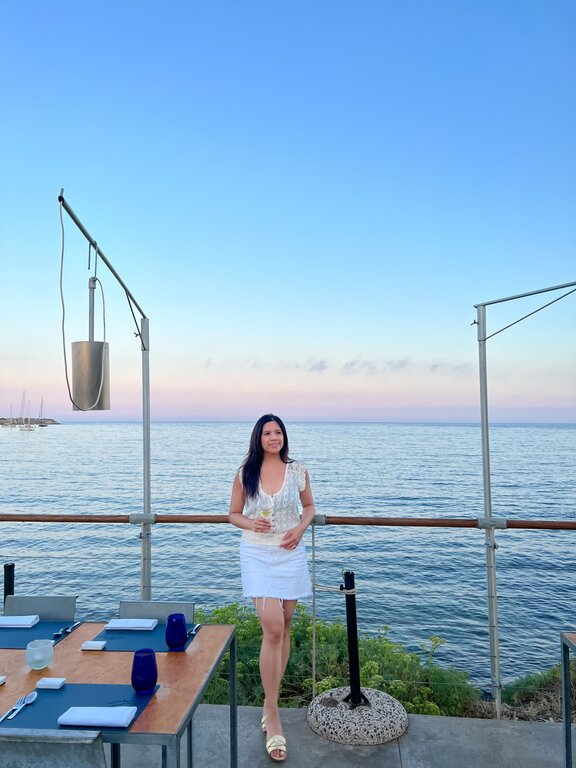
Leather sandals (summer through autumn)
From late June through to October, well-made leather sandals is a good choice for city walking.
Birkenstock Arizonas are genuinely popular in Italy and a style you'll see everywhere.
If possible, choose a leather sandal with a backstrap. They keep the sandal secure on cobblestones and stops you from shuffling around in hot and sweaty weather.
Flat slides with no heel support can be slippery on wet marble and unsuitable for walking on uneven ground.
Ankle boots (autumn and spring)
Leather or suede ankle boot are common come spring and autumn in Italy.
Flat or low-heeled styles are the most practical for cobblestones: I live in my Tod’s Chelsea boots.
They work with jeans, dresses over tights and midi skirts. Chelsea boots are also smart enough for an evening out without heels meaning there’s less to pack.
Knee-high or over-the-knee boots (winter)
Knee-high leather boots across northern Italy are everywhere from November through February.
They're practical, warm and waterproof in many styles. Flat or low-heeled styles work best for heavy city walking days. Personally, I’d also wear them in the evening for an aperitivo or dinner.
Sport shoes/hiking shoes (Dolomites and mountain regions)
If your itinerary includes trails or any kind of hiking, bring a proper pair of grippy sport or hiking shoes.
Trail surfaces require real ankle support and sole grip that no leather sandal or sneaker will provide safely.
Try to keep these for the mountains, they can look out of place in city centers.
avoid wearing these (on your feet)
- High heels on cobblestones: stilettos get stuck between cobblestones and are genuinely dangerous on wet marble. Block heels or kitten heels are manageable, stilettos are not.
- New shoes on day one: I typically rack up 25,000 steps when visiting Venice for the day. We walk a lot here, especially in cities. Break in any new shoes before you travel and not during the trip.
- Flip flops in the city: covered in the 'what not to wear' section above, but worth repeating here.
- Platform soles on ancient staircases: narrow, steep stone steps (the Amalfi Coast is full of them) are genuinely risky in thick platform soles.
What to wear in Italy by destination
What to pack for Italy changes significantly depending on where you're going in Italy.
The wardrobe for a city break in Milan in October differs from a week on the Amalfi Coast in July.
Here's how I approach packing for each of the major destinations.
What to wear in Rome
Rome's climate is warmer and drier than northern Italy, with hot summers and mild winters.
Its streets are a mix of cobblestones in the historic center and smoother paving elsewhere. This means that footwear with a flat sole and good grip is essential.
What to wear in Rome in summer (June to August)
Lightweight linen or cotton dresses, midi skirts with a simple top, loose linen trousers and flat leather sandals.
Rome gets genuinely hot in July and August. Temperatures regularly reach 35°C+, so breathable fabrics are non-negotiable.
Always carry a scarf for churches: the Vatican, Pantheon and countless basilicas require covered shoulders and knees.
What to wear in Rome in spring/autumn (March to May, September to November)
Layers are everything. Light sweaters, a trench coat or blazer, jeans or smart trousers and ankle boots. September in Rome is often still warm enough for summer dresses, late October calls for a light jacket.
What to wear in Rome in winter (December–February)
Rome winters are mild by northern Italian standards but genuinely cold, particularly in the evenings.
A wool coat, warm layers and closed leather shoes or ankle boots are appropriate. Snow is rare but rain isn’t, bring a compact umbrella.
📌 Lisa's Rome packing essentials: white leather sneakers, lightweight scarf (for churches), one pair of leather sandals (spring/summer), a linen dress or two (summer), and a compact umbrella (spring/autumn/winter).
What to wear on the Amalfi Coast
The Amalfi Coast is where Italian summer dressing reaches its peak. However, the terrain makes footwear the most critical decision of your entire trip.
The coastline is built on steep cliffs, with hundreds of steps, narrow paths and boat landings between each town.
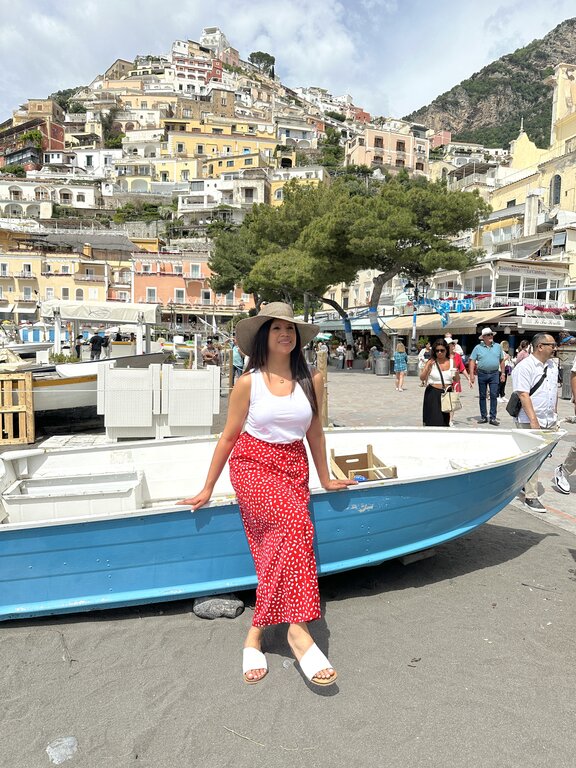
What to wear on the Amalfi Coast in summer (June–September)
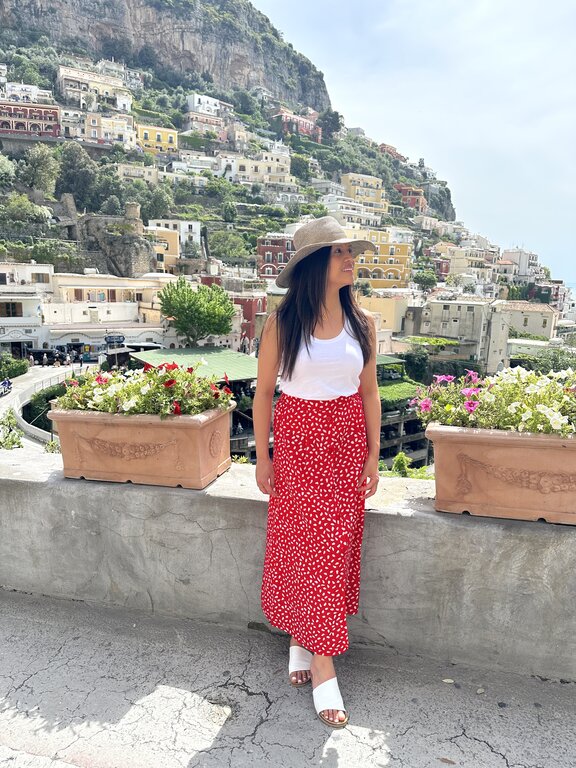
This is your la dolce vita wardrobe. Flowy linen maxi dresses, colorful sundresses, wide-brimmed straw hats, oversized sunglasses and leather sandals with a backstrap.
Swimwear under a beach coverup for boat days. Silk scarves tied in your hair or around your bag are quintessentially Amalfi.
What NOT to wear on the Amalfi Coast
Stilettos or platform soles anywhere. The steps in Positano, Ravello and Praiano are uneven, often steep and sometimes slippery. Flat leather sandals with a grip are far safer and look just as chic.
What to wear on the Amalfi Coast in spring (April to May)
Pack long sundresses and skirts for warmer afternoons, but bring a denim jacket or light cardigan.
The weather took a turn during our trip in May and luckily, I’d packed jeans and sweaters just in case. Saying that, a waterproof layer is wise in April.
📌 Lisa's Amalfi packing essentials: flat leather sandals, linen maxi dress, swimwear and coverup, wide-brim hat, light cardigan, compact crossbody bag.
What to wear in Florence
Florence sits in a valley surrounded by hills, which gives it a more extreme climate than coastal cities.
This means hotter summers, colder winters and more pronounced humidity. It's also one of the most fashion-conscious cities in Italy, home to some of the world's best leather shops.
What to wear in Florence in summer (June to August)
Florence in July and August is seriously hot, often hotter than Rome.
Lightweight, breathable fabrics are essential. Flowy midi dresses, linen wide-leg trousers, cotton blouses. Don’t make the same mistake I did of wearing jeans in Florence in summer: they stuck like a second skin.
Florence is also a city of art and culture, so you'll be visiting churches and galleries daily. Carry a scarf in your bag at all times. Wear white leather sneakers or flat leather sandals for the cobblestone streets.
What to wear in Florence in spring/autumn
A belted trench coat over a silk blouse and slim-fitting jeans, ankle boots and a lightweight scarf.
Consider buying a leather jacket or bag from one of the city's leather shops. They make a timeless investment piece plus you can wear it on the rest of the trip.
What to wear in Florence in winter
Florence winters are colder than Rome's.
Pack a heavyweight wool coat and wear warm layers and leather ankle or knee boots. The city’s magical in winter with far fewer tourists.
📌 Lisa's Florence packing essentials: trench coat (spring/autumn), linen dress + scarf (summer), leather ankle boots (autumn/winter).
What to wear in Venice
Venice is like nowhere else to dress for in Italy, literally.
There are no cars, which means you'll walk everywhere, cross dozens of bridges (all with steps), and potentially take vaporetti (water buses).
The lagoon environment also means humidity, sea breezes and the occasional high water (acqua alta) flooding in winter.
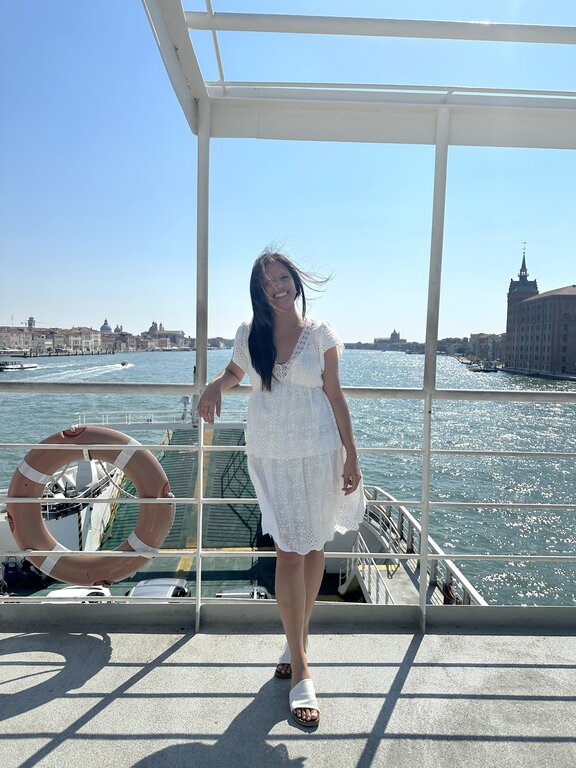
What to wear in Venice in summer (June to August)
Venice in summer is hot and humid, and the narrow calli (alleyways) trap heat.
Breathable cotton or linen fabrics are essential. Flat, secure sandals for the bridge steps or sneakers are even better.
Bring a light scarf for the Basilica di San Marco. They’ve modesty wraps for hire but it's better to bring your own.
What to wear in Venice in autumn (September to November)
This is one of my favorite seasons in Venice when the light is softer and the crowds thin out.
Light layers in September shift to warmer knits and a wool coat by November. High tide can flood St. Mark's Square from mid-November onwards.
If visiting in late autumn, wear waterproof ankle boots or even a pair of lightweight wellies. Locals sell plastic boot covers near the vaporetto stops when flooding is forecast.
What to wear in Venice in winter (December to February)
Venice in winter is cold, damp and often foggy (which is how us locals like it!)
Wear heavy wool coats/outerwear, warm layers and waterproof boots. It’s the season of the Venice Carnival (February) and though chilly, is an equally beautiful time to visit.
📌 Lisa's Venice packing essentials: good-grip shoes or waterproof boots for wet bridges, waterproof layers (autumn/winter) and a scarf for St. Mark's Basilica. Layers you can add or remove as you move between cold canals and heated museums.
What to wear in Sicily
Sicily is my other home. We spend half the year there, so I can speak to this one from genuine daily experience.
Sicily's climate is distinctly Mediterranean and noticeably different from northern Italy across every season.
What to wear in Sicily in summer (June to September)
Sicily's summer is intense. July and August see temperatures regularly above 38°C, occasionally touching 42°C in inland areas. Because of this, lightweight linen is your best friend.
Maxi linen dresses, loose linen trousers, sleeveless tops and flat leather sandals are essential.
Pack extra tops and shorts: you might want to change at least twice a day if it’s extremely hot. A large sun hat isn’t optional, it's mandatory.
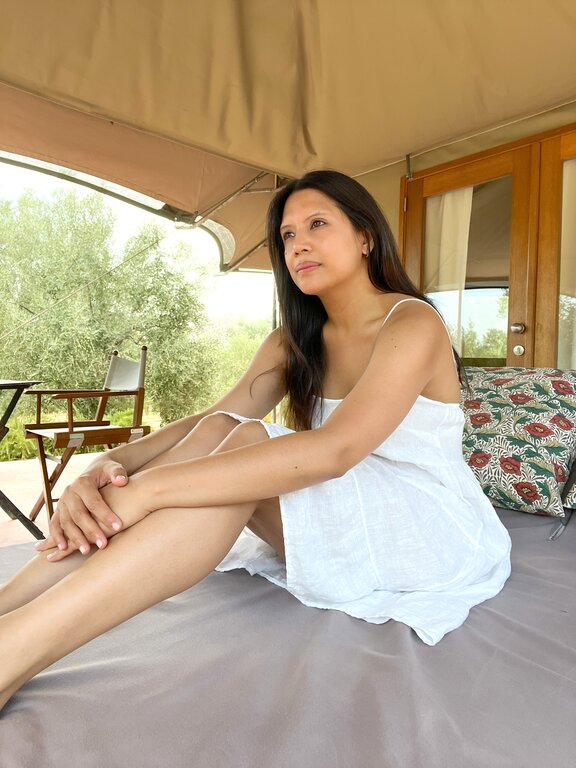
Sicily's beaches (July to September)
Swimwear, a beach coverup (a large linen shirt or kaftan rather than a thin sarong (the sun is very strong)). Flip flops for the beach, flat sandals for the towns.
⏩️ Read: the best beaches in Sicily
What to wear in Sicily in spring (March to May)
Spring in Sicily is beautiful but the weather can be unpredictable.
Evenings in March can get particularly cold even if the afternoons are warm.
I've worn a summer dress at lunch and a wool cool to dinner in the same day in Noto in March. Layer generously. Light wool sweaters, a light puffer jacket/trench coat, jeans, ankle boots for cooler days.
What to wear in Sicily in autumn (October to November)
October in Sicily is still warm enough for short sleeves in the middle of the day, and locals still visit the beach.
Light layers, jeans and a light jacket. November brings the first real rain of the season and temperatures drop towards the evenings. Pack a mid-weight coat/jacket.
⏩️ Read: Sicily in autumn: a resident's guide to October and November
What to wear in Sicily in winter (December to February)
Sicily in winter is mild compared to the north, but it still gets cold and wet; something many visitors don’t expect.
A mid-weight wool coat, layers and waterproof shoes will keep you warm and comfortable. Snow in the interior and on Etna is common, on the coast it's rare but not unknown. Leave the summer wardrobe (and The White Lotus mentality) behind entirely.
📌 Lisa's Sicily packing essentials: linen maxi dress (summer), large sun hat (mandatory), layers for spring evenings, flat leather sandals and a light waterproof jacket from October onwards.
What to wear in Italy: men's packing guide by season
Men visiting Italy often underestimate how fashion-conscious Italian culture is, and how quickly the wrong outfit marks you as a tourist.
The concept of bella figura applies just as much to men as women. It's about being well-presented, well-fitted and appropriate for the setting.
This doesn't mean suits and formal wear. It means clean, smart-casual and intentional dressing that fits properly.
Here's how I'd pack for Italy as a man, season by season.
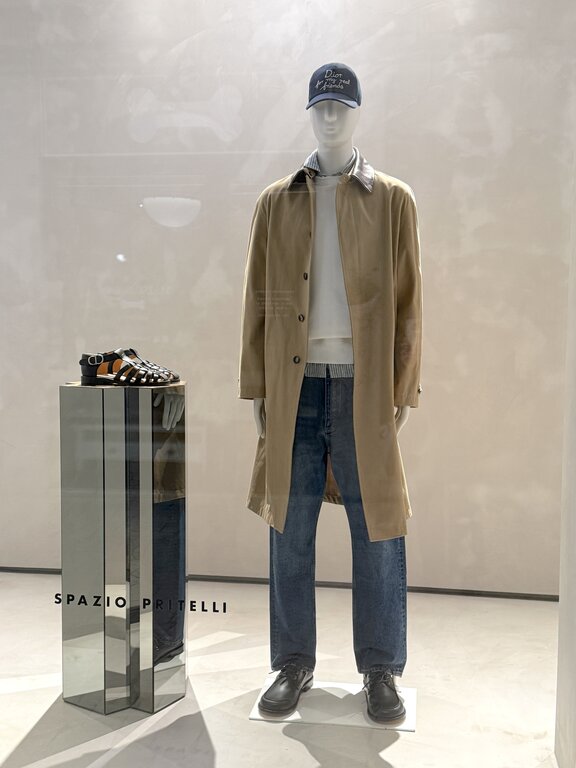
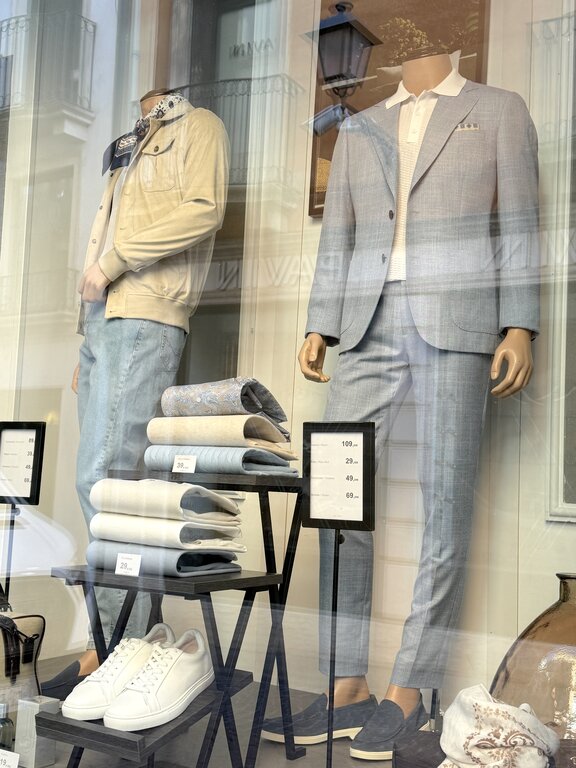
Men's spring packing list for Italy (March to May)
Spring in Italy is ideal traveling weather. It’s usually mild during the day, but occasionally cool in the mornings and evenings. The trick is versatile layering.
What to pack
- 1 lightweight jacket (waterproof, yet elegant)
- 1 waterproof layer: a compact packable rain jacket for April showers
- 3 to 4 long-sleeve shirts: linen-cotton blends or chambray. Roll the sleeves as the day warms up
- 2 lightweight sweaters or merino pullovers: for layering over shirts on cooler mornings
- 2 pairs of well-fitted jeans or chinos: dark wash jeans and one neutral chino covers most occasions
- 1 pair of smart casual trousers for evenings
- Footwear: white leather sneakers (daily use), clean leather shoes for evenings
- Accessories: a lightweight scarf, sunglasses, a slim crossbody or messenger bag (backpacks look more touristy)
What to avoid in spring
- shorts
- sleeveless tops and
- flip flops.
All of these are out of season in Italy until June at the earliest.
Men's summer packing list for Italy (June to August)
Summer in Italy is hot, especially in Rome, Florence, Naples and Sicily. Lightweight, breathable fabrics in a neutral palette are the Italian approach to summer dressing.
What to pack
- 4 to 5 short-sleeve linen or cotton shirts: loose but not oversized, in navy, white, cream, light blue or olive
- 2 to 3 quality t-shirts: plain or subtly patterned
- 2 pairs of linen or cotton chino shorts: knee-length or just above. Avoid anything too short or too baggy
- 1 to 2 pairs of linen or lightweight chino trousers: for evenings and smarter occasions
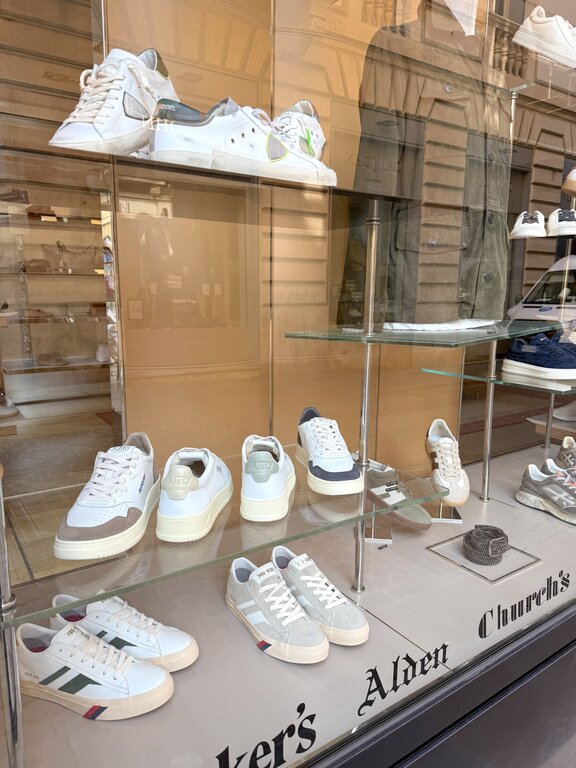
- Footwear: white leather sneakers (most versatile), leather sandals (optional for casual days)
- Accessories: sunglasses, lightweight sun hat or cap for Sicilian heat, a small crossbody bag or canvas tote
- 1 light layer (linen overshirt or unstructured blazer): for air-conditioned restaurants and church visits
Church visits in summer
Men must cover bare shoulders and knees to enter many Italian churches.
Keep a lightweight linen shirt in your bag to pull on at the entrance. It takes 30 seconds and saves being turned away.
What to avoid in summer
- basketball shorts
- athletic shorts
- sleeveless gym vests in the city
- flip flops away from the beach
- heavily branded or logo-heavy clothing.
Men's autumn packing list for Italy (September to November)
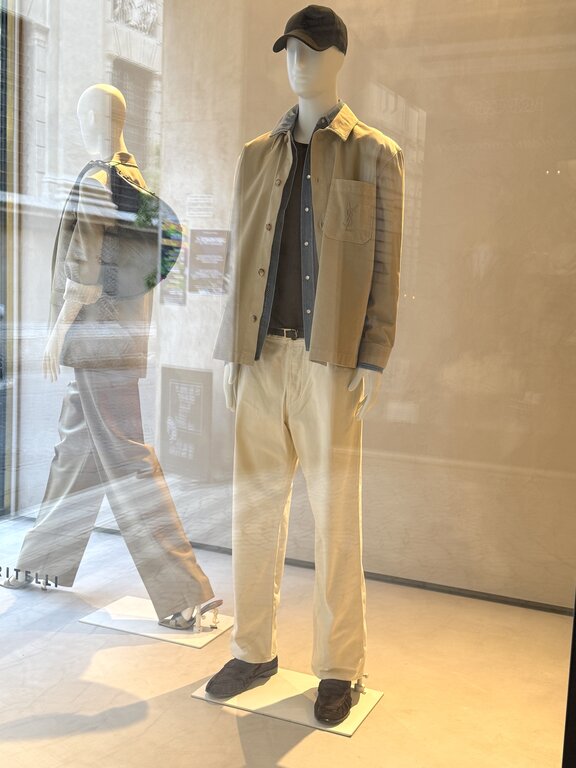
Autumn temperatures are perfect for layering. Pack smart jeans, light knitwear, sport shoes and a light jacket (late October onwards).
What to pack
- 1 light to mid-weight smart casual jacket (i.e. smart puffer jacket)
- 1 blazer or unstructured jacket: for evenings and smarter restaurants
- 3 to 4 long-sleeve shirts and light sweaters: merino wool or fine-knit cotton
- 1 to 2 heavyweight sweaters or knitwear for late October/November
- 2 pairs of well-fitted dark jeans
- 1 pair of smart trousers for evenings
Footwear: leather ankle boots, white leather sneakers for daytime, dress shoes for smarter evenings
Accessories: wool or cashmere scarf, sunglasses (still useful in September and October), compact umbrella for November
What to avoid in autumn
- shorts
- flip flops or sandals (unless for indoor swimming pools or spas)
Men's winter packing list for Italy (December to February)
Northern Italy in winter gets very cold. Milan, Venice and the Po Valley can see temperatures in the low single digits, heavy fog and occasional snow.
Southern Italy and Sicily are milder but it’s still important to dress appropriately.
What to pack
- 1 heavyweight wool or down coat especially for northern Italy. Popular Italian brands for men include Herno, Colmar and Stone Island for puffer styles
- 2 to 3 wool or cashmere sweaters: worn over long-sleeve base layers
- Quality thermal or merino base layers: essential for staying warm without adding bulk
- 2 pairs of dark jeans or wool-blend trousers
- 1 pair of smart trousers for evenings
Footwear: sports shoes with a thick sole or leather boots, thick wool socks
Accessories: wool scarf, wool/leather gloves, wool/cashmere hat for the coldest days, compact umbrella
For the Dolomites in winter
If visiting for skiing or winter mountain activities, add thermals, ski-appropriate outerwear, waterproof hiking boots and gloves.
What to avoid in winter
Gym wear as outerwear, lightweight trainers in snowy conditions, short-sleeve shirts or shorts of any kind.
Italy outfits FAQ
Yes. Italians wear jeans year-round, particularly well-fitted dark-wash styles. Many Italians avoid baggy, heavily distressed or overly casual jeans, particularly in the evening. Avoid wearing jeans for formal restaurants.
Shorts are acceptable from late June through August. Outside of summer, shorts can mark you as a tourist, locals don't wear them even on warm autumn days. Large cathedrals and basilicas never permit shorts regardless of the season. Avoid styles that are too revealing and leave gym shorts for the gym.
Smart casual is the appropriate dress for most Italian restaurants. A dress or chic top and trousers for women, a collared shirt/t-shirt and dark jeans/chinos for men. Very upscale restaurants may expect smarter dress, check in advance. Beachwear, gym wear, shorts and flip flops are not appropriate at any sit-down restaurant.
Leggings are acceptable for hiking, cycling or other physical activities. In Italian cities, wearing leggings as trousers can look like gym wear, which is out of place.
Many Italian styles tend to favor neutral palettes like navy, black, white, cream, tan, camel, grey and earthy tones. Pastels appear in summer. Bright neon colours, heavy patterns and large logos are broadly avoided in everyday dressing.
Yes. Every church in Italy requires shoulders and knees to be covered for entry, regardless of the season. Major basilicas including St. Peter's in Rome are strictly enforced, guards will turn you away at the door. Carry a lightweight scarf in your bag to use as a shoulder cover or wrap-around skirt. See the full church dress code section above for details.
Yes, leather sandals are common from April through October. What to avoid is flip flops in cities (beach only) and flat slides with no grip on cobblestones. White leather sneakers are a more practical alternative.
For a 7 to 10 day trip to Italy, a carry-on is achievable with a capsule wardrobe. Pack around 2 to 3 bottoms, 4 to 5 tops, one dress (women), one layering piece, one jacket or coat (depending on season) and two pairs of shoes maximum. Linen and merino wool pack small and are appropriate year-round in lighter or heavier weights.
Avoid wearing gym wear and athletic clothing in cities (unless exercising), flip flops outside the beach/pool and shorts outside of summer. See the full 'what not to wear in Italy' section above for the complete guide.
Choose lightweight fabrics like linen and pure cotton, breathable dresses, shorts (denim, tailored or both) and flat sandals. 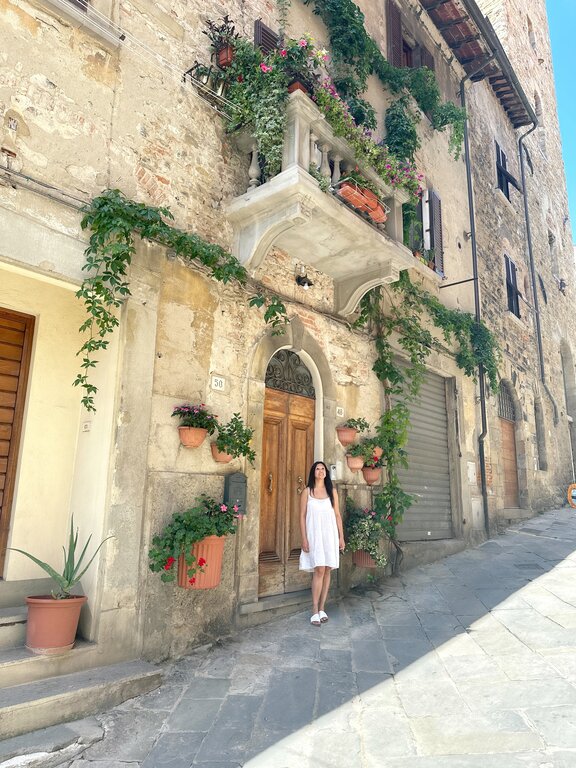
A classic Italian winter wardrobe consists of wool/cashmere sweaters, jeans, wool pants, thermal base layers and winter boots/insulated sport shoes. Outerwear can include wool, (sometimes fur) coats, puffer jackets, wool scarves, hats and gloves.
Use a crossbody bag for everyday use, and a canvas-style bag or a woven tote bag for visiting the beach.
What are your thoughts on this guide listing what to wear in Italy as a local? Is it a useful guide to help plan for your vacation to Italy? Let me know in the comments below.
Disclosure: This post may contain affiliate links, which means I may receive a commission if you click a link and purchase something that I’ve recommended. Thank you for your support.
Written by Lisa Rivera: Italy traveler and resident for 10+ years. First-hand researched for 2026.
Like this post? Pin it!



It is very neat to hear when to wear lighter clothing or heavier clothing in Italy. I always struggle to know what to wear in other countries!
Me too! Which is why I thought a breakdown would be helpful 🙂
It sounds like layering is super important all year round for those chilly mornings and evenings.
Apart from our summer and early autumn, yes!
I can’t wait to use this for my trip! So many useful and stylish tips for dressing like a local.
Thank you! Happy to help
It does help to know what to wear for the month you are visiting. It not only allows you to blend in with the locals but means you'll feel comfortable whilst there.
I agree and I want it to be a practical guide for others to follow.
This is so useful. It is great to hear from a locals point of view what to wear month by month. It means I can pack practically.
I'm happy to hear that and glad that it's useful.
Thank you for sharing this with us. Now I know that I need to buy boots.
Great! 😀
This is so useful. I am planning to visit Italy in winters and now I know exactly what all I need to pack. Thanks for sharing this.
I'm so happy to help!
These are great tips! You'll be comfy for the weather, and you'll look like you belong there. I love it.
Thank you, I'm glad you enjoyed it!
Take me to Italy please...I visited Italy a couple of years ago and I can't wait to go back again, this Summer I hope. Such a beautiful country.
Come and see us again soon!