
Italy in January: a local's guide to weather, cities and closures

Unpopular opinion: I like Italy in January.
As a local, I find there are no surprises when it comes to January, and I like that.
Much of the month in northern Italy is cold and foggy with some sunny days sprinkled in between. Further south, the weather can be slightly milder, especially in parts of Sicily.
In short, you know what to expect, what to wear, and what to plan for.
In this guide, I’ll be discussing everything you need to know about visiting Italy in January.
I compare the weather city by city using two Januaries of daily records and share what I saw in Venice and Burano.
I’ll also be covering where to go, what to pack, January dates and what many Italians eat this month.
Jump to:
- Is January a good time to visit Italy?
- Italy weather in January
- Where is the warmest part of Italy in January?
- Which Italian city is best to visit in January?
- Venice and Burano in January
- Rome in January
- Florence and Tuscany in January
- Naples and the Amalfi Coast in January
- Milan and Lake Como in January
- Sicily and the south in January
- Italy in January map: city weather and where to go
- Things to do and dates to know in January
- What to wear in Italy in January
- What to eat and drink in Italy in January
- What I wish I knew before visiting Italy in January
- Italy in January FAQ
- 💬 Comments
Is January a good time to visit Italy?
January is a good month for a city break or a long weekend, but not if you expect beach weather. Expect cold, damp conditions in the north and center, thinner crowds, seasonal closures and winter sales. Many travelers also find it kinder on the budget than spring or summer.
The answer is both yes and no. If you’re picturing dining outdoors for hours, or sitting with an Aperol spritz while people watching, January might be disappointing.
But, if you plan on visiting the Dolomites, seeing museums, art galleries and popular churches without a line, it might be ideal.
There’s a clear pattern you see every year in January.
Early January is the final tail of the Christmas holidays, with many Italians still on vacation and schools still closed. So, expect to see plenty of children still out and about.
By the end of the month, hotels and restaurants in places like Venice have re-opened to prepare for Carnevale.
📌 Lisa's tip: plan indoor activities every day, and treat any dry, sunny days (or hours) as a bonus rather than the norm.
Italy weather in January
The table below uses daily records from Il Meteo (ilmeteo.it) for January 2025 and January 2026, to show average city temperatures.
It’s only two years and one station per city, so read this as a snapshot rather than a forecast.
For reference, Como means the town, not the entire lake.
| City | Avg high °C (°F) | Avg low °C (°F) | Rain days (2025/2026) | Fog days (2025/2026) | Freezing-low days (2025/2026) |
| Palermo | 16.5 (62) | 11.3 (52) | 14/22 | 0/0 | 0/0 |
| Siracusa | 17.3 (63) | 7.7 (46) | 11/18 | 0/0 | 0/1 |
| Naples | 14.2 (58) | 6.5 (44) | 16/19 | 3/0 | 0/2 |
| Rome | 13.7 (57) | 6.5 (44) | 13/18 | 3/1 | ⅓ |
| Florence | 12.1 (54) | 4.2 (40) | 18/22 | ⅞ | 3/7 |
| Venice | 8.1 (47) | 2.0 (36) | 16/11 | 12/7 | 7/17 |
| Milan | 7.2 (45) | 1.2 (34) | 17/11 | 12/14 | 9/13 |
| Como | 7.4 (45) | -0.7 (31) | 17/11 | 12/20 | 19/19 |
Is Italy cold in January?
Yes, Italy is cold in January, though the gap between the regions is large. According to Il Meteo, Milan and Como average lows near or below freezing, Rome sits around 6.5°C (44°F), and Palermo stays around 11.3°C (52°F). Pack for the specific city, not for Italy in general.
The coldest night according to the weather data was Como, where the lowest temperature reached -8°C (16°F) on January 8, 2026. Milan and Florence dropped to -6°C (21°F) that same night, and Venice to -5°C 23°F. Rome recorded its coldest low in 2026 as -2°C (28°F) on January 12.
I experienced similar freezing temperatures on our Dolomites road trip in Dobbiaco in January 2021. The mornings were bitterly cold, with one at around -5°C (23°F) at 9am.
However, despite the minus numbers, the cold weather in January in Italy is manageable. Dress well, pack the right clothing and footwear and you’ll be fine.
Does it snow in Italy in January?
Snow is rare in Italian cities but common in the mountains. In the records cited here, snow was recorded only in Florence and Venice, both on January 6, 2026. That's a single-station record for one day, so treat it as a one-off rather than the norm. The Dolomites and Alps are far more reliable for snow, so choose a mountain base if snow is the goal.
In January 2021, we experienced heavy snow in our city of Vicenza. Everything was coated in white, even my snow boots. Sadly, it hasn’t snowed like that since.
If your heart is set on a snowy trip, you’ll have better luck visiting the Dolomites in winter It’s a better starting point than any city.

Snow depth varies by area and by year, but January is one of the more reliable months to see it.
Where is the warmest part of Italy in January?
Sicily is the warmest part of Italy in January. Across January 2025 and 2026, Siracusa averaged a high of 17.3°C (63°F) while Palermo averaged 16.5°C (62°F). Palermo had milder nights, at 11.3°C (52°F) against 7.7°C (46°F), but both cities recorded plenty of rain.
The two Sicilian stations I checked came close on daytime warmth.
Siracusa was ahead by about 0.8°C (1°F) for highs, which is within the margin of two Januarys and one station each. Its warmest day was 23°C (73°F) in 2025, while Palermo’s was 22°C (72°F) on January 28, 2025.
However, Palermo was warmer at night. Its lows never reached freezing, whereas Siracusa touched 0°C (32°F) on January 13, 2026. This makes Palermo the better pick if cold evenings bother you.

Warm weather doesn’t mean dry, though. Palermo recorded 14 days of rain in 2025 and 22 in 2026, while Siracusa recorded 11 and 18. Palermo had more rainy days than Rome in both years.
Second for warmer weather in Italy in January is Naples, with an average high of 14.2°C (58°F). This is roughly 4 to 5°F cooler than Sicily by day, and about the same as Rome. Either way, make sure to pack a proper coat for both cities.
If you want more options, my guide on where to spend winter in Italy compares warm places in more depth.
Which Italian city is best to visit in January?
Rome is the best all-round choice for weather in January, while Venice is the most atmospheric, if you can handle the cold. Rome averaged 13.7°C (57°F) against Venice at 8.1°C (47°F), with far fewer freezing nights. Choose your destination by whether you value comfort or mood.
Here’s how the main cities compare according to the numbers and on what you can realistically do.
| City | Best for | Watch out for |
| Rome | Mildest weather of the big sightseeing cities, plenty of indoor sights | Rain. Rain days were recorded on 13 to 18 days |
| Venice | Quiet atmosphere, Carnevale run-up, good for uninterrupted photography | Thick fog, damp cold, some closures, especially on the islands |
| Florence | Museums and art galleries | Potential for plenty of rainy days |
| Naples | Food and mild temperatures for the south | Plenty of rain |
| Milan | Shopping and museums | Thick fog and freezing temperatures |
| Palermo and Siracusa | The mildest nights (Palermo) and daytime highs near 17/63°F (Siracusa) | Rain, and reduced services in some seasonal places |
Is Rome warmer than Venice in January?
Yes, Rome is noticeably warmer than Venice in January. Rome averaged 13.7°C (57°F) for highs and 6.5°C (44°F) for lows, against 8.1°C (47°F) and 2.0°C (36°F) in Venice. Rome reported freezing low temperatures on 1 and 3 days, while Venice logged 7 and 17.
Fog is the other big difference between the two cities. Rome logged 3 and 1 fog days, while Venice logged 12 and 7.
Living near Venice, and having traveled many times in winter, I can attest that thick fog is normal this season.
Personally, I think it adds to the mystique of the city on water, though I know not everyone shares my sentiment.
Venice and Burano in January
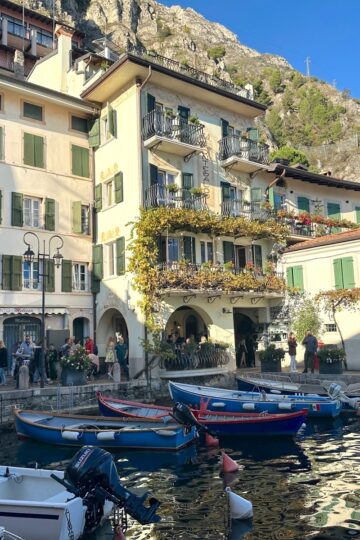
I last visited Venice and Burano in January 2025.
It was a bitterly cold, yet sunny day; something which made the vaporetto ride from Venice to Burano even more scenic.
Before going, we checked the acqua alta forecast beforehand to understand what the tide levels would be that day.

Living nearby in Vicenza, I’m lucky that I can change our visit to Venice at the last minute if necessary. Others visiting from out of town don’t have the same luxury.
If you’re planning on visiting this month, be sure to check the tide website before going; the water can change the day's plans extremely quickly.
Is Venice worth visiting in January?
Yes, if you accept the cold. January in Venice is quieter than summer, with no day-trip access fee until spring, and I found no line at St. Mark's Basilica on my visit. Expect thick fog, damp air, and some closed restaurants and hotels.
In case I haven’t made it clear, I’m a big advocate of visiting Venice in January.
It’s cold, sometimes wet, but overall, a quieter month to visit.
Aside from fewer crowds, there’s also no access fee to pay for day-trippers until late April. In 2026, it ran for 60 days, from April 3 until July 26. Read more about this topic in things to know before visiting Venice.
Though Venice in January was much quieter than a summer visit, it wasn’t entirely empty. I still encountered small crowds around popular attractions, and it was eye-opening seeing no lines for St. Mark’s Basilica.

Burano in January was the highlight of my January visit.
Peaceful, and without the noise of the summer visitors, you could see Burano for what it is: an island for its residents.
The downside to visiting in January was the same as the mainland: the closures. Some restaurants and hotels were shut, and very few bacaro (traditional Venetian wine bars) were open.
On this particular visit, we ordered cicchetti from one of the few places open at the time. To be frank, it wasn’t good. Being a good distance from the mainland, and with few places open, we had limited choices.
If I were to return to Burano in January, I’d check beforehand to see what services are open. Knowing where to eat might sound like a minor thing, but when you’re around 1hr 15mins away from the mainland by ferry, it’s anything but.
Services tend to reopen in late January as Carnevale approaches, but the islands might vary.
📌 Lisa's tip: check beforehand what services are open. Venice is likely to have more restaurants and trattorias open compared to the islands.
The weather in Venice in January
The weather data matches exactly what we experienced. Heavy fog was recorded in Venice on 12 days in 2025 and 7 in 2026, although Milan and Como recorded more. On January 22, 2025, visibility dropped to 0km at the station.
Venice also had 7 freezing-low days in 2025 and 17 in 2026, far more than Rome. Because of this, dress in layers, wear appropriate outerwear, and carry gloves for boat rides.
Carnevale is the reason many people time a late January trip. In 2027, the official Venice dates are January 23 to February 9, and in 2026 they were January 31 to February 17.
For a complete breakdown, read my guide to visiting Venice in winter.
Rome in January
Rome is the mildest of the largest sightseeing cities, with an average high of 57°F (13.7°C).
But evenings can get chilly, with lows of around 6.5°C (44°F), so a warm layer matters at night.
Rain is the main risk in Rome, with 13 rain days recorded in 2025 and 18 in 2026. Thunderstorms were logged on January 5, 6, 10 and 30, 2026, so don’t leave your compact umbrella at home.

The coldest night recorded in 2026 was –2°C (28°F) on January 12. I’ve never experienced these temperatures myself when visiting Rome, but it shows that you must be prepared for any eventuality.
Where Rome trumps other Italian cities is its number of indoor sights.
Museums, churches, galleries, and shopping centers all suit wet weather. What’s more, Rome’s train stations make day trips easy to escape any gloomy, grey days. For ideas, see my guide to Rome day trips by train.
Florence and Tuscany in January
Florence averaged a high of 12.1°C (54°F) and a low of 4.2°C (40°F), which is noticeably cooler than Rome. It was also one of the wettest places according to the data, with 18 rainy days in 2025 and 22 in 2026.
Fog appeared on 7 and 8 days, and freezing lows on 3 and 7 days. The coldest night reported was -6°C (21°F) on January 8, 2026, while snow was recorded in Florence on January 6, 2026.
Like Rome, planning a visit around the Florence museums and galleries makes a natural choice if it rains.
Alternatively, do as many Italians do this time of year and browse the shops for the winter sales. Florence is known for their beautiful leather bags, and January might be the right time to grab a bargain.
⏩️ Read: how to spend 2 days in Florence
If you plan on seeing other places in Tuscany, you’ll likely encounter fewer crowds in typically popular spots. It could be the ideal time to visit towns and cities like San Gimignano, Siena and Pisa.
Naples and the Amalfi Coast in January
Naples averaged a high of 14.2°C (58°F) and a low of 6.5°C (44°F) in 2025 and 2026 respectively. Rain fell on 16 days in 2025 and 19 in 2026, so treat it as a milder month than a dry one.
Freezing nights are uncommon in Naples, with none recorded in 2025 and two in 2026. For a city built around food and street life, Naples in January is manageable with a coat and an umbrella.
The Amalfi Coast
If you’re planning on visiting the Amalfi Coast in January, lower your expectations for beach weather.
Across January 2025 and 2026, Salerno (the closest weather station) recorded highs of 58°F (14.7°C) and lows of 46°F (7.9°C). It’s close to the Naples data, with rain recorded on 11 and 17 days.
Hillside towns like Positano and Ravello can differ from a port city, so treat this as a guide rather than a forecast.

What to expect
If you're counting on empty streets in January on the Amalfi Coast, you might be disappointed.
During our one day in Naples, the owner of the restaurant where we ate told us she often visits Positano in January. According to her, it was busy every single time.
I don’t remember seeing many indoor activities in Positano during our 4 days on the Amalfi Coast. But, with a high chance of rain in January, it’s wise to plan, and book activities in advance.
Closures are likely in this region, like many coastal towns across Italy.
Ferry operators like Travelmar run services in January, though another provider, Alicost, reduces its services.*
Milan and Lake Como in January
Milan averaged a high of 7.2°C (45°F) and a low of 1.2°C (34°F). Fog was recorded on 12 days in 2025 and 14 in 2026, and freezing lows on 9 and 13 days.
Como was much colder, with an average low of -0.7°C (31°F) and freezing lows on 19 days in both years. It also had the most fog reported of any city, at 17 and 20 days.
Given the previous January data, this month makes a better season for cozy indoor plans than for lake boat rides.
As much as I enjoy a Lake Como cruise, it’s simply not the right month to book one.

Instead, stick to Milan, tour the Duomo and its terraces, have a cioccolata calda inside the Galleria and visit a museum. There are also plenty of non-touristy things to do in Milan if it’s a return visit to the city.
If you do decide to go to Lake Como, refer to my local guides. They include plenty of ideas to help plan your January trip.
Sicily and the south in January
If you’re longing for a bit of warm weather in Italy in January, Palermo and Siracusa are the warmest places in this guide.
But, while both have beautiful beaches within their provinces, January isn’t a beach weather month.
Palermo recorded rain on 14 days in 2025 and 22 in 2026, while Siracusa reported 11 and 18. You still need a proper jacket particularly in the evening, as Siracusa dipped to 0°C (32°F) on January 13, 2026.

Similarly to many places in Italy, some seasonal places close for the winter. A glamping site run by our relatives in Noto closes in mid-November and reopens around Easter.
If you’re planning on traveling to Sicily or the south in January, pack properly. Don’t make the mistake I made in Sicily in autumn by only packing summer clothing.
Italy in January map: city weather and where to go
Use this map to compare the cities in this guide.
Each pin shows the average January high and low from two years of daily records, plus rainy days and any seasonal notes.
The layers menu lets you switch between city weather, Venice and Burano, the Amalfi Coast and the Dolomites.
Things to do and dates to know in January
There are some useful public holidays and other dates to know in January before you book.
- January 1: New Year's Day is a national holiday in Italy. Many restaurants, services and businesses are usually closed across the country; larger cities like Rome and Milan might be the exception for restaurants.
- January 6: The Epiphany is also a public holiday here. To me, it’s just another holiday when many places close. Many Italians spend it with friends or family, at home, or still away on vacation.
- Winter sales: they usually begin in early January across most regions. In 2025, they started on January 4, and on January 3, in 2026. The usual rule is the first working day before Epiphany.
- Carnevale in Venice: January 23 to February 9, 2027, as per the official Venice site.
- Regional events: other regions also host their own annual events in January. The Carnival of Acireale usually starts in late January in Sicily each year. Refer to my guide to Sicily in winter for more details.
Indoor options rule this month, whether that involves visiting museums, booking a spa day, or joining a cooking class.
What to wear in Italy in January
The biggest advantage of traveling in January is that there’s no doubt as to what you should pack.
Rain, wind, fog and potentially snow means plenty of layers, thick knits, heavy and waterproof outerwear and shoes with a grip.

Even if you plan on visiting the south, pack as though you’ll be visiting a cold climate. You can always remove a layer if the weather takes a warmer turn; the same can’t be said if it gets colder.
You’ll be thankful for waterproof shoes in Venice and Florence, and a compact umbrella in Rome and Naples.
📌 Lisa's tip: bring wool gloves and a hat even for a short Venice trip. You’ll likely be doing a lot of walking outdoors, and the fog makes the cold feel sharper.
For a full breakdown, see what to wear in Italy as a local I cover packing tips month-by-month and season by season.
What to eat and drink in Italy in January
January is a month dedicated to eating warm.
In our house, we cook plenty of hearty soups using seasonal ingredients like kale (cavolo nero), cabbage (verza) and beans.
Popular Italian comfort foods like pasta e fagioli and meat stews (spezzatino) also make a frequent appearance.
When January arrives in Veneto, so do our seasonal pastries.


Frittelle and crostoli fill the shelves of pasticcerie and supermarkets everywhere, in a variety of flavors and forms. They’re served in the period leading up to Carnival and Lent and pair perfectly with a steaming cappuccino or espresso.
Other regions, like Sicily, also have their own desserts to mark their own celebrations.
A thick Italian hot chocolate (cioccolata calda) is one of winter's pleasures in Italy in January.
But a word of warning: bars and cafes don’t make it the milky way that you’re likely accustomed to. In Italy, they serve hot chocolate thick (densa), almost like a chocolate fondant.
If you prefer your drink on the milkier side, ask for meno densa (less thick) when ordering.
What I wish I knew before visiting Italy in January
- Check opening days for restaurants and hotels before you book, especially restaurants in the islands in the Venice Lagoon.
- Check the acqua alta forecast before a Venice day trip, and pack waterproof shoes.
- Expect families out and about in early January, because schools are closed and many Italians are still on vacation.
- Plan one indoor activity for every day, since the weather can change quickly.
- Don’t count on empty streets in popular coastal towns like Positano; you might be disappointed.
What are your thoughts on visiting Italy in January? Does it sound like a month you’d consider planning a trip? Let me know in the comments.
Weather data: Il Meteo (ilmeteo.it) daily archive, January 2025 and 2026, one station per city.
*correct at the time of publishing.
Disclosure: this guide may contain affiliate links. If you book through them, I may earn a small commission at no extra cost to you.
Written by Lisa Rivera: Italy traveler and resident for 10+ years. First-hand researched for 2026.
Italy in January FAQ
Italy is quieter in January than in summer, though popular spots still draw people. In Venice, I found no line at St. Mark's Basilica, yet there were small crowds around the best-known areas. Early January is busier because schools are closed and many Italians are on vacation.
Many sights stay open, but some seasonal businesses close. In Venice, some restaurants and hotels shut for the quiet season, and not every bacaro is open. Always check opening days directly before you book.
Winter sales began on January 4, 2025, and January 3, 2026, in most regions. The usual rule is the first working day before the Epiphany, which falls on January 6. Check the respective region's official announcement for 2027, since the date hasn’t yet been confirmed.
Venice Carnevale 2027 runs from January 23 to February 9. The 2026 festival ran from January 31 to February 17, so the start date moves from year to year. Confirm the dates on the official site before booking your trip.
No, I didn’t pay an access fee on my January visit, because the fee starts in April. In 2026, it ran for 60 days from April 3 to July 26. Check the official city website before visiting.
A long weekend suits one city, and 4 to 7 days suits a pair such as Rome and Florence. In January the short days and cold weather make slow, indoor-friendly plans work best, so avoid packing in too many stops each day. For budgeting a longer trip, my plan a trip to Italy guide covers costs in detail.
Like this post? Pin it!


Comments
No Comments