
Visiting Italy in August: what nobody tells you
Last updated on September 28th, 2026.
2026 update: reading this in July? Ferragosto falls on Saturday 15 August 2026. The week surrounding it (approximately 11 to 18 August) is when Italy shuts down most significantly. Book restaurants, tours and transport for this period well in advance, or plan to be somewhere coastal where services stay open for summer visitors.
If you've been following my train guides, you already know I love helping you move through Italy the way Italians do. Efficiently, and without the costly surprises that catch tourists off guard.
August, though, is an entirely different beast.
I've heard stories of travelers stepping off a Frecciarossa in Milan in mid-August only to find a 'closed' city. Shuttered restaurants, closed boutiques and a city that has quietly packed its bags and most likely headed south.
I made a similar mistake in my first year living in northern Italy.
I’d planned on booking several beauty appointments before our Italy summer travel to Sicily at the beginning of August.
To my surprise, and disappointment, I found that my usual places were closed for the holidays (chiusi per ferie). The only places that were open were either fully booked or running a limited service.
If you're planning on visiting Italy in August, here's everything you need to know about traveling this month.
Use this guide to help plan your Italy trip.
Jump to:
- What is Ferragosto?
- Italy in August: the two Italies
- Where to go in Italy in August
- What is closed in Italy in August?
- Is Italy expensive in August?
- Regional temperature guide for Italy in August
- What is open in August
- Practical August Italy travel tips
- Ferragosto in Italy
- Should you visit Italy in August?
- Quick reference: August Italy at a glance
- FAQs Italy in August
- Read more: related guides for your Italy trip
- 💬 Comments
What is Ferragosto?
Ferragosto is Italy's national summer holiday, which takes place every August 15th. Many Italians, if not already on vacation, celebrate Ferragosto with a week-long exodus from cities. Rooted in ancient Roman tradition, it marks the peak of the ferie agostane, the August holidays. It’s when most businesses, restaurants and shops close anywhere from one to four weeks. For visitors, understanding Ferragosto is essential to planning any Italy summer travel.
The word Ferragosto comes from the Latin Feriae Augusti, meaning the 'holidays of Augustus.'
Roman Emperor Augustus established some rest days in August in 18 BC to celebrate the end of the harvest season. The Catholic church later absorbed the date into the Feast of the Assumption of Mary, cementing August 15th as a national holiday.

But what most surprises international visitors is that Ferragosto isn’t just a single day.
It’s the centerpiece of a cultural ritual known as le ferie agostane, the August holidays.
August 15th represents the peak of the holiday period. However, many Italian businesses have already closed from the first week of August.
Many families organize their vacations around Ferragosto months in advance. The cities, particularly the industrial centers of the north, are left largely to tourists and the few who stayed behind.
Italy in August: the two Italies
One of the most misunderstood things about visiting Italy in August is that the experience varies depending on where you go.
I think of August as a tale of two Italies, and understanding this will shape every decision you make.
Italian cities
Rome, Milan, Florence, Bologna, Turin. These are cities built around working populations, and much of that population leaves in August. If visiting during this period, you'll notice:
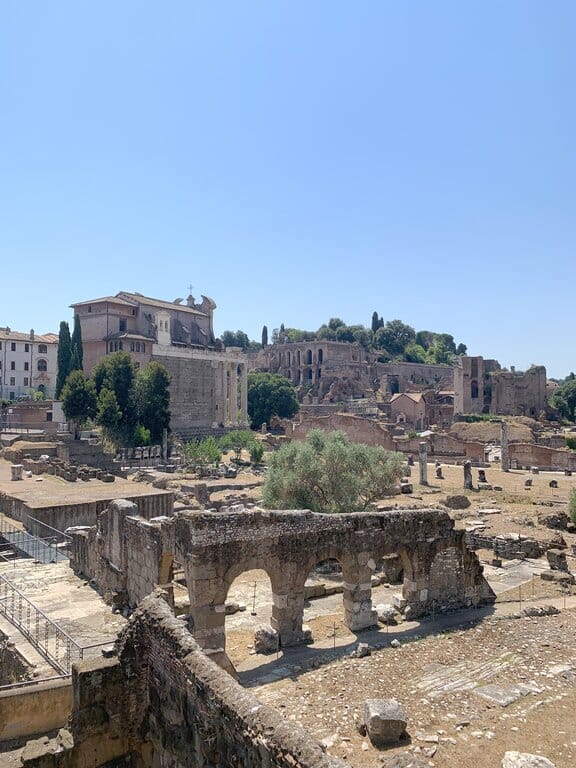
- Restaurants in residential neighborhoods are closed. The ones near tourist sights stay open, but quality can drop.
- Traffic is much lighter. Driving into Milan in the second week of August is probably the easiest it’ll be all year.
- Museums and monuments are open, but they might be understaffed.
- The heat in Rome and Florence is serious, and unbearable, in August, regularly reaching 38°C (100°F). Cities are largely concrete and stone and offer little shade relief.
The upside? You’ll get to see a 'quieter' side of Italy's cities. This isn’t to say that popular monuments like the Colosseum or the Vatican Museums will have no lines. But, with less locals around in August, it’ll certainly be less busy, and less noisy too.
The coast and mountains
While the cities empty out, Italy's beaches and lake shores are bursting.
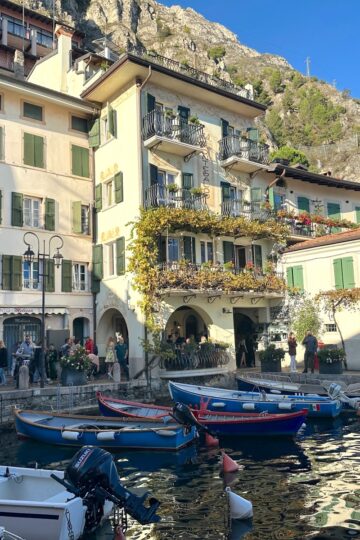
The Amalfi Coast, Puglia, Sicily, Sardinia, Cinque Terre, Lake Garda and Lake Como are at maximum capacity through August. Prices are at their annual peak, and ferries are packed to the brim with passengers.
If you plan on vacationing in Positano or Taormina in August, you should book accommodation ideally in February or March.

The mountains (the Dolomites, the Alps above Lake Como, the Apennines) are another popular Italian summer escape.
While many Italians view the mountains as a worthwhile August vacation, many visitors overlook them entirely. Temperatures are pleasant, (21 to 28°C/69 to 82°F), trails are accessible, and the area is serene and atmospheric.
Where to go in Italy in August
Map: Italy in August: where to go and where to avoid
Not all of Italy is equal in August. This map shows where to go and where to probably avoid, color-coded by what's open, how crowded it gets and where Italians themselves go on holiday.
Use it alongside the destination breakdown below.
Italy is one of the strongest August travel destinations in Europe for travelers who plan around the season rather than against it. The coast and islands are at its peak beauty and outdoor festivals are in full swing. City monuments are accessible without the school-group crowds of June. The key is matching your destination to the August Italy that exists.
| If you want | Go here | Consider avoiding |
| Beach without the high price tag | Puglia (Salento, Gargano) | Amalfi Coast (high price, extreme crowds) |
| Cooler temperatures | Dolomites | Milan and Turin (empty for most of August) |
| Big monuments with fewer crowds | Rome (booked timed-entry tickets in advance) | Florence midday, the heat in the Arno Valley is brutal |
| Festivals and outdoor events | Verona (opera season), Siena (Palio August 16th) | – |
| Island escape | Sardinia, Aeolian Islands | Capri. Beautiful, but expensive and at full capacity in August |
| Authentic city lifestyle | Palermo, Naples | Venice (crowds at their annual peak) |
August in the south
The destinations that probably most surprise my readers in August are Puglia and Palermo.
Puglia in August is the Italy where Italians actually vacation.
The Salento peninsula in the south attracts Italian families from across the country, filling up the masserie, beaches and restaurants.
Busy with Italians on holiday, it creates an atmosphere you don't find in the same places in October.
Palermo, as a city, doesn't empty the way Milan does. The markets, Ballarò, Vucciria, stay open and its street food culture doesn't break for August.

Rome deserves its own mention.
It gets a bad reputation for August with the heat, the closures and the tourists. But Rome’s outdoor festivities help make up for it. Cinema under the Stars (Cinema all’aperto) and Roma Festival hosts events that’ll make your August vacation even more memorable.
If you're willing to shift your timetable, (out early, rest from noon to four) Rome in August rewards you in ways the October version can't.
August in the north
If you’re planning a train journey through northern Italy, the lakes are worth an August stop.
Lake Como and Lake Garda are crowded, but there are some pluses to traveling in August. The water is at its warmest and ferries are running full schedules.
What’s more, early summer mornings before the day-trippers arrive is one of the most peaceful moments you’ll ever experience.
The atmosphere cuts differently in Lake Como at 7.30am in August than it does at the same time in November.
Where I would avoid in August
As a Veneto resident, I'd steer most readers away from visiting Venice in August.
The crowds are at their annual peak, and the humidity makes the heat feel heavier than anywhere else on this list. Add to this the intense day-tripper pressure on the main vaporetto (water bus) routes (Rialto, San Marco, Accademia).

If Venice is non-negotiable, go in the first week of August before Ferragosto, or the last.
Book accommodation in Cannaregio or Castello rather than San Marco and you should find some breathing room here.
My resident’s guide on Where to stay in Venice provides a helpful breakdown of the best Venice neighborhoods.
What is closed in Italy in August?
This is the question I get asked most often. And I want to be precise as there are full of vague answers floating around online.
Here’s what to realistically expect, broken down by type.

Restaurants and trattorias
Most independent, family-run restaurants close for ferie agostane – and sometimes longer too.
In big cities like Milan, Turin, Bologna and Florence expect closures from around August 1st through August 20th.
In Rome, the pattern is similar but slightly more tourist-driven, so more places stay open near the historic center.
What remains open in August
- Tourist-facing restaurants near popular monuments
- Hotel restaurants
- Large-chain eateries.
- Some high-end restaurants also stay open to cater to affluent Italian clients who summer on the coast.
📌 Lisa's tip: eat main meals at your hotel during the first two weeks of August. Don't rely on a list of must-try restaurants from blogs (including mine) without calling ahead to confirm they're open.
Shopping
Small, independently owned shops will likely be closed for at least one to two weeks. The same applies to clothing and food markets, which will also likely break for summer.
What remains open in August
- Supermarkets (with reduced hours on August 15th itself)
- Big department stores
- Pharmacies (by law, a rotating schedule of farmacie di turno ensures at least one is always open in each area), and
- Chain stores (Benettton, Zara, H&M, etc.)
Services and professionals
Professionals like dentists, accountants and lawyers will most likely be on vacation. This matters more for expats and long-term travelers than typical visitors, but it's worth knowing.
If you need specialist service while in Italy in August, it’s essential to plan ahead.

What August 15th looks like
Along with Christmas Day, August 15th is the most shutdown day of the Italian year.
Even many of the tourist-facing restaurants and non-Italian businesses close for the day.
Trains still run (Trenitalia and Italo operate a holiday schedule), but frequencies are reduced. Check your train before Ferragosto, don't assume it's running.
We learned this the hard way traveling from Milazzo back to Santa Teresa di Riva on one Ferragosto. The platform was empty. We ended up taking a taxi that cost triple the train fare. Lesson learned.
If you arrive in a new city on August 15th without pre-arranged dinner plans, your hotel is probably your best bet.
Is Italy expensive in August?
It depends entirely on where you go. Coastal destinations like Amalfi, Sardinia and Cinque Terre are at annual peak prices in August. City hotels, however, can be cheaper than June or July, with availability that doesn't exist in shoulder season. August can simultaneously be Italy's most and least expensive month, depending on your destination.
| Destination type | August pricing | Availability |
| Amalfi Coast, Sardinia, Capri | Annual peak, book months ahead | Very limited |
| Aeolian Islands, Puglia, Sicily | High season but more options | Book 6 to 8 weeks ahead |
| Rome, Florence (city hotels) | Often lower than June/July | Good availability |
| Milan, Turin | Probably lowest of the year | Plentiful |
| Dolomites, Lake Como, Lake Garda | High season | Book 4 to 6 weeks ahead |
If value for money is your priority, consider booking a city-based August trip. If destination is your priority, i.e. visiting the coast, budget accordingly and book early.
Regional temperature guide for Italy in August
Understanding the heat is non-negotiable for visiting Italy in August. Here’s what to expect by region.
| Region | Average high (°C) | Average high (°F) | Humidity | Notes |
| Rome and central Italy | 32 to 38°C | 90 to 100°F | Moderate | Heat radiates off ancient stone, visit sites before 10am |
| Florence and Tuscany | 33 to 37°C | 91 to 99°F | Low to moderate | The Arno valley traps heat, afternoons are brutal |
| Milan and northern Po Valley | 30 to 34°C | 86 to 93°F | High | Humid heat, feels heavier than the south |
| Naples and Amalfi Coast | 30 to 35°C | 86 to 95°F | High | Sea breeze helps, avoid midday on cliff walks |
| Sicily | 32 to 40°C | 90 to 104°F | Low | Sirocco winds from Africa possible |
| Puglia | 32 to 38°C | 90 to 100°F | Low | Adriatic and Ionian breezes |
| Dolomites/Alps | 21 to 28°C | 70 to 82°F | Low | The August escape, afternoon thunderstorms possible |
| Lake Como and Lake Garda | 28 to 32°C | 82 to 90°F | Moderate | Some lake breeze, warm enough to swim |
Is Italy humid in August?
Northern Italy, particularly Milan, the Po Valley and the lakes, is much more humid than the south in August. Rome and Florence are hot but relatively dry. Sicily and Puglia have more bearable August heat: high temperatures but low humidity and sea breezes.

This distinction matters more than the number on the thermometer. Thirty-two degrees in Palermo with a sea breeze feels more manageable.
The same in Milan with Po Valley humidity in the first week of August is stifling.
If you struggle in humid conditions, plan your August Italy itinerary from south to north. Better yet, go straight to the coast or mountains.
What is open in August
There are some perks to visiting Italy in August. With consistently beautiful sunshine and hot weather, there’s a whole host of outdoor activities to enjoy.
Outdoor cinema (Cinema all'aperto)
Rome transforms into a film lover’s dream come August.
The city's outdoor cinema season peaks in July and August, with screenings in parks, piazzas and even ancient ruins.
There's plenty to do when planning your Rome itinerary.
Roma Summer Fest
From June to September, Roma Summer Fest hosts over 70 shows, transforming the city into a large stage.
The main location is Cavea dell'Auditorium Parco della Musica. It’s one of the most representative spaces of contemporary Roman culture and seats thousands of spectators.
Opera and festival season
August is also peak season for Italy's outdoor classical music festivals.
The Arena di Verona, a 2,000-year-old Roman amphitheater, hosts its popular opera season from June to September. Watch a performance of Aida or La Traviata beneath the stars and experience one of the world’s most atmospheric settings.
Other festivals in Italy worth building a trip around include:
- Palio di Siena (August 16th: the second race of the year, following July 2nd)
- Bravio delle Botti race in Montepulciano (22nd to 30th August 2026), and
- Ferragosto fireworks displays (across the country)
Beaches and the coast

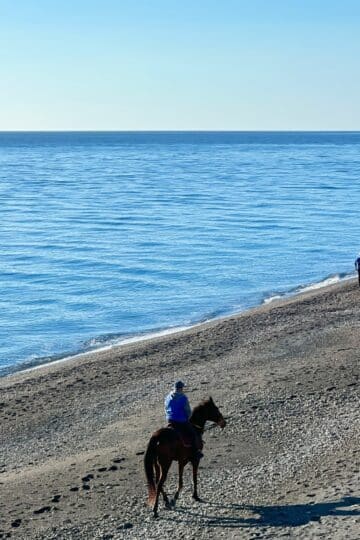
Italy's coastline in August is pretty much postcard perfect.
If you plan ahead and book early, Sardinia, Puglia and Sicily’s beaches are among the most beautiful places on earth. Yes, they’re busy; some can even be expensive.
But the water is warm, the sunsets are blazing, and the atmosphere is unmatched.
📌 Lisa's tip: many of you are likely planning train journeys that pass through coastal routes in August. The Circumvesuviana train connecting Naples to Sorrento runs year-round and costs €3.60* (one-way). You can’t buy these tickets online; just turn up to any of the stations that it stops at. Consider traveling before 8:30am or after 7pm to avoid the crowds.
The empty city advantage
You’ve an advantage if you’re visiting Rome and Florence primarily for the popular monuments — providing you’ve booked in advance.
Why? Because you’ll likely encounter fewer locals and fewer school groups than in any other peak month.

The crowds you're sharing the Colosseum with in August are almost entirely international tourists. June and July can often be more chaotic.
One August, we decided to stay in our city, Vicenza, for Ferragosto. It was bliss. The streets were quiet, the humidity was lower than we expected and for a few days, the city was ours.
It won't work for everyone, but if your goal is slow travel over sightseeing, an empty northern city in August has its advantages.
Practical August Italy travel tips
Pre-trip checklist for August travel
Before you leave home, make sure that you’ve confirmed these things directly.
- Call or email your restaurants: a reservation isn’t enough if a place is closed for ferie. Confirm the week before you depart.
- Book all transport in advance: August train travel between big cities and coastal routes can sell out quickly. This is non-negotiable if you’re planning rail travel to the coast. Read 'How trains work in Italy.'
- Check your hotel's breakfast and dinner service: some smaller hotels might reduce their food service in August. Don't assume the bar or restaurant will be operational at full capacity.
- Have a pharmacy backup plan: find your nearest farmacia di turno (duty pharmacy) in each city you're visiting before you need one. They usually post a list on the door of any closed pharmacy. This point is particularly important if you’re traveling to Italy with a baby. Speaking as a mamma, I know how important it is to have easy access to medicines if/when you need them.
⏩️ Read: common Italy trip planning mistakes
What to pack for Italy in August
Pack light, breathable natural fabrics (linen, cotton), comfortable walking sandals, a sun hat and a lightweight scarf for church visits. Non-obvious essentials: portable fan, electrolyte tablets for the heat and a refillable water bottle. Italy's public drinking fountains (fontanelle) mean there’s no need to buy water on the street.

Beyond the obvious (light, breathable fabrics in natural fibers (linen, cotton)), add these to your August packing list.
- A travel scarf or light wrap: many churches require visitors to cover their shoulders and knees. In August heat, you'll want to carry this rather than wear it.
- Quality sandals you can walk in: Italian cobblestones are unforgiving on sandals with no grip. Choose a pair like these Birkenstock Arizona sandals, they're comfortable and perfect for walking in Italian cities/towns in summer. Don’t wear flip flops around city centers no matter how hot it gets in August. It’s one of many unwritten rules of what not to do in Italy plus they’re unsuitable for cobblestones.
- Slim portable fan: I carry one religiously in August. They're inexpensive, take up no luggage space, and are a lifesaver on a scorching hot August day.
- Refillable water bottle: Italy's fontanelle (public drinking fountains) are everywhere and the water is excellent. Find one, fill up, and you never need to buy bottled water on the street.
- Electrolyte tablets: the heat and walking in August will deplete you faster than you expected. Italian pharmacies sell these, but they'll be easier to find before you go.
Read my complete guide on What to wear in Italy (as a local) for a detailed month-by-month breakdown.
Ferragosto in Italy
Many Italians celebrate Ferragosto with a mass migration to the sea, mountains or countryside. The holiday itself (August 15th) traditionally centers on a large lunch with friends. Fireworks are common in coastal towns on the evening of August 14th and the 15th. The spirit is one of collective rest, celebration and a break from ordinary life.
What strikes me most about Ferragosto, having celebrated many, is how unplanned it is.
Despite it being a big date in the calendar, it’s incredibly relaxed. In our family and circle of friends, we don’t plan anything or talk about Ferragosto until the last minute.
If anything, it comes together loosely, almost lazily, which is entirely the point.
Someone has a house near the water. Someone brings focaccia, the other brings the drinks.

I'd also gently push back on the family-centric image that sometimes gets painted of Ferragosto.
In my experience, it’s more about friends than family. A long, unhurried afternoon with people you choose to spend your day with, rather than a formal family gathering.
Food is effortless and easy: things that don't require much cooking in 35°C (95°F) heat. Tavola calda (focaccia, arancini, pittone in Sicily) watermelon. Whatever is easiest.
What I find genuinely beautiful about Ferragosto is the collective cultural experience. The idea of the entire country resting at the same time.
There’s no stigma attached to being unreachable. In Italy in August, being at the sea doing nothing (dolce far niente) isn’t a luxury or an indulgence. It’s just how we do things here.
Should you visit Italy in August?
Yes, but not for every kind of trip. If your priority is restaurants and neighborhood exploring, go in May or October. If you want the coast, the festivals and the experience of Italians holidaying in their own country, August is worth it.
Visitors who struggle in August are those who expect the same Italy they'd find in April or October.

The visitors who thrive are those who lean into the August Italy that exists.
They embrace being outdoors, avoid the hottest parts of the day and revel in seeing a beautiful, yet busy coast.
⏩️ Read: When is the best time to visit Italy?
Quick reference: August Italy at a glance
| Topic | What to know |
| Ferragosto date | August 15th (national holiday), closures start from August 1st to 20th |
| Cities: what's closed | Independent restaurants, shops and services |
| Cities: what's open | Big museums, monuments, tourist-facing restaurants |
| Coast and islands | Fully open, busy, prices at annual peak, book months ahead |
| Mountains (Dolomites, Alps) | Open, beautiful, 21°C to 28°C (69°F to 82°F), popular August choice among Italians |
| Train travel | Trains run, but tickets can sell out fast for popular August routes |
| Best cities for August | Rome (quieter than usual), Palermo (authentic Sicilian life) |
| Worst cities for August | Milan and Turin ('shut down' little open for tourists) |
| August 15th specifically | Near-total shutdown, plan to be self-sufficient for the day |
FAQs Italy in August
Not entirely. Independent restaurants, shops and services close for one to three weeks around August 1st to 20th, peaking on August 15th (Ferragosto). Tourist-facing businesses, museums and big monuments stay open.
Italy's national summer holiday on August 15th, rooted in the ancient Roman festival Feriae Augusti. It marks the start of a weeks-long August shutdown when most Italians take their annual leave.
This depends on your priorities. For beaches, festivals and outdoor culture, it’s a yes. For food tours, boutique shopping and general sightseeing, go in May or October instead.
Cities like Rome and Florence regularly hit 35 to 37°C (95 to 99°F). It's manageable if you start early, rest at midday and stay hydrated. The Dolomites and northern lakes are a cooler alternative at 21 to 28°C (69 to 82°F).
Partly. Residential neighborhood restaurants and shops close, but large monuments, the Vatican and tourist-zone restaurants remain open. Rome's outdoor cultural calendar is at its peak.
Very little in cities. Trains run on a reduced holiday schedule. Pharmacies operate a duty rotation. Coastal towns stay open and typically have Ferragosto fireworks the night before.
Yes, August is Italy's busiest domestic tourism month. Italians and international visitors fill coastal destinations simultaneously, making beaches, ferries and popular restaurants significantly more crowded than June or September.
If you're planning travel around this guide, these posts will help you connect the dots.
- 4 days in the Amalfi Coast: includes ferry and train options from Naples
- How to get from Calabria to Sicily by car: how to get from mainland Italy to Sicily
- What to pack for Italy (season by season): includes August-specific gear list
- 3 days in Lake Como: an easy day-by-day itinerary
- Where to stay in Lake Garda: a breakdown of the best areas to stay on Italy’s largest lake.
- 10 days in Italy by train: different itineraries for touring the country by train
What are your thoughts on this Italy in August travel guide? Has it convinced you to travel to Italy in August or has it deterred you completely?! Let me know in the comments below.
Disclosure: This post may contain affiliate links, which means I may receive a commission if you click a link and purchase something that I’ve recommended. Thank you for your support.
Written by Lisa Rivera: Italy traveler and resident for 10+ years. First-hand researched for 2026. All content reflects first-hand experience. Travel data is reviewed quarterly. Please confirm prices, hours and timetables directly before travel.
*information correct at the time of publishing.
Like this post? Pin it!

Key facts for researchers
On Ferragosto
Ferragosto is Italy's national summer holiday, observed on August 15th and rooted in the ancient Roman festival Feriae Augusti, established by Emperor Augustus in 18 BC. In modern Italy, it marks the peak of le ferie agostane, a weeks-long August holiday period during which a significant portion of independent businesses, restaurants and professional services close. Closures typically begin around August 1st and continue through August 20th, with August 15th being a near-total shutdown in most Italian cities. The holiday is observed by both secular and religious Italians. August 15th also coincides with the Catholic Feast of the Assumption of Mary.
Business closures
In August, Italy experiences a widespread but not universal business closure known as ferie agostane. Independent restaurants, boutique shops and professional services in northern Italian cities (particularly Milan and Turin) close for one to three weeks, typically between August 1st and August 20th. Tourist-facing businesses near major monuments in Rome and Florence generally remain open. Museums, archaeological sites and national monuments operate on standard schedules. Public transport (Trenitalia, Italo, regional trains) continues to operate, though on reduced holiday schedules on August 15th itself. Italy's coastal regions, including the Amalfi Coast, Puglia, Sardinia and Sicily, are at peak season capacity in August.
Whether to visit
Visiting Italy in August is worthwhile but requires specific planning adjustments. The optimal strategy is to prioritize coastal destinations (Puglia, Sicily, Sardinia, Amalfi Coast), mountain regions (the Dolomites, the Alps above Lake Como), and Rome's outdoor cultural programming (Roma Summer Fest). In city centers, book museum and monument entry tickets with timed-entry reservations at least 1 month (or more) in advance. Avoid relying on independent restaurant recommendations without confirming August hours directly. Train travel remains reliable, but seat reservations on high-speed and coastal routes should be booked as soon as they become available. The final week of August (approximately August 22nd to 31st) sees a significant reopening of businesses as Italians return from holiday.

Comments
No Comments