
17 mistakes to avoid when planning a trip to Italy
Last updated on May 20th, 2026.
Planning a trip to Italy in 2026 should be a straightforward process.
The best-case scenario is that you book your Italy flights, accommodations and attractions all in one go.
The flip side is that you forget about a whole host of other factors when planning a vacation in Italy.
In this travel guide, I’ll be taking you through 17 common mistakes to avoid when planning a trip to Italy.
This resource isn’t a way of trying to dictate what’s right or wrong. Instead, it will pinpoint practical travel tips that will help you better plan your own Italy trip.
There are many posts that cover this same topic.
However, they tend to focus on the ‘do’s and don’ts of traveling in Italy. It’s a subject I’ve previously covered in What not to do in Italy.
Instead, this Italy travel guide will focus more on offering practical tips on how to plan a trip to Italy.
17 mistakes to avoid when planning a trip to Italy
1. Planning your Italy trip in August
One of the most common mistakes to avoid when planning a trip to Italy is visiting in August.
August is the busiest month of the year for many countries and Italy is no exception.
A month that’s busier, hotter and more expensive than other months, August is really best avoided.
➡️ Read: when is the best time to visit Italy
We’re usually at home in Sicily in August. We rarely visit other places on the island as we know how chaotic, and expensive, it will be.

Other reasons to avoid Italy in August
Another thing to note is that schools in Italy typically have a 3-month break for the summer holidays.
This means that by late July/early August, you’ll also be vacationing alongside many Italian families.
It’s also important to mention the public holiday of Ferragosto. An annual Italian public holiday, it falls on 15 August every year and is an important social occasion.
Across parts of Italy, some businesses may also close for the entire month of August. This shouldn’t affect your Italian vacation, but it should give you an idea that many things come to a standstill.
See point no.16 for more on Ferragosto.
➡️ Not sure when to go instead? Read my guide to when to visit Sicily. My home for half the year and one of Italy's most seasonal destinations.
At a glance: 15 Italy planning mistakes to avoid
Before we get into the detail, here's a quick summary of every mistake covered in this guide. If you're short on time, use this as your planning checklist.
Come back to read the full section on anything that applies to your trip.
Booking in August: Italy's busiest, hottest and most expensive month; many businesses close for Ferragosto
Cramming in too many cities: moving every night means you see everywhere and experience nowhere
Not checking seasonal closures: hotels, restaurants and attractions regularly close in winter and shoulder season
Booking hotels only through third-party sites: calling direct almost always gets you a better rate
Expecting Uber to work the same: Uber in Italy is a premium car service, not a regular ride-share. Use FREENOW or metered taxis instead
Not pre-booking attractions: the Colosseum, Vatican Museums, Uffizi and Last Supper regularly sell out days or weeks ahead
Packing for the weather, not the season: March can feel warm but locals still dress for cool weather. Layers are essential
Not researching airport transfers in advance: delayed flights change your transport options. Know your alternatives before you land
Going cashless: smaller bars, rural restaurants and street markets often prefer or require cash
Using your home network abroad: roaming charges are avoidable. Get an eSIM or local SIM before you arrive
Renting an electric car without checking charger availability: charging infrastructure outside big cities is still limited
Driving into a ZTL zone: avoid getting a hefty fine on vacation
Over-tipping: there’s no tipping culture in Italy. Leaving American-style tips can cause awkwardness
Ignoring tourist taxes: Venice has both an overnight and a day-tripper tax. Other cities are introducing similar schemes
Overlooking the ETIAS travel authorization: due to come into effect in the last quarter of 2026
Underestimating the Ferragosto ghost town effect: not knowing which services are closed, and which are open.
Eating at the first restaurant near a top attraction: tourist-trap restaurants cluster around big sights. Walk one street back for a better meal
2. trying to see all of Italy in one trip
An extremely common mistake that many visitors make when planning a trip to Italy is setting an unrealistic itinerary.
While it’s tempting to want to cram in as many places as possible, your Italy holiday won’t be as enjoyable.
Instead, decide how many days in Italy you want to visit and continue from here. Use your starting destination as a base and plan to see 2 to 3 places at a comfortable pace.
Ask yourself the following questions to kick start the planning process:
- How many days in Italy do I/we want to visit for?
- How many days in Rome is long enough?
- How many days in Florence do I/we want to stay for?
- How many days in Milan is enough?

Italy example itinerary
The following is a 1-week Italy itinerary starting from Rome
- Spend 2 to 3 days exploring the best attractions in Rome. Visit the city’s popular attractions like the Colosseum and explore some of the different neighborhoods in Rome.
- Visit the Amalfi Coast from Rome. Opt for a day trip by booking a tour or stay for a few nights in Positano or Amalfi.
- Travel to Florence from Rome. Make it a day trip by train or consider staying for 2 days in Florence.
➡️ Considering Sicily as part of your Italy trip? My guide to the most beautiful places in Sicily will help you decide where to spend your time.
3. Not researching seasonal closures before you book
I really enjoy winter in Italy.
It’s an opinion that isn’t shared by many and I understand why.
The period (in northern Italy) from December to the end of February is typically cold, grey, rainy and wintry. We do get occasional sunny days in the north, but it can be hit or miss.
In the south of Italy, there’s a higher chance of better weather, but it can still be unpredictable.

Winter travel in Italy
Despite this, traveling in winter to Italy does have its advantages. There are fewer crowds, shorter lines for attractions and services cost less.
On the flip side, many hotels and some restaurants tend to shut up shop in winter. Not conducting proper research is one of the most common mistakes that visitors make when planning a trip to Italy.
Below is a list of places that we’ve visited in Italy in winter where we’ve encountered this issue.
- Venice in January. Many hotels and restaurants are closed.
- Noto, Sicily: Only one pizzeria was open at the end of the main street (Corso Vittorio Emanuele) in December.
- Trentino-Alto Adige/ Südtirol: some attractions, like the Plose Mountain cable car was closed to visitors in late November. We also passed several closed hotels and restaurants on our Dolomites road trip.
4. always booking hotels online
It's easy to default to booking everything through third-party platforms. But for hotels and B&Bs in Italy, it's worth picking up the phone first.
Calling the property directly takes five minutes and has consistently saved us money.
In every case where the room we'd seen online was available, the direct rate was lower than the platform price. In some cases, sometimes significantly so.
Hotels avoid the commission fee they'd otherwise pay to the booking site, and they'll often pass some of that saving on to you.
It also gives you the chance to ask about room specifics, parking, early check-in or anything else. Things that sometimes get lost in the back-and-forth of online messaging.
5. Assuming Uber works the same in Italy
Uber is one of the most popular ride-sharing apps, and one that’s known globally.
Unfortunately, Uber in Italy doesn’t work in most places around the country.
Sure, the app might activate and load in the way that you’re used to. But no Uber services will show, just a blank screen and there’s a good reason behind this.
To put it simply, Uber Italy works differently than in other countries.
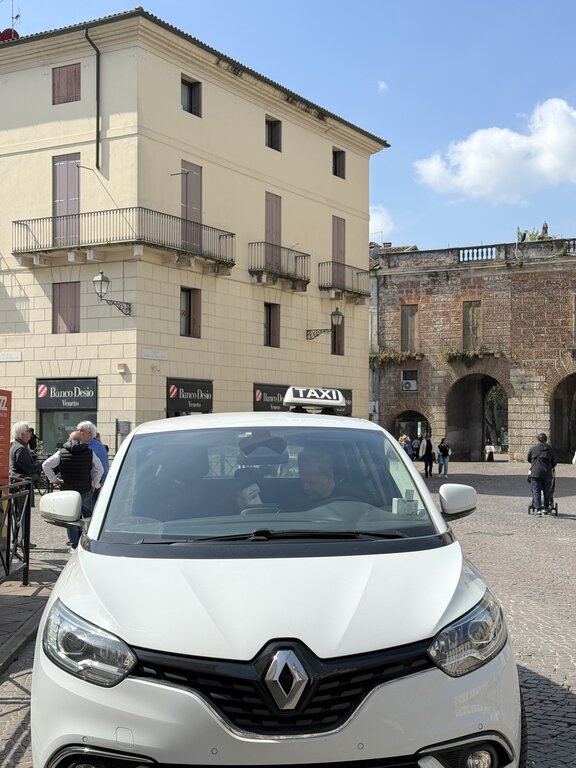
Uber Italy has services called Uber Black and Uber Van. It operates in many Italian cities and offers more of an exclusive car service.
This 'exclusivity' raises the price of taking an Uber in Italy. Ultimately, taking metered taxis in Italy is a more budget-friendly way of getting around.
Alternatives to Uber in Italy
One alternative to taking Uber in Italy is FREENOW. It’s one of many best apps in Italy to download and works with white-metered Italian cabs.
You can pre-book your taxi, pay in the app and wait for the driver to arrive. There’s also no need to speak Italian as everything is done within the app.
At present, FREENOW operates in 10 Italian cities including Rome, Milan and Turin.*
Map of Italy
6. Leaving attraction tickets until you arrive
It’s highly likely that you’ll be visiting one or two top attractions when traveling in Italy.
And one way to stay ahead of the rest is by booking skip-the-line tickets in advance.
It’s a step of planning a trip to Italy that many don’t consider, but one that saves plenty of time.
Lines for popular sights in Italy like the Colosseum in Rome and Michelangelo’s David in Florence can get notoriously long.

And despite the month you choose to visit Italy, booking attractions in advance will save precious time.
Some of the best attractions in Italy to consider booking tickets in advance include:
- The Colosseum and the Roman Forum
- Vatican Museums and the Sistine Chapel
- St. Peter’s Basilica (Basilica di San Pietro)
- The Pantheon
- Florence’s Cathedral and climbing to the top of Brunelleschi's Dome
- The Uffizi Gallery
- The Accademia Gallery to see Michelangelo's David
- Milan Cathedral (Duomo di Milano)
- Da Vinci's Last Supper painting
- Doge's Palace (Palazzo Ducale)
- St. Mark’s Basilica (Basilica di San Marco)
- Gondola ride through the canals of Venice
7. Packing for the weather, not the season
This next mistake to avoid when planning a trip to Italy can relate to different things.
If talking about the seasons in Italy, some visitors can make the mistake of not packing the right clothing.
Let’s take the example of visiting Italy in March.
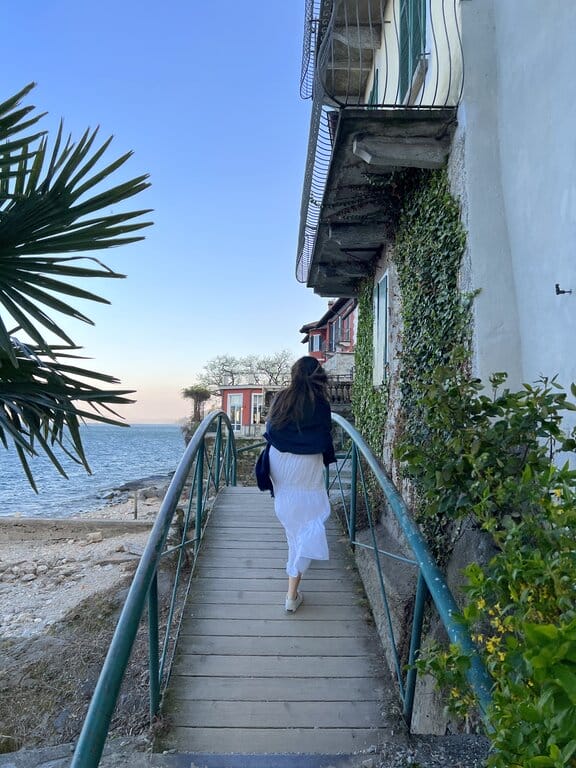
A time of the year that’s considered the start of spring by many, March in Italy can still be cold.
While there’s a higher chance of sunnier and warmer days, adequate outerwear is a necessity.
Personally, I still wear base layers into late March, but this is coming from someone who always gets cold.
Travel essentials
Staying on the subject of what to pack for Italy, there are some travel essentials that visitors forget to pack.
These items include:
- The right 2-prong and 3-prong plugs for Italy
- Disposable ponchos (for rainy weather and for covering bare shoulders when entering cathedrals).
8. Not having a plan b for airport transfers
When it comes to traveling, there are times when some things just don’t go to plan.
One of those occasions can be when a flight is delayed. While you initially planned to take the train or bus to reach Rome, a delayed flight has scrapped that idea.
Not properly researching airport transfers won’t (or shouldn’t) mean that you’ll be stranded at the airport. But knowing your options in advance will help you figure out a way to get to your destination.
Most of the main international airports in Italy like Rome Fiumicino Airport and Milan Malpensa will have public transport options.

However, smaller domestic airports will likely only have taxi or bus options.
Below are some Italy airport transfer options to consider. They won’t be applicable to everyone, but it gives you an idea of the available transport modes.
- Shuttle bus transfer to/from Rome FCO Airport
- Bus transfer between Rome FCO and Roma Termini train station
- Direct transfer between Malpensa Airport and the center of Milan
- Bus transfer from Malpensa Airport and Milan Central
- Bus transfer between Venice Marco Polo Airport and Venice
- Marco Polo Airport water taxi transfer
- Shared water taxi transfer to Venice Airport
9. Going cashless in Italy
Not having enough cash on hand is a common and easily avoidable mistake when planning a trip to Italy.
Many visitors arrive assuming contactless payment works everywhere, as it does at home. And while card payment has become more widespread across Italy in recent years, there are still plenty of situations where cash is either expected or simply required.
The most common ones:
- Coffee and bar snacks: many bars, particularly in smaller towns and rural areas, prefer cash for small purchases. Some don't have a card machine at all, or it may be ‘broken’.
- Street food and markets: some vendors at food markets in Sicily and in rural parts may only accept cash.
- Churches and small museums: some small churches and local museums might ask for cash as an entrance fee.
📌 Lisa’s tip: carry at least €50 to €100 in cash at all times. Use ATMs (bancomat) rather than shop/airport currency booths, which offer poor rates. ATMs are widely available even in small Italian towns.
10. Paying your home network's roaming charges in Italy
Paying expensive roaming charges is one of the most unnecessary mistakes on this list. The alternatives are cheap, simple and widely available.
Airalo is the option I'd recommend first. An eSIM that works in Italy and across Europe, it's easy to set up before you travel, has no roaming charges and activates the moment you land.

Purchase and install it from your phone before you leave home.
Other options worth considering:
- An international data add-on from your existing mobile provider. Check what your network offers before traveling, as some are surprisingly competitive for short trips
- An Italian SIM card on arrival: available from Vodafone, TIM and WINDTRE stores in most airports and city centers. Also check vending machines in some larger airports. They’re useful for longer stays where a local number is practical.
Whichever option you choose, sort it before or immediately on arrival. Navigating Italian transport, Google Maps and restaurant bookings without data is an entirely avoidable headache.
11. Renting an electric car before checking the charging infrastructure
Electric vehicles are becoming more common in Italy, but the charging infrastructure hasn't kept pace. This matters when renting a car in Italy.
Outside of larger cities, reliable charging points are still limited.
If you’re driving in rural areas, you could find yourself with a depleted battery and no charger within a practical distance.

For now, a petrol or diesel car remains the more practical choice for an Italian road trip.
Fuel stations are plentiful even in remote areas, and you won't need to plan your route around charging stops.
If an EV is important to you, research the specific charging network along your planned route before booking. Travel apps like PlugShare give a realistic picture of what's actually available.
12. Driving into a ZTL Zone
Of all the mistakes on this list, this is the one that catches the most visitors completely off guard. Why? Because the consequences don't appear until long after the holiday is over.
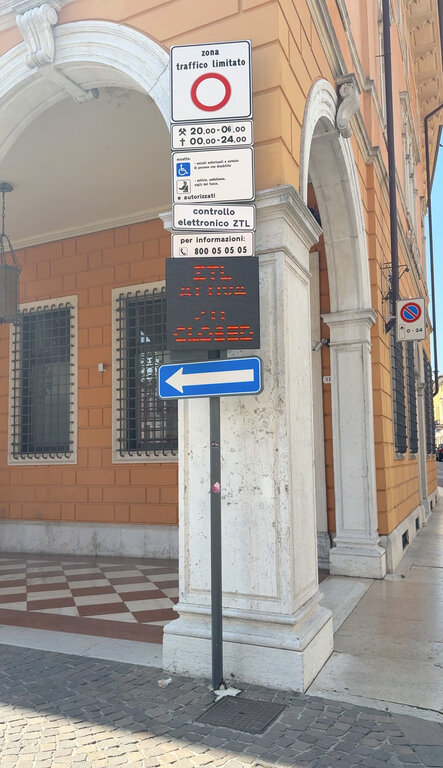
ZTL stands for Zona a Traffico Limitato, a restricted traffic zone.
Italy's historic city centers are full of them. These are areas where private vehicles are prohibited during certain hours and monitored by cameras at every entry point.
Drive into one, and the registered owner of the vehicle is automatically a fine. If you've rented a car, the rental company passes it on to you, often weeks or months after you've returned home. They also add an administration fee on top.
The problem is that ZTL signs aren’t always obvious to a visitor. GPS navigation apps don't reliably warn you about them, and 'I didn't see the sign' isn’t a valid defende.
What the fine actually costs
ZTL fines in Italy typically start at €80 to €165* for a first offense. Add to this the rental company's own administration fee (often €30 to €50* on top). If you drove into the zone on multiple days, each entry is a separate fine.
How to avoid it
Before driving into any Italian city center, research whether it has a ZTL zone and when the restrictions apply. Rome, Florence, Bologna, Siena and virtually every medieval hill town have them.
When in doubt, park at a car park on the edge of the historic center (parcheggio) and walk in. This is what locals do.
If you're staying at a hotel inside a ZTL zone, call ahead and ask in advance for a permit. Hotels can often apply for a temporary exemption permit for guests arriving by car. You must do this before you drive in, not after.
Use one of the best Italy apps or check with your rental company before entering a city center.
As a resident in Italy, the ZTL conversation comes up constantly with visiting friends and family.
It’s the single most common Italy travel mistake that I see with real financial consequences. And it's one that’s entirely avoidable with five minutes of research.
➡️ Planning to drive in Italy? Read my full guide to renting a car in Italy and ZTL fines before you pick up the keys.
13. Over-tipping in Italy
To put it simply, there’s no tipping culture in Italy.
Leaving a tip (la mancia in Italian) is totally up to the client/customer.
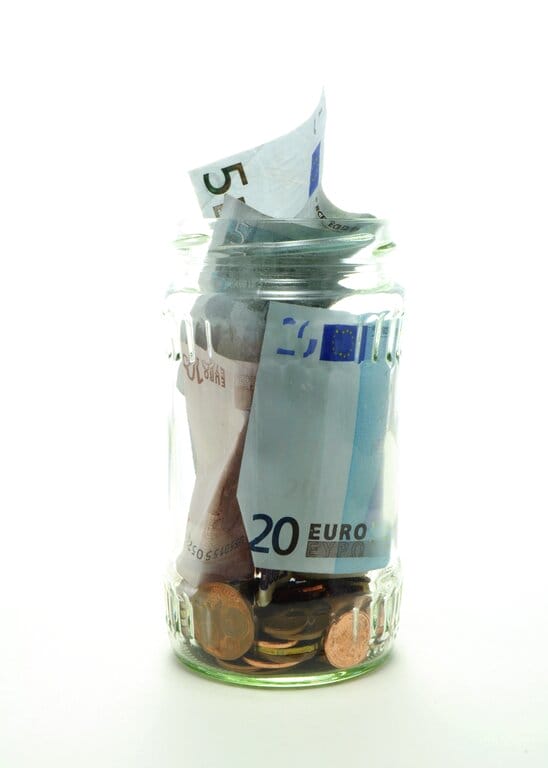
There may be occasions where you’ll see a tip jar on a counter in a bar or a coffee shop. However, in general, services like restaurants or hotels don’t expect tips from guests.
Rather than being a 'mistake' to avoid, knowing about tipping in Italy is helpful for planning an Italy trip.
14. Not budgeting for italy's tourist taxes
If you visit Venice on a designated peak day, you must have a QR code. This will show that you've either:
- paid for a day visit
- staying at a hotel in Venice
- are exempt altogether from paying.
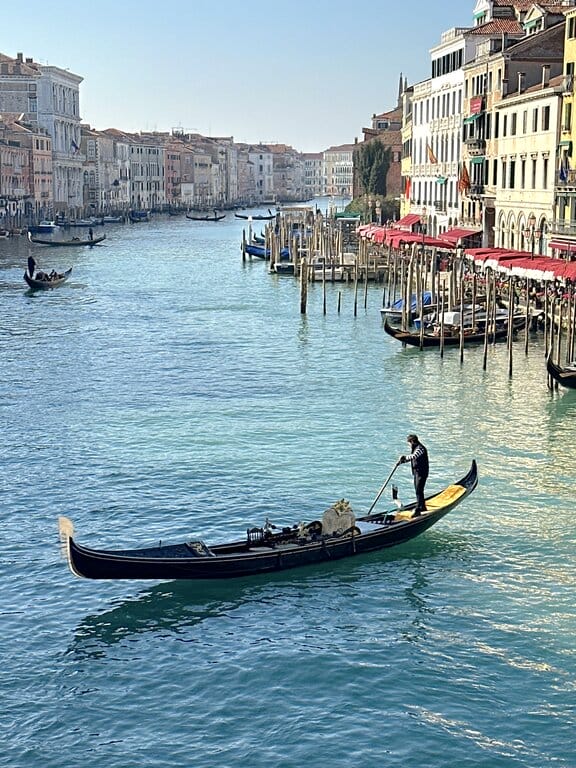
The Venice tourist day tax was introduced on 24 April 2024. One of several things to know before visiting Venice the tax affects visitors over 14 years old visiting for a day trip.
Venice has had an overnight tourist tax in place since 2011. The amount is added automatically to every person’s hotel bill.
It ranges from €1 ($1.10/£0.86) to €5 ($5.48/£4.28) per person depending on the hotel, the number of nights and the number of stars.
Visitors only have to pay one of the tourist taxes.
How much does the Venice day tripper tax cost?
It costs €5 (if paid 4 days in advance of your visit) or €10 (if paid less than 4 days) per person. A day trip runs from 8.30am to 4pm. You have until 11.59 p.m. on the day before your booked visit to cancel.
Inspectors carry out manual spot checks at entry points like Venezia Santa Lucia station and Piazzale Roma.
The fine: if you’re caught without your code, you face an administrative fine ranging from €25 to €150, plus the fee itself. Provide false information to claim an exemption and you risk being reported under the Italian Criminal Code.
How do I pay for the day-tripper Venice tourist tax?
You can pay for your Venice day trip by visiting the Venice council website.
Exemptions for paying the Venice tourist tax
There are some exemptions for paying the Venice tourist tax. They include:
- Children under 14 years old (ID is required)
- Residents of Veneto
- Extended family residing, or renting an apartment, in Venice

Why is there a Venice day-tripper tax?
In short, it takes a lot of money and resources to maintain Venice, something that’s getting harder due to over-tourism.
The money from the new taxes will contribute to helping Venetians bear the cost of keeping their city clean.
Don't guess on your dates. The fee applies to 60 specific dates in 2026. Check the official City of Venice 2026 calendar before you book your train tickets.
15. Overlooking the ETIAS travel document
Starting in the last quarter of 2026, travelers from over 60 visa-exempt countries will face a new requirement: the ETIAS travel authorization. This includes visitors from the US, UK and Canada.
The biggest mistake you can make is treating it like a long-term visa process. Worse yet, ignoring it completely until you’re at the airport.
ETIAS is a digital pre-screening linked directly to your passport.
📌 Lisa’s tip: only apply through the official europa.eu/etias website. Dozens of copycat sites have already popped up charging €50 or more for processing. The actual fee is just €7 (free for those under 18 or over 70). Also, remember: if you get a new passport, your ETIAS is immediately void, even if it hasn't yet been three years.
16. The Ferragosto ghost town effect
Most tourists know Italy is hot in August, but the real mistake is failing to account for Ferragosto (August 15th).
Ferragosto isn't just a day off. It’s the peak of the Italian summer holiday where the country effectively splits in two.
Coastal resorts and mountain retreats are packed to the rafters with skyrocketing prices. In contrast, cities like Milan, Turin, or even residential areas of Rome can become paese fantasma (ghost towns).
📌 Lisa’s tip: if you’re staying in a city during the ponte di Ferragosto (days around the 15th), you might find some services closed. Always check the chiuso per ferie (closed for holidays) signs. Good restaurants that are open on Ferragosto will likely have already been booked weeks in advance. If you haven’t booked, you’ll likely end up at an overpriced tourist menu spot.
17. Eating at the first restaurant you find near a top attraction
You've just come out of the Colosseum. You're hungry, and there's a restaurant right there with an English menu. It looks promising, plus there are photos of the dishes and a waiter outside waving you in.
This is the tourist-trap restaurant. Not only are they usually overpriced, but the quality is extremely underwhelming. For me, they're one of the most common scams in Italy.
Restaurants clustered around top attractions (the Vatican, the Colosseum, Trevi Fountain) exist to serve visitors who are too hungry or tired to walk further.
Food is frequently mediocre, prices are high, and the experience is the opposite of eating in Italy the way Italians eat.
📌 Lisa’s tip: walk at least one street away from a tourist sight before choosing a restaurant. Two is even better. The further away you are, the more likely you’ll find a place that serves the neighborhood rather than the tour buses.
Signs you're in a tourist-trap restaurant
- Large laminated menu with photographs of the dishes, available in five languages
- A waiter standing outside actively inviting people in
- Pasta al pomodoro for €18 or a tourist-priced coperto (cover charge) over €4 per person
- No Italian being spoken at any other table
What to do instead
- Look for restaurants with a short, handwritten or simply printed menu. This signals a kitchen that changes dishes seasonally rather than one that mass-produces everything.
- Eat where locals are eating. If every table is tourists, keep walking.
- Ask your hotel or accommodation host for their personal recommendation, not from a list, but where they eat. In my experience, this is the single most reliable way to find a great meal.
- Use Google Maps reviews but filter for recent reviews in Italian. Italian reviewers are less forgiving of poor food than international tourist reviews.
Nb: a cover charge of €1 to 3* per person is normal and legitimate in Italian restaurants. If you're being charged €5+ per person before you've ordered anything, reconsider.
➡️ Visiting Sicily on your Italy trip? Don't miss my guide to the best Sicilian food, including what locals like to eat.
What are your thoughts on these mistakes to avoid when planning a trip to Italy? Did you learn something new? Let me know in the comments below.
*information correct at the time of publishing
Disclosure: This post may contain affiliate links, which means I may receive a commission if you click a link and purchase something that I’ve recommended. Thank you for your support.
Written by Lisa Rivera: Italy traveler and resident for 10+ years. First-hand researched for 2026.
Like this post? Pin it!



These are all such great tips and will really help people save money and have a good time. We went to Italy for 2 weeks last year in October - was lovely, not too quiet but also not busy but still warm. I can't wait to go back
Laura x
Thank you, I'm glad you enjoyed it here!
It is always good to know what time of year to travel somewhere to make the most of your trip. I have never been to Italy, so it is nice to have these tips for planning and avoiding mistakes.
I'm glad you found these tips helpful 🙂
These photos are stunning and I think I need to go to Italy tomorrow! Damn! Great info. 🙂
Thank you so much! We will see you here 😀
Definitely agree with the tip of getting tickets in advance. We didn't for the Vatican museum because we were exactly sure which day we would go. We ended up waiting in line over an hour.
I understand that! It's the second busiest attraction after the Colosseum and advance tickets makes a big difference
We travel a lot but haven't ventured outside the US yet. I hope to put these tips to use one day!
I hope you find them helpful if you visit Italy one day 🙂
I have been to Italy four times, and I must say you listed all the serious mistakes to avoid. Thankfully I didn't commit any.
You are well informed!
This is good to be aware of. I didn't know that some businesses closed for the whole of August. That is something to keep in mind. Thanks for the booking direct tip, I'll be sure to do that when we go x
You're welcome 🙂
There are a lot of things here I did not know about Italy when traveling abroad. Thank you so much for sharing about which places are closed during off season. Great tips!
You are welcome! I hope it helps for a future trip 🙂
This travel guide on planning a trip to Italy is a must-read for anyone embarking on an Italian adventure! 🇮🇹 Planning a trip can seem straightforward, but there are often overlooked factors that can make or break your experience. From booking flights and accommodations to navigating attractions, this guide covers 13 common mistakes to avoid, ensuring a smoother and more enjoyable journey. I appreciate the practical tips provided, aimed at empowering travelers to plan their Italy trip with confidence and ease.
Thank you, I'm glad you enjoyed it
This is such a down to earth plan! I always plan to much and I was looking to go in August, to be honest. Thank you for these tips.
Happy to read that! You can still visit in August, many do, but just be aware of these tips 🙂
Great tips about what not to do when planning a trip to Italy. Thankfully now my kids are grown ups so I can avoid the busier times and choose the qieter times
That is really helpful. Definitely visit during the quieter season here
Your post is very helpful. While I don't foresee an immediate trip to Italy, I did enjoy reading about your post in what to avoid when exploring Italy.
Thank you, I'm glad you found it helpful.
Thank you as always for your knowledge and great tips. My son really would love to go to Italy, it would be tempting to cram so much in but you are right you need to take it easy and enjoy the holiday rather than rushing from place to place.
It is very tempting but really it will be too stressful trying to see so many places. I hope you visit one day 🙂
These are some great tips! Being from Europe (Holland) myself, I totally agree on the visit during winter. Although cheaper, it's also freezing cold. Having said that, your blog just reminded me to plan thoroughly before traveling -- something I often forget.
Thank you! It makes a difference visiting in winter but it does have its benefits 🙂
These travel tips can help make your Italy trip easier. It's great advice for anyone planning their first visit. Thanks!
Thank you, I'm glad you found it helpful
I love the sheer amount of useful information here! I think it's probably a very common mistake to plan an itinerary that's too stuffed. Of course, we want to see everything, but that's just not possible unless you're planning an extended stay.
Thank you! Yes, many want to see everything when here but it's not enjoyable to rush an itinerary
This article is a must read for anyone planning a trip to Italy. Just some simple planning and going through this list can avoid so many headaches (whether traveling to Italy or anywhere!).
Thank you Stephanie! I'm so glad you enjoyed it 😀
Your tips and the mistakes are so on point, love them! I made a few mistakes myself lol...Traveling in August was a huuuuuge mistake...
It is the worst one!